

Expert discusses the patient-reported outcomes from the GRIFFIN trial at the final study analysis after all patients completed 1 year of follow-up post maintenance therapy.
Expert discusses the patient-reported outcomes from the GRIFFIN trial at the final study analysis after all patients completed 1 year of follow-up post maintenance therapy.
Expert discusses updated cohort of patients with longer-term follow up treated in the phase 2 clinical trial of venetoclax added to cladribine plus low-dose araC alternating with azacytidine.

Expert discusses the updated data for a trial cohort after a median follow-up of 27 months.
Richard T. Maziarz, MD, and a team of investigators assessed average medical costs of allo-HCT throughout a patient’s lifetime and the net monetary savings and value associated with reducing complications.
The FDA clinical reviewer responsible for the approval of this combination therapy discusses the data that led to the approval in May 2022.
Phase 1 clinical trial data show the drug to be active with evidence of clinically meaningful responses and a manageable safety profile.
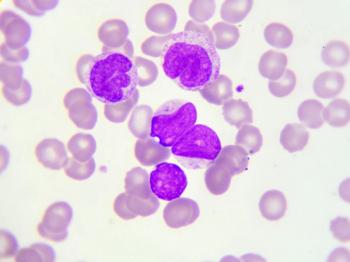
Based on real-world outcomes, there is an unmet need for an effective therapy to be used among patients aged 75 years or older with relapsed/refractory diffuse large B-cell lymphoma.

Long-term data showed no difference in the clinical benefit between the treatments for HER2-negative early breast cancer with homologous recombination deficiency.
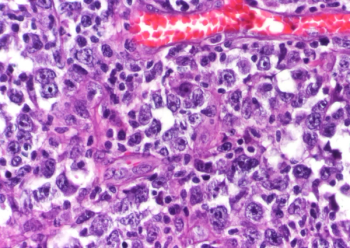
Although patients with Richter syndrome often experience poor outcomes, there are many new treatment strategies that have demonstrated a durable response.
Expert discusses the effect of baseline transfusion burden and luspatercept dose level on response to treatment in patients with LR-MDS from the MEDALIST study.

Expert discusses the results of a trial assessing immune reconstitution in adult patients who received Orca-T, consisting of hematopoietic stem/progenitor cells, regulatory T cells, and conventional T cells.
Expert discusses clinical outcomes of the phase 3 ZUMA-7 trial assessing axicabtagene ciloleucel versus standard-of-care in second-line large B-cell lymphoma by metabolic tumor volume.
Expert discusses the safety and efficacy of polatuzumab vedotin combined with rituximab, ifosfamide, carboplatin, and etoposide (R-ICE) as second-line treatment in a multicenter phase 2 study.
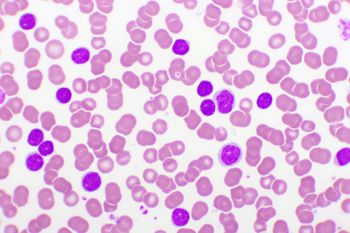
Expert discusses analysis of phase 3 MEDALIST trial data aimed to assess the probability of greater overall survival and progression-free survival benefit from luspatercept vs placebo.

Low socioeconomic status was associated with greater in-hospital mortality and decreased use of advanced therapeutic options.
In recent decades, clinical trials have grown increasingly restrictive and exclusive, which has impacted the inclusivity and diversity of selected trial participants.

Following a phase 2 analysis of OP-1250 with palbociclib, researchers recommend an OP-1250 dose level of 120 mg/day for future trials.

Guidelines for HER2-low expressed cancer could define who and how patient recieve drugs, said expert live from San Antonio Breast Cancer Symposium 2022.
At 3 and 6 months, rivaroxaban was found to be as effective and safe as apixaban in the composite outcome of recurrent venous thromboembolism or bleeding-related hospitalization.

The phase 3 clinical trial shows that the 5-year OS for patients with HR+/HER2- advanced breast cancer in the abemaciclib plus fulvestrant group was 41.2% vs 29.2% for the placebo arm.
OP-1250 and palbociclib showed “enhanced suppression of tumor growth” in preclinical mouse model studies, according to expert who presented his findings in a poster at the San Antonio Breast Cancer Symposium 2022.

Expert sits with Pharmacy Times to share the promising results of a study that evaluated the safety of a new antibody drug conjugate with radiation therapy.

Results from the phase 3 CAPItello-291 clinical trial show that the combination doubled the median progression-free survival compared with the placebo in patients with HR-positive, HER2-negative advanced breast cancer.

BYLieve clinical trial data indicate long-term and very-long-term data disease control was observed in 25.6% and 16.5% of patients, respectively, with PFS at 24.8 and 29.4 months in patients with HR-positive, HER2-negative advanced breast cancer.

Efficacy and safety profile in combination with alpelisib is comparable to that reported in the BYLieve and SOLAR-1 clinical trials, according to a poster presentation at the San Antonio Breast Cancer Symposium.

Pharmacy Times will be covering the 64th American Society of Hematology (ASH) Annual Meeting and Exposition, which gathers pharmacy professionals working in malignant and classical hematology in New Orleans, Louisiana.

Based on the ALIFE 2 trial results, the investigators do not advise the routine use of low-molecular-weight heparin in women with recurrent pregnancy loss and confirmed inherited thrombophilia.

Dawn L. Hershman, MD, MS, Columbia University Medical Center, New York, NY, presents her findings at the 2022 San Antonio Breast Cancer Symposium.

Researchers discovered the most common single gene mutation that causes treatment-resistance in first- line ER-positive or HER2-negative breast cancer treatment with a CDK4/6 inhibitor.

Clinical trial results found that second-line treatment with trastuzumab deruxtecan led to significantly longer overall survival compared with trastuzumab emtansine.