

Pharmacy Times is covering the American Pharmacists Association (APhA) Annual Meeting & Exposition in Phoenix, Arizona from March 24 to 27, 2023.
Pharmacy Times is covering the American Pharmacists Association (APhA) Annual Meeting & Exposition in Phoenix, Arizona from March 24 to 27, 2023.

Michael D. Hogue, PharmD, FAPhA, FNAP, FFIP, discusses current outlook on the occurrence of outbreaks of vaccine-preventable diseases in the country.

Specifically, 3 new drugs for sickle cell disease are providing options for patients who are not responding to hydroxyurea.

In addition to improving working conditions for current employees, burnout must be addressed in order to recruit and retain new employees and alleviate understaffing.
Since 2014, 10 immunotherapies have been approved by the FDA, including 6 CAR T-cell therapies and 4 BiTE therapies.

Although state efforts can be impactful, Downs said enforcement is a major hurdle.

Among patients with lung cancer, approximately 20% have the earliest stage of disease but are still dying of metastatic lung cancer within about 5 years.

Drugs such as pembrolizumab, sacituzumab govitecan, and datopotamab deruxtecan all have growing bodies of evidence illustrating which patients with cancer are most likely to benefit and in which settings.
Research has even shown that cancer diagnosis can be significantly improved using AI, with real-time data updates, personalized attention, and ultimately better results at lower costs.

Despite tensions that can occur, building relationships with health systems and finding opportunities to collaborate is crucial to improve cancer care.

Shiela Plasencia, director of practice support at the Community Oncology Alliance, discussed COA’s new tool to help practices prepare for the Enhancing Oncology Model.

Nick Ferreyros, managing director of policy, advocacy, and communications at the Community Oncology Alliance, discussed the Alliance’s efforts surrounding PBMs and 340B reform.
There is no single thing that can prevent all cancer risk, but there are 6 pillars of lifestyle that people can adopt to best prevent the disease.

Pharmacists are the best resource at cancer center practices to ensure patients with cancer do not need to make the choice to stop or delay therapy due to financial reasons.
CRISPR technology has also been successful in treating a pediatric patient with T-cell acute lymphoblastic leukemia, showing feasibility of its use for cancer immunotherapy.

Pharmacy departments can be one of the most expensive departments in a cancer center practice, but the revenue generated for its services typically far outpaces associated costs.
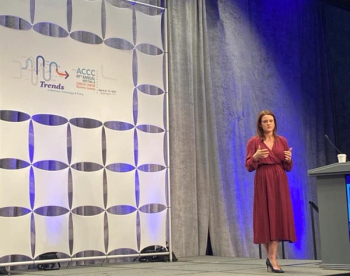
Cancer Moonshot Initiative launched efforts to investigate how to better support patients with cancer by providing support in the navigation of the diagnosis, treatment, and survival of cancer.

AI-enabled algorithms can also augment clinical decision making for health care professionals using real-time data analysis and decision support to treat patients more efficiently and accurately.

Through automated tools related to scheduling, prior authorization, and radiation planning tasks, there are efforts to shorten the time from diagnosis to treatment to improve patient outcomes.
Vaccination rates were significantly higher in study groups who received a letter highlighting the potential cardiovascular benefits of vaccination and who received repeat letters about the importance of flu vaccination in general.

Deep learning AI models like ChatGPT health care edition, coupled with applications targeting pain points in practice workflow, present a very exciting vision for the future.

The proportion of patients prescribed high-intensity statin therapy increased by 3.8% across all clinics in the intervention arm.

Study participants without co-pays were slightly more likely to take their medications as prescribed for several medication classes.

Sheldon Litwin, MD, a cardiologist at the Medical University of South Carolina, discussed the significant recent advances in anti-obesity drugs.

Donna Ryan, MD, discussed her presentation about pharmacological approaches for obesity, which patients they are indicated for, and considerations for pharmacists.

The 2022 American Heart Association, American College of Cardiology, and Heart Failure Society of America guidelines recommend SGLT2 inhibitors for nearly all patients in cardiovascular practice.

Pharmacists play a vital role in ensuring that patients can afford their medications, either by advising them on more affordable options or working with insurers and prescribers to find cheaper alternatives.

Although scientists have long been working on anti-obesity medications, several key failures in recent decades have made this a challenge.

Because of the complexities of cardio-oncology medication regimens, pharmacists are vital to assess drug-drug interactions using multiple resources, such as databases, case reports, FDA and National Institutes of Health guidelines, and package inserts.

Findings from the AFFIRM trial found increased risks after stopping oral anticoagulant therapy after rhythm control, and the same is true for stopping treatment with oral anticoagulants after successful ablation.