

Bola Olagunju, PharmD; and Vicki Saengkheune, PharmD, stress that medication is an important tool in the care of patients with obesity, and improving one disease state can help others improve as well.
Bola Olagunju, PharmD; and Vicki Saengkheune, PharmD, stress that medication is an important tool in the care of patients with obesity, and improving one disease state can help others improve as well.
Katelyn O'Brien, PharmD, emphasizes sick-day management and preprocedure holds to lower euglycemic DKA risk with sodium-glucose cotransporter 2 (SGLT2) inhibitors.
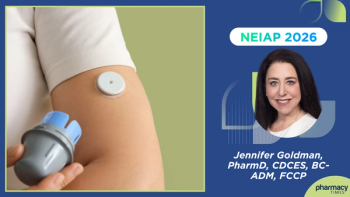
With a dual glucose-ketone monitor now available, pharmacists must interpret the data and give patients a clear DKA action plan, Goldman says.
Kelsey Norman, PharmD, says addressing provider inertia and asking about adherence at every visit are central to proprotein convertase subtilisin kexin type 9 (PCSK9) inhibitor success.

A prospective observational study found microplastics more frequently and at higher levels in lung samples from patients with lung malignancies, although the findings do not establish that the particles cause cancer.
Updated guidelines call for earlier primary aldosteronism screening in stage 2 hypertension, opening a clear role for pharmacists, says Anthony Ishak.

At the 2026 New England Institute of Ambulatory Care Pharmacists (NEIAP) Annual Forum, Jennifer Goldman detailed how monitoring data drive engagement—and how a new dual sensor readies pharmacists for ketone alerts.

Vicki Saengkheune, PharmD; and Bola Olagunju, PharmD, describe a collaborative clinic where pharmacists titrate therapy, provide counseling, and remove access barriers.

Jackie Burke, PharmD, has advice for strengthening collaborative drug therapy management (CDTM) in a year: ask leaders what they need, then pilot one focused, trackable, reportable workflow.

Jackie Burke, PharmD, says the widest collaborative drug therapy management (CDTM) gap is operational—implementing workflows and showing outcomes, not proving pharmacists' clinical expertise.
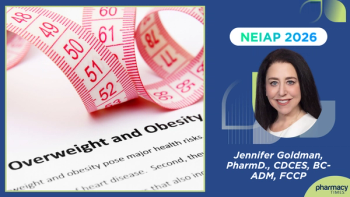
The strongest antiobesity medication candidates are chosen by overall health and comorbidities like heart failure, CKD, and sleep apnea, not weight alone.

Phase 2 DeLLphi-309 data show comparable activity in previously treated SCLC with less frequent dosing.

Katelyn O'Brien, PharmD, says a shared view of cardio-kidney-metabolic syndrome lets pharmacists unify care across endocrinology, cardiology, and nephrology.

Kelsey Norman, PharmD, says pharmacists' longer visits and collaborative practice agreements make them well positioned to get patients to low-density lipoprotein (LDL) goals.

Anthony Ishak, PharmD, explains how the PREVENT risk estimator helps pharmacists calibrate dose intensity and move stage 2 patients to combination therapy.
From statins after 70 to aspirin-free STEMI care, the pharmacist takeaway across 13 trials: identify disease earlier, treat precisely, deliver reliably.
From enlicitide to Lp(a)-lowering siRNAs, a look at the add-on therapies helping high-risk patients reach stricter LDL targets below 55 mg/dL.
Craig Beavers, PharmD, breaks down CARDIO-TTRansform, SINGLE-AF, and POET II—and what each means for anticoagulation, stewardship, and monitoring.
Andrew Bzowyckyj, PharmD, explains how pharmacists can use albuminuria, ejection fraction, and inflammation to drive earlier CKM risk stratification and patient care.
Kidney-protective therapy is now layered. How pharmacists screen, stage by KDIGO, stagger ACE/ARB, SGLT2, GLP-1, and finerenone, and cut CV risk.
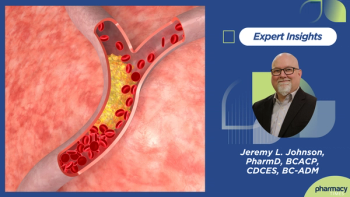
Older triglyceride drugs manage only 10% to 30% reductions; newer injectables go far further, with FCS as their first key role.
Stacey Cutrell, PharmD, BCACP, CDCES, on the PREVENT calculator, screening for secondary causes, intensive BP targets, and fixing stubborn blood pressure.

Susan Cornell, PharmD, CDCES, FAPhA, FADCES, explains how pharmacists can spot metabolic dysfunction-associated steatotic liver disease (MASLD) risk, weigh GLP-1 and MASH therapies, and pair medication with lifestyle change.

Before escalating therapy, Stacey M. Cutrell, PharmD, urges pharmacists to rule out pseudo-resistance and nonadherence driving stubborn blood pressure.

Finerenone, SGLT2s, and GLP-1s each target a different driver of CKD—pharmacists can tie every drug to a matching lifestyle change for adherence.
Jeremy Johnson, PharmD, on how oral and injectable proprotein convertase subtilisin/kexin type 9 (PCSK9) inhibitors are helping high-risk patients hit LDL targets statins alone can't reach.

Framing systemic inflammation as a “slow burn” helps patients see why SGLT2 inhibitors and GLP-1s work across diabetes, heart failure, and CKD.

Chronic kidney disease (CKD) in diabetes is often caught late. Standardized eGFR and UACR screening plus thoughtful sequencing can slow progression and cut CV risk.
From dietitian referrals to setting realistic weight-loss expectations, Cornell maps the pharmacist's place on the MASLD team.
UNC Health's Stacey Cutrell breaks down the PREVENT calculator, secondary-cause screening, and special-population guidance for pharmacists.