

Chronic Kidney Disease
Latest News
Advertisement
Latest Videos



Shorts

0:45
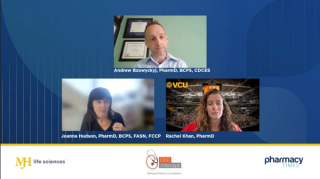
CKM Syndrome: A Comprehensive Lens for Patient Care
2 months ago
by
Andrew Bzowyckyj, PharmD, BCPS, CDCES, FADCES, FAPhA, FCCP(+1 more)

1:01
Why Stable CKD Prevalence Hides a Growing Problem—And How to Find It
3 months ago
by
Ashish Verma, MBBS(+2 more)
1:17
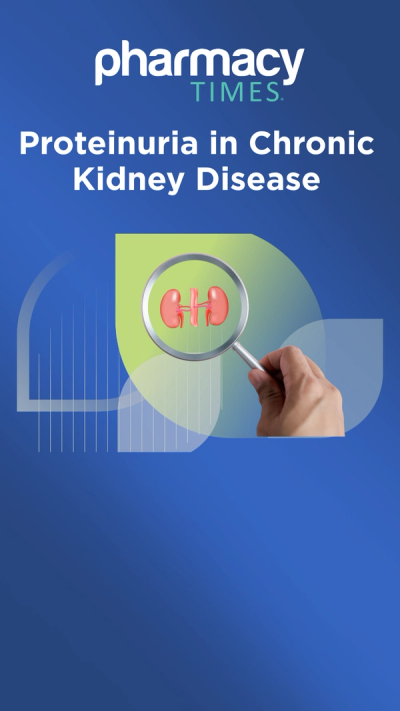
Why Reducing Proteinuria Can Lower Your Risk of Kidney Disease
6 months ago
by
Luke Halpern, Associate Editor

0:50
The Essential Role of Pharmacists in Early CKD Detection
8 months ago
by
Muthiah Vaduganathan, MD, MPH(+1 more)

0:34
A Missed Risk Enhancer: How a Routine Urine ACR Test Can Detect Hidden CKD
a year ago
by
Neerja Balachander, MBBS, PhD(+1 more)

0:31
Spotting and Fixing Medication Problems Before They Arise
a year ago
by
Sarah Nelson, PharmD(+1 more)
Advertisement
More News
Publication, conference dissemination, and guideline inclusion are needed for uptake, which has historically been poor for chronic kidney disease (CKD) outcome sets.
A minimum agreed set of outcomes could let pharmacists compare chronic kidney disease (CKD) interventions head-to-head and cut the heterogeneity that has long muddied trials.

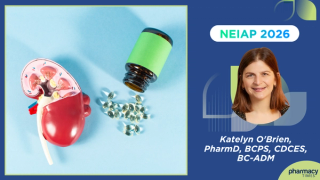
Five "essential" outcomes, including medication error and adherence, should anchor every pharmacist intervention study in chronic kidney disease.
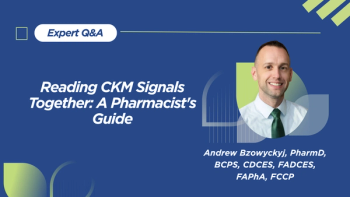
Andrew Bzowyckyj, PharmD, explains how pharmacists can use albuminuria, ejection fraction, and inflammation to drive earlier CKM risk stratification and patient care.
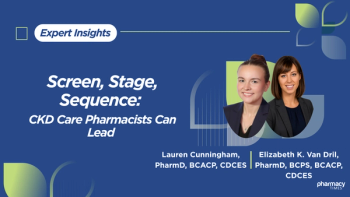
Kidney-protective therapy is now layered. How pharmacists screen, stage by KDIGO, stagger ACE/ARB, SGLT2, GLP-1, and finerenone, and cut CV risk.

Finerenone, SGLT2s, and GLP-1s each target a different driver of CKD—pharmacists can tie every drug to a matching lifestyle change for adherence.

Framing systemic inflammation as a “slow burn” helps patients see why SGLT2 inhibitors and GLP-1s work across diabetes, heart failure, and CKD.

Chronic kidney disease (CKD) in diabetes is often caught late. Standardized eGFR and UACR screening plus thoughtful sequencing can slow progression and cut CV risk.

From patient selection to prior authorization: Tim Pflederer, MD, on delivering guideline-directed CKD care beyond the 15-minute visit.
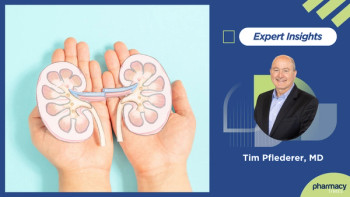
A nephrologist makes the case that value-based care is team-based care—with pharmacists, care managers, and dietitians in the loop.
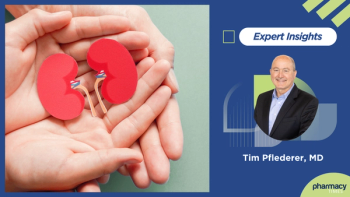
Tim Pflederer, MD, of Evergreen Nephrology, explains why proteinuria, diabetes, and heart failure all point toward the same 2 drug classes.

Brendon Neuen, PhD, MBBS, discusses findings from the FIND-CKD study showing that finerenone benefits patients with nondiabetic chronic kidney disease (CKD) and glomerular disease, as well as those receiving combination SGLT2i therapy.

The autoinjector provides an accessible, at-home option for patients with chronic kidney disease or heart failure who need treatment for fluid buildup.

Pharmacist outreach at VA doubles SGLT2 inhibitor starts in diabetes and CKD, helping close cardiorenal guideline gaps.

A machine learning–triggered nephrology consultation did not reduce peak creatinine changes in hospitalized patients at high risk for stage 2 AKI.

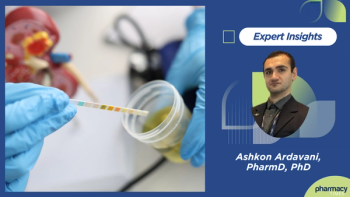
Nephrology experts Ashish Verma, MBBS, and Sophie Claudel, MD, discuss why estimated glomerular filtration rate alone misses chronic kidney disease and how pharmacists can help drive earlier detection.

Boston University researchers say flat chronic kidney disease (CKD) prevalence conceals a growing diabetes-linked burden, and pharmacists have a key role in closing screening gaps.
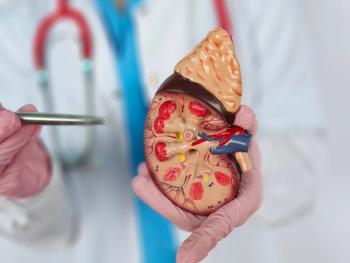
New findings show chronic kidney disease affects the same share of US adults as in 2013, although the disease is increasingly tied to diabetes and heart conditions.
FDA grants accelerated approval to atacicept-vymj for IgA nephropathy proteinuria, backed by ORIGIN clinical trial results.

CKD Stage Predicts Mortality and Dialysis Dependence in Critically Ill Patients
Published: | Updated:
A study found worsening chronic kidney disease (CKD) severity was independently associated with increased mortality risk and exponentially higher rates of kidney replacement therapy initiation following ICU admission.
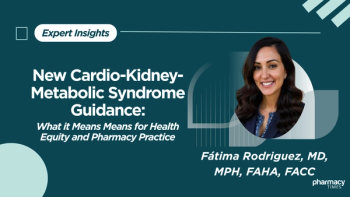
Fátima Rodriguez, MD, explains how the new cardiovascular-kidney-metabolic (CKM) syndrome guideline addresses health equity, risk prediction, and the pharmacist's role in care.

Landmark data from three major trials published simultaneously suggest finerenone may protect kidney function and reduce cardiovascular risk across a far broader CKD population than current guidelines recognize.

High-dose semaglutide shows improved kidney markers and lowers inflammation in obesity without diabetes, suggesting benefits beyond weight loss.
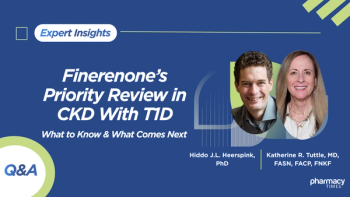
With no new kidney-protective therapies approved in T1D for over 3 decades, experts break down the clinical significance of finerenone's FDA priority review and what pharmacists need to know.

If approved for this indication, finerenone would become the first nonsteroidal mineralocorticoid receptor antagonist indicated for adults with type 1 diabetes and CKD.
Advertisement
Advertisement
Trending on Pharmacy Times
1
Finerenone Expands MRA Options as Pharmacists Address Underrecognized HFpEF
2
Diuretics, eGFR, and Intensive BP Lowering in CKD: What to Watch
3
Finerenone in Heart Failure: Evidence and Practice a Year Later
4
5 Breast Cancer Advances in 2026—And The Questions They Leave Unanswered
5