
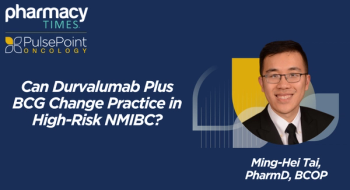
In an interview with Pharmacy Times, Ming-Hei Tai, PharmD, BCOP, discusses whether durvalumab plus BCG offers enough clinical benefit to change practice in high-risk non–muscle-invasive bladder cancer.
In an interview with Pharmacy Times, Ming-Hei Tai, PharmD, BCOP, discusses whether durvalumab plus BCG offers enough clinical benefit to change practice in high-risk non–muscle-invasive bladder cancer.

Angie Maynard, PharmD discusses RCC immunotherapy guidelines, treatment selection, toxicity management, and pharmacists’ clinical role.

Modern pharmacists increasingly serve as translators, helping patients navigate health care complexity, reduce confusion, and improve understanding through meaningful conversations.
FDA advisory vote boosts access hopes for peptide supporters, but compounding stays illegal pending rulemaking.

Preclinical data show a GLP-1 receptor agonist reprogrammed lung macrophages and prevented post-COVID pulmonary fibrosis in diabetic mice.
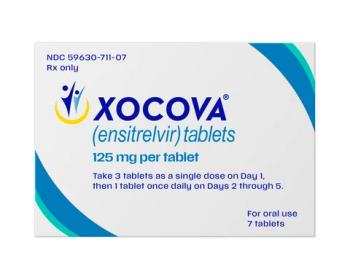
FDA clears ensitrelvir oral postexposure pill to prevent symptomatic COVID-19 after close contact, cutting infections in household trial with comparable safety.
Although the FDA committee's vote does not change what is currently legally available, it signals where the regulatory landscape is heading in the future.

The FDA approved SimpleScreen CRC, a blood-based screening test for average-risk adults aged 45 years and older, which may expand screening access.
Agitation associated with Alzheimer disease carries clinical challenges, and Auvelity's approval can reshape treatment selection, safety monitoring, and the pharmacist's role.

Erica Marini, PharmD, and Millad Sobhanian, PharmD, BCPS, unpack Auvelity's approval, efficacy data, and safety profile for treating agitation in Alzheimer disease.
Tim Pflederer, MD, of Evergreen Nephrology explains why proteinuria, diabetes, and heart failure all point toward the same two drug classes.

Food as Medicine programs that do not include pharmacist-led food-drug interaction screening are clinically incomplete.

Hackensack Meridian Health uses a multifaceted approach to diversion auditing and DEA/state reporting requirements, and is beginning to integrate artificial Intelligence (AI) to shift surveillance from a reactive to a proactive process.
Subcutaneous isatuximab could compete with daratumumab in multiple myeloma by combining a hands-free on-body delivery system with potential workflow, patient-experience, and mechanistic advantages.

Taking a new medication is a step toward healing, but danger may lie in how different drugs, supplements, and even foods and drinks react behind the scenes.

Updated phase 1/2 findings showed that emavusertib-based therapy produced responses in both BTK inhibitor–naïve and BTK inhibitor–treated patients with relapsed or refractory primary central nervous system (CNS) lymphoma.
Seth Martin, MD, MHS, discusses a simplified machine-learning equation that helps labs deliver more accurate LDL-C results at no cost.

Most websites selling GLP-1 receptor agonists prescribed medication with minimal clinical vetting, raising safety concerns pharmacists should be aware of.

Deepika Nayyar outlines how HMH built a multidisciplinary drug diversion prevention program and shares the core elements any institution needs to detect and respond to diversion effectively.

Pharmacists can use motivational interviewing as a technique to encourage influenza vaccination.

Ravulizumab-cwvz did not significantly improve 26-week event-free survival in adults and adolescents with HSCT-associated thrombotic microangiopathy.

Pharmacists can provide updated vaccine recommendations and offer immunizations during MTM consults.

The review combines mechanistic and real-world evidence to guide health care professionals through different scenarios in the MS treatment space.
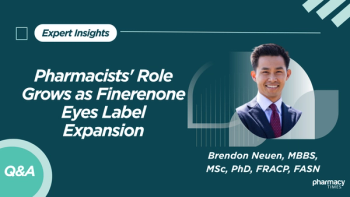
Brendon Neuen, PhD, MBBS, discusses findings from the FIND-CKD study showing that finerenone benefits patients with nondiabetic chronic kidney disease (CKD) and glomerular disease, as well as those receiving combination SGLT2i therapy.

Adding consolidative thoracic radiotherapy to atezolizumab maintenance increased serious and fatal adverse events without improving survival in patients with ES-SCLC.
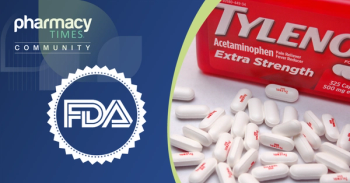
The FDA approved Tylenol with Naproxen, the first OTC fixed-dose combination of acetaminophen and naproxen sodium, for up to 12 hours of relief from minor aches and pains in patients 12 years and older.
This week's episode covers a new AHA scientific statement on caffeine safety and cardiovascular benefit; pharmacist guidance for protecting patients with asthma, COPD, and allergies during wildfire smoke events; and regulatory updates in obstructive sleep apnea and ROS1-positive lung cancer.
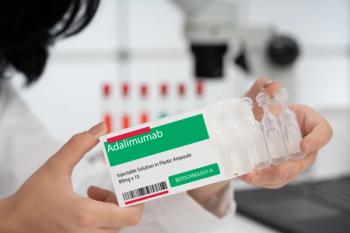
Data show adalimumab biosimilars can replace brand-name treatment with minimal gaps, high persistence, and sharply lower drug costs for patients and plans.

A yearlong trial suggests the tuberculosis vaccine may retrain immune cells in the brain and shift Alzheimer-related biomarkers in older adults without existing pathology.
In an interview with Pharmacy Times, Erin J. Walsh, PharmD, MS, RPh, discusses where VER-01 could fit within chronic pain management and why advances in standardized cannabinoid therapies may represent a pivotal moment for the future of evidence-based cannabis-derived medicines.