
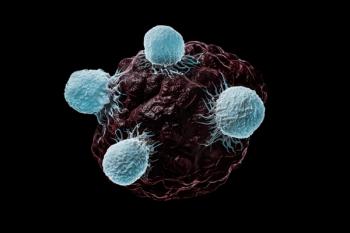
Preclinical research identifies tumor-secreted PRDX1 as a potential “redox checkpoint” that suppresses T-cell activity and may contribute to resistance to immune checkpoint inhibitors.
Preclinical research identifies tumor-secreted PRDX1 as a potential “redox checkpoint” that suppresses T-cell activity and may contribute to resistance to immune checkpoint inhibitors.

The Cleveland Clinic team's real-world findings presented at ESC 2026 are hypothesis-generating and need prospective confirmation but point to a low threshold for OSA screening.

In an interview with Pharmacy Times, Claudia R. Morris, MD, lead investigator and author of the phase 3 STArT trial and a pediatric emergency medicine physician at Children’s Healthcare of Atlanta, discussed the need for more meaningful end points in sickle cell pain trials, future research targeting acute chest syndrome, and how pharmacists can improve the collection of opioid-use data.

Titilola M. Afolabi discusses how gaps in pediatric-specific evidence shaped her path into research and highlights the interdisciplinary studies that have defined her career.

Clear governance, appropriate oversight, and alignment among technology, policy, and payment will be essential.
Publication, conference dissemination, and guideline inclusion are needed for uptake, which has historically been poor for chronic kidney disease (CKD) outcome sets.

A single-center study found similar 12-month total weight loss whether or not patients used a glucagon-like peptide-1 (GLP-1) receptor agonist before surgery.

Learn how pharmacists guide older adults through polypharmacy with safer OTC choices and MTM reviews that prevent interactions and simplify regimens.

Long-lived monocyte-derived cells in the lung help sustain tissue-resident memory T cells after influenza infection, and researchers say the discovery could inform more effective nasal flu vaccines.

A prospective multicenter study found high response rates with first-line obinutuzumab plus bendamustine across several indolent B-cell lymphoma subtypes, although short follow-up and the absence of a comparator limit conclusions about long-term benefit.

Milind Desai, MD, MBA, explains the domino effect linking obesity, obstructive sleep apnea, and hypertrophic cardiomyopathy—and why treating obesity may break the chain.

An ifosfamide shortage prompts cancer treatment concerns and new importation efforts.

This issue's content reflects a specialty that is clinically rigorous and structurally evolving.

Blood Cancer Awareness Month highlights types of blood cancer and how pharmacists flag multiple myeloma symptoms early, speeding referral and care.

A prespecified analysis found the PCSK9 inhibitor reduced total events 20% in high-risk patients with no prior heart attack or stroke.

State boards of pharmacy are at the center of this issue and must be positioned and resourced to protect patient safety first.

In an interview with Pharmacy Times, Claudia R. Morris, MD, lead investigator and author of the phase 3 STArT trial and a pediatric emergency medicine physician at Children’s Healthcare of Atlanta, discussed how treatment timing and patient heterogeneity may inform the design of future sickle cell pain trials.

Independent pharmacies should build documentation, watch rulemaking, and press for transparency terms in every contract renewal.

Zilganersen, an antisense oligonucleotide targeting glial fibrillary acidic protein, is cleared for pediatric and adult patients across all ages.

Pediatric and obstetric groups expand high-risk criteria and extend vaccination windows as federal vaccine guidance remains unsettled.

A real-world analysis of matched adults links glucagon-like peptide-1 (GLP-1) receptor agonist use to fewer major cardiovascular events, driven by a mortality benefit.
A minimum agreed set of outcomes could let pharmacists compare chronic kidney disease (CKD) interventions head-to-head and cut the heterogeneity that has long muddied trials.

Trial investigator Claudia R. Morris, MD, said substantial variation in pain phenotypes, treatment practices, and trial end points may offer broader lessons for future acute sickle cell disease research.

Both virtual and in-person interviews have their benefits.

In an interview with Pharmacy Times, Claudia R. Morris, MD, lead investigator and author of the phase 3 STArT trial and a pediatric emergency medicine physician at Children’s Healthcare of Atlanta, discussed how patient history and institutional pain-management practices may influence time to crisis resolution and how care teams, including pharmacists, can help standardize treatment.

This episode covers the importance of considering vaccine timing, selection, and hesitancy in patients on immunomodulating and immunosuppressive therapies, along with emerging data linking several vaccines to reduced dementia risk.

Time-to-vaccination data from a large diabetes cohort reveal delayed, incomplete uptake of pneumococcal vaccination, with age and citizenship emerging as the strongest predictors.

The phase 3 findings support MR-107A-02's potential as a nonopioid option for certain patients with moderate to severe acute pain.

Five "essential" outcomes, including medication error and adherence, should anchor every pharmacist intervention study in chronic kidney disease.

Melissa Seifert, PharmD, of UPMC Health Plan, explains how managed care pharmacists guide DMT selection and address adherence barriers in patients with MS.