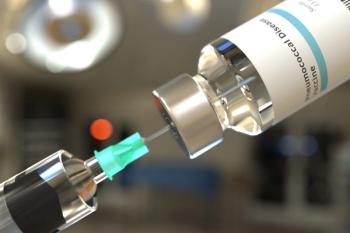
VAX-31 met all primary end points against PCV20 and PCV21 in the pivotal phase 3 OPUS-1 trial.
Making cannabidiol water-soluble could reduce dissolution and food-related variability, but improved aqueous behavior has not yet been shown to produce better clinical outcomes.
Putting a poorly water-soluble molecule into an oral dosage form does not guarantee that a predictable fraction of the dose will reach the systemic circulation. Cannabidiol (CBD) presents this problem clearly: the drug substances are highly lipophilic and insoluble in water, whereas oral exposure is affected by dissolution, gastrointestinal conditions, food, formulation composition, and extensive presystemic metabolism.1,2
The pharmaceutical question is therefore narrower than whether a formulation can make CBD really “dissolve” in water. The useful question is whether increasing aqueous solubility or maintaining CBD in a readily absorbable dissolved state can produce more reproducible intestinal absorption and systemic exposure. Asking this question matters because dissolution is only one step in the oral absorption process.
For an orally administered poorly soluble compound, the amount available for absorption can be limited by the rate and extent of dissolution. Increasing the dissolved concentration can increase the concentration gradient driving absorption across the intestinal epithelium. But once dissolution is no longer the rate-limiting step, permeability, intestinal metabolism, transport, gastrointestinal degradation, and hepatic first-pass metabolism can become more important determinants of exposure.
CBD illustrates the problem clearly. Estimates of absolute oral bioavailability have historically been limited by the absence of paired intravenous and oral studies. A pharmacokinetic review estimated fasting oral bioavailability at approximately 6%, while emphasizing the uncertainty surrounding the estimate.2 A separate systematic review of human CBD pharmacokinetics found substantial heterogeneity among studies and formulations, with food and lipid formulations consistently affecting exposure.1
First-pass metabolism also constrains what increased dissolution can accomplish. CBD undergoes extensive metabolism, and its systemic exposure reflects both gastrointestinal absorption and presystemic elimination. Thus, a formulation that increases the amount of CBD dissolved in intestinal fluid may increase absorption without producing a proportionate increase in plasma exposure if metabolism becomes the dominant limitation.2
Food provides a useful real-world demonstration of how formulation and physiology interact. In a randomized pharmacokinetic study of adults with refractory epilepsy, administration of a purified CBD capsule with a high-fat meal increased mean maximum plasma concentration (Cmax) approximately 14-fold and area under the concentration-time curve from zero to infinity (AUC 0-¥) approximately 4-fold compared with fasting administration.3,4 The current US prescribing information for cannabidiol (Epidiolex; Jazz Pharmaceuticals) similarly reports substantially higher exposure with food and recommends consistent administration with respect to meals to reduce variability in CBD plasma exposure.5
A formulation that genuinely reduces dependence on dietary fat could therefore have a practical pharmacokinetic advantage even if its absolute bioavailability were not dramatically higher. The relevant end point would be lower within-person and between-person variability under realistic dosing conditions, not simply a larger peak concentration.
The term “water-soluble CBD” can obscure important differences in formulation science. True molecular aqueous solubility means that CBD itself is present in the aqueous phase at equilibrium. By contrast, an emulsion may disperse CBD-containing oil droplets throughout water. A micellar system may incorporate CBD into surfactant assemblies. A liposome may associate the drug with a lipid bilayer. And, finally, a nanosuspension may reduce particle size sufficiently to accelerate dissolution. These approaches can markedly increase apparent solubility or the amount of drug maintained in a dispersed system without changing the intrinsic aqueous solubility of the CBD molecule.
It is essential to make that distinction because it does not make colloidal or lipid-based delivery systems inferior. For a lipophilic compound, maintaining the drug in a solubilized or dispersed state during gastrointestinal transit can be precisely the desired mechanism. Self-emulsifying systems, for example, can form fine oil-in-water dispersions after dilution in gastrointestinal fluid and can maintain a poorly soluble drug in a state that favors absorption.6
CBD formulation research provides several examples. In one study, amorphization of CBD increased aqueous solubility and accelerated dissolution compared with crystalline CBD. Cyclodextrin-based formulations, mesoporous silica systems, and polymeric formulations were subsequently evaluated to stabilize the amorphous state and maintain the solubility advantage.7 The central limitation was physical stability because an amorphous material has greater thermodynamic activity than the crystalline drug and can recrystallize.
Lipid-based approaches the problem through a different mechanism. In a study comparing medium-chain triglycerides, glyceril monolinoleate, and a self-emulsifying drug delivery system (SEDDS), the SEDDS produced the greatest recovery of CBD AUC than the comparator lipid formulations.8 The result supports improved delivery from a lipid-based system. It does not, however, establish that CBD itself became intrinsically water-soluble.
Other formulation work has produced similar distinctions. A hot-melt-extruded solid SEDDS increased in vitro CBD dissolution investigation rather than a human pharmacokinetic trial.9 A 2025 SEDDS study likewise reported improved dissolution and pharmacokinetic performance in experimental models, illustrating how excipient composition can affect CBD exposure independently of any change in the molecule’s intrinsic aqueous solubility.10
Molecular modification represents a different position. CBD prodrugs can be designed to change the physicochemical properties. And subsequently release CBD after administration. A 2024 study described morpholinyl CBD prodrugs with improved solubility and oral exposure in preclinical experiments.11 Such compounds should not be described simply as “water-soluble CBD,” because the administered chemical entity is different from CBD and must be evaluated for conversion, stability, pharmacology, and safety.
The human evidence already shows that formulation can change CBD exposure. In a 2024 double-blind crossover study, a lipid formulation produced approximately 9-fold greater CBD AUC0-48 than a powder formulation after a 1000-mg dose in fasting healthy volunteers.12 That is a substantial pharmacokinetic difference, but it does not isolate aqueous solubility as the causal variable. Lipid digestion, drug solubilization, intestinal lymphatic transport, and effects of formulation excipients could all contribute.
More recent work illustrates why the phrase “water-soluble” still requires scrutiny. In a randomized study of a nano-dispersible CBD oral solution, 300 mg was administered to healthy men under fasting or fed conditions. Food increased CBD AUC0-¥ approximately 3-fold and Cmax approximately 1.3-fold and delayed Tmax.13 The study demonstrates that a nano-dispersible formulation can produce measurable systemic exposure, but it does not establish superiority over a conventional CBD formulation, nor does it show that nano-dispersion eliminates food effects.
A 2024 systematic review and meta-regression analysis encompassing 112 trial arms from 39 human studies also found that diet, dose, route, and formulation were important determinants of CBD pharmacokinetics. The heterogeneity across studies remains substantial, and the available evidence does not establish a single formulation mechanism as consistently superior.14
This distinction becomes particularly important when interpreting Cmax and AUC. A higher Cmax may indicate faster or greater absorption, but it can also increase concentration-dependent adverse effects without improving therapeutic response. A larger AUC indicates greater systemic exposure, not necessarily greater pharmacodynamic benefit. Conversely, a formulation that produces a lower Cmax but more reproducible AUC could theoretically be preferable for a drug in which excessive peak exposure is undesirable. Those hypotheses require clinical testing rather than extrapolation from dissolution data.
A convincing development program for genuinely water-soluble CBD would need to establish a chain of evidence rather than a single favorable assay.
First, the formulation would need rigorous physicochemical characterization, including equilibrium aqueous solubility, dissolution behavior, solid-state properties, chemical stability, and the concentration of truly dissolved CBD under physiologically relevant conditions. If the system relies on colloidal dispersion, that mechanism should be explicitly characterized rather than described simply as molecular water solubility.
Next would come intestinal permeability and gastrointestinal stability studies, followed by animal pharmacokinetics where appropriate. Those experiments could establish whether increased dissolution translates into greater absorption and whether changes in exposure arise from absorption, lymphatic transport, reduced pre-systemic metabolism, or another mechanism.
Human studies would provide the decisive evidence. A useful comparison would include the same CBD dose administered in a well-characterized reference formulation and the test formulation, ideally under both fasting and controlled-fed conditions. Cmax, Tmax, AUC, dose proportionality, and interindividual variability should be assessed. Repeated-dose studies would be more informative for dosing predictability than a single-dose experiment.
Food-effect studies deserve particular attention. The existing evidence shows that dietary fat can profoundly alter CBD exposure.3,4 If a new formulation is intended to reduce that dependence, the relevant claim is not simply “higher bioavailability.” It is a smaller fed-to-fasted exposure ratio and, ideally, less variability across meals.3,5,14
Only after those pharmacokinetic findings would pharmacodynamic and clinical outcome studies answer the next question: Does the altered exposure profile matter? The FDA-approved cannabidiol formulation has demonstrated efficacy for specific seizure disorders. But that evidence cannot be transferred automatically to another CBD formulation merely because both contain the same active ingredient.5 A new formulation would require its own evidence linking its exposure profile to an established therapeutic effect if a clinical advantage is being claimed.
For pharmacists and pharmaceutical scientists, the most useful formulation claim is therefore a specific one. Improved water solubility describes a physicochemical property. Improved dissolution describes a performance characteristic. Higher AUC describes systemic exposure. None of these terms, by themselves, establishes improved efficacy or a more appropriate dose.
CBD is a good example of why dosage form matters. Two products containing the same nominal amount of CBD can produce different plasma concentration-time profiles because their excipients, physical state, dissolution behavior, lipid handling, and interaction with food differ.1,8,12,14
Could truly water-soluble CBD improve oral dosing? Yes, mechanistically it could.15 Removing dissolution as a major constraint could make the absorbed fraction less dependent on gastrointestinal conditions and potentially make exposure more reproducible. But the current evidence does not justify treating molecular water solubility as a surrogate for higher bioavailability, predictable pharmacokinetics, or clinical benefit. The strongest evidence to date supports the broader proposition that formulation can materially change CBD exposure. Whether true aqueous solubility offers an advantage over effective, lipid, colloidal, amorphous, or other delivery strategies remains a comparative human pharmacokinetic question, followed by a clinical one.
About the Author
Jaclyn Leyson-Azuela, MD, MPH, RMT, is a medical researcher and writer and scientific consultant for Trait Biosciences.