According to the school's published history, in 1955 the University of California San Francisco (UCSF) School of Pharmacy became the second institution in the nation to adopt the Doctor of Pharmacy as its sole professional degree, signaling that pharmacists were clinicians contributing to therapeutic decision-making rather than mere dispensers.1 Seventy years later, the profession still carries a location in its name.
Unlike physicians, dentists, or optometrists, the word "pharmacy" is understood first as a place. Patients go to the pharmacy the way they go to the laboratory or the radiology suite. Yet pharmacists practice across hospitals, ambulatory clinics, intensive care units, research institutions, public health systems, informatics, and precision medicine programs.
This raises a question: Does the shorthand "PharmD" still describe what pharmacists do? The argument is not that a title change would expand pharmacy practice. It almost certainly would not. The argument is that a location-based title is a visible symptom of an unfinished professional transition, one that provider status, payment reform, and scope legislation must ultimately complete.
The Place Problem
Ask what a pharmacist does, and many people describe a counter. Dispensing is essential work, and community pharmacy remains among the most accessible points of care in the health system. Community pharmacists manage chronic disease, counsel on nonprescription therapy, intercept dangerous interactions, and support adherence long before a patient reaches a clinic or emergency department.
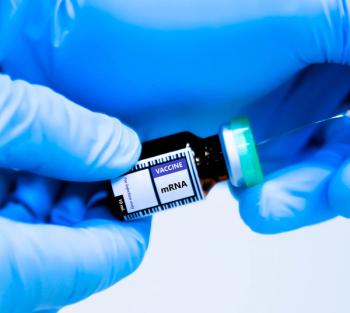
I remember standing alongside colleagues in COVID-19 vaccination clinics, administering hundreds of doses in a single day. No one there was behind a counter. We were screening for contraindications, managing anxious patients, watching for reactions, and moving a population toward protection one arm at a time.
The prefix "Pharm" still emphasizes where that work is thought to happen rather than what it is. In hospitals, pharmacists dose vancomycin and warfarin, lead antimicrobial stewardship, manage critical care regimens, reconcile medications across transitions, and guide pharmacogenomic prescribing. That is clinical decision-making, and it is invisible in the title.
Where "PD" Came From
The alternative shorthand is not an invention. American pharmacy education cycled through a long sequence of credentials before settling on the current one, including the Graduate in Pharmacy, the Pharmaceutical Chemist, the Bachelor of Science in Pharmacy, and eventually the Doctor of Pharmacy.2 The Philadelphia College of Pharmacy, founded in 1821 as the first college of pharmacy in North America, sat at the center of that sequence, and historical accounts describe the institution awarding a "Doctor in Pharmacy" credential abbreviated PD in the late 1800s before it was displaced by later degree structures.3
Two things follow. PD is a recovered term rather than a new one. More important, pharmacy has changed its credential language repeatedly, and each change followed a change in what pharmacists were trained and permitted to do. That precedent is the argument against renaming now.
What the Evidence Supports, and What It Does Not
The claim that pharmacists change outcomes is testable, and it has been tested. In a meta-analysis of 39 randomized trials including 14,224 outpatients, pharmacist care reduced systolic blood pressure by 7.6 mm Hg (95% CI, −9.0 to −6.3; I² = 67%) and diastolic pressure by
3.9 mm Hg (95% CI, −5.1 to −2.8; I² = 83%) versus usual care.4,5 The US Department of Veterans Affairs and Department of Defense hypertension guideline summarizes the same review with somewhat larger effects (8.5 mm Hg systolic and 4.6 mm Hg diastolic over a mean 8-month follow-up).6 Both sets of figures are reported here rather than reconciled.
A systematic review of pharmacist-led chronic disease management found increased attainment of goal blood pressure below 140/90 mm Hg across 7 trials (relative risk, 1.45; 95% CI, 1.241.70) over a median of 39 weeks, but similar numbers of office visits, urgent care and emergency department visits, and hospitalizations at moderate strength of evidence, with mortality and clinical events similar at low strength.7 That review excluded retail pharmacy settings, limiting its reach into precisely the setting the public stereotype governs.7
The RxEACH trial fills part of that gap, because it studied community pharmacists with independent prescribing authority. Among 723 high-risk patients across 56 community pharmacies, the intervention produced a 21% greater relative reduction in estimated cardiovascular event risk at 3 months, with improvements in systolic pressure (−9.37 mm Hg), glycated hemoglobin (HbA1c) (−0.92%), low-density lipoprotein cholesterol (−0.2 mmol/L), and smoking cessation (20.2% absolute difference; P = .002).8 Follow-up was short, and durability was not established.
The other half requires honesty. A Cochrane review of pharmacist services for nonhospitalized patients found these services probably make little or no difference to hospital attendance or admissions (odds ratio [OR], 0.85; 95% CI, 0.65-1.11; 14 trials; N = 3631; moderate certainty) and may make little or no difference to mortality (OR, 0.79; 95% CI, 0.56-1.12; 9 trials; N = 1980; low certainty).9 Low-certainty evidence favored pharmacist services for blood pressure outside target (OR, 0.40; 95% CI, 0.29-0.55; 18 trials; N = 4107), while it remains uncertain whether they reduce the proportion of patients outside the HbA1c target (OR, 0.29; 95% CI, 0.042.22).9
That moderate-certainty null on admissions in unselected outpatients is the most important finding for anyone making this argument in good faith. But honesty cuts both ways. A systematic review of 12 randomized trials enrolling 2060 patients with heart failure found pharmacist care reduced all-cause hospitalization (OR, 0.71; 95% CI, 0.54-0.94) and heart failure hospitalization (OR, 0.69; 95% CI, 0.51-0.94), with collaborative pharmacist care yielding a larger reduction in heart failure hospitalization than pharmacist-directed care (OR, 0.42 vs 0.89).10 Mortality was not significantly affected, and follow-up was generally 6 months or less.10

The pattern is consistent. Effect appears where pharmacists are embedded in a defined pathway for a defined population and disappears where services are merely available.
Integration, Not Presence
In a randomized trial of 1467 hospitalized Danish patients taking 5 or more medications, an extended intervention combining medication review, motivational interviewing, and coordinated primary care follow-up reduced 30-day readmission (hazard ratio [HR], 0.62; 95% CI, 0.460.84), 180-day readmission (HR, 0.75; 95% CI, 0.62-0.90), and the 180-day composite of readmission or emergency department visit (HR, 0.77; 95% CI, 0.64-0.93), with a number needed to treat of 12.11 Basic medication review alone showed no clear effect. Notably, 61% of pharmacist recommendations were implemented in hospital and 66% in primary care. The intervention worked where the care pathway absorbed it.11
Expertise produces measurable outcomes when it is structurally embedded and does not when it is merely available. The same is true of titles.
Why Renaming Is the Wrong First Move
Two objections deserve more than a hedge. First, ambiguity. In clinical documentation, "PD" already denotes Parkinson disease, peritoneal dialysis, pharmacodynamics, personality disorder, and progressive disease. Medication safety has moved consistently toward eliminating ambiguous abbreviations, and pharmacists are the profession most engaged in that work. The argument that context resolves overlap is weakest coming from us.
Second, title changes have historically followed scope expansion rather than caused it. Pharmacists are not federally recognized providers under Medicare Part B and are therefore ineligible for cognitive service reimbursement.12 Credentialing and privileging pathways remain unstandardized across institutions and less established than for physicians, physician assistants, and nurse practitioners.13
Tiered clinical licensure is the modern version of the same experiment. California created the Advanced Practice Pharmacist, North Carolina and Montana the Clinical Pharmacist Practitioner, and New Mexico the Pharmacist Clinician, yet credentialed populations remain small. A survey directed to every certified Pharmacist Clinician in New Mexico and every Clinical Pharmacist Practitioner in North Carolina identified 189 such pharmacists in total in late 2008, with a mean interval of 11 years from initial licensure to advanced certification, and more than one-third reporting they had to justify their position to administrators.14
The obstacle is not the title. In a multistate review of pharmacist payment statutes, California reimburses pharmacist services at 85% of the physician fee schedule with payment issued to the pharmacy rather than the pharmacist. Furthermore, California and New Mexico permit billing only by specified pharmacies or advanced-credentialed pharmacists, Oregon requires contracting with each individual insurer without any payment mandate, and in Alaska, where scope and payor regulations do align, insurance credentialing portals are not configured to enroll pharmacists as billing providers.15 That last detail is the argument in miniature. The authority exists, and the infrastructure blocks it.
About the Author
Kim Madlangbayan is a 2027 PharmD Candidate at the University of California, San Francisco, School of Pharmacy.
The author has no relevant financial relationships to disclose. The views expressed are the author's own and do not represent the University of California, San Francisco. The author used AI-assisted research and editing tool to support literature identification, verification of reported statistics, and reference formatting.
The author gratefully acknowledges Katherine Yang, PharmD, MPH, BCIDP; Joanne Chun, PharmD, PhD; Sharon Youmans, PharmD, MPH; and Jennifer Cocohoba, PharmD, MAS, BCACP, AAHIVP for their thoughtful feedback, mentorship, and encouragement during the development of this commentary. The views expressed and any errors are solely the responsibility of the author.
Awareness compounds the problem. In a survey of 634 New Mexico health care providers, 68% were unaware the state's 2 advanced practice pharmacist designations existed, with cost, billing difficulty, and limited reimbursement cited as barriers, even though 80% agreed pharmacist clinicians should be recognized as providers for reimbursement.16 Among 56 North Carolina physicians supervising Clinical Pharmacist Practitioners, the leading barriers were limited reimbursement (60.7%) and billing difficulties (51.8%), while the benefit ranked first was enhanced clinical outcomes (87.5%).17
Where privileging accompanied the credential, it appeared to matter. In a single-site retrospective analysis at one California community pharmacy, advanced practice pharmacists holding full privileges had 62.2% of recommendations accepted, versus 41.9% under limited privileges and 31.6% with none.18 That finding is suggestive rather than confirmatory.
Naming works only when payment and privileging travel with it. A title unaccompanied by billing authority is a credential almost no one adopts.
What the Question Is Really About
The shorthand debate is a diagnostic rather than a proposal. The persistence of a location-based title, 70 years after UCSF declared pharmacists to be clinicians, reflects a transition that remains incomplete, not in training and not in demonstrated therapeutic effect, but in federal recognition, payment structure, and institutional privileging.
Pharmacists are not physicians, and the value of community pharmacy is not diminished by asking this question. But if the profession continues to present itself primarily through the room where medications are handed across a counter, it should not be surprised when others do the same.
The conversation worth having is not about 2 letters. It is whether pharmacy's language, its payment model, and its scope of practice describe the same profession. Right now, they do not. Pursue provider status and privileging first, and let the title follow the authority rather than precede it.
REFERENCES
Santschi V, Chiolero A, Colosimo AL, et al. Improving blood pressure control through pharmacist interventions: a meta-analysis of randomized controlled trials. J Am Heart Assoc. 2014;3(2):e000718. doi:10.1161/JAHA.113.000718
Dunn SP, Birtcher KK, Beavers CJ, et al. The role of the clinical pharmacist in the care of patients with cardiovascular disease. J Am Coll Cardiol. 2015;66(19):2129-2139. doi:10.1016/j.jacc.2015.09.025
VA/DOD Clinical Practice Guidelines on the Diagnosis and Management of Hypertension (HTN) in Primary Care (2020). Accessed August 11, 2026. https://www.healthquality.va.gov/guidelines/cd/htn/
Greer N, Bolduc J, Geurkink E, et al. Pharmacist-led chronic disease management: a systematic review of effectiveness and harms compared with usual care. Ann Intern Med. 2016;165(1):30-40. doi:10.7326/M15-3058
Tsuyuki RT, al Hamarneh YN, Jones CA, Hemmelgarn BR. The effectiveess of pharmacist interventions on cardiovascular risk: the multicenter randomized controlled RxEACH trial. J Am Coll Cardiol. 2016;67(24):2846-2854. doi:10.1016/j.jacc.2016.03.528
de Barra M, Scott CL, Scott NW, et al. Pharmacist services for non-hospitalised patients. Cochrane Database Syst Rev. 2018;9(9):CD013102. doi:10.1002/14651858.CD013102
Koshman SL, Charrois TL, Simpson SH, McAlister FA, Tsuyuki RT. Pharmacist care of patients with heart failure: a systematic review of randomized trials. Arch Intern Med. 2008;168(7):687-694. doi:10.1001/archinte.168.7.687
Ravn-Nielsen LV, Duckert ML, Lund ML, et al. Effect of an in-hospital multifaceted clinical pharmacist intervention on the risk of readmission: a randomized clinical trial. JAMA Intern Med. 2018;178(3):375-382. doi:10.1001/jamainternmed.2017.8274
Ali US, Hale GM, Santibañez M, berger K, Baldwin K. Is now our time? History to provider status for allied health professions and the path for pharmacists. J Am Pharm Assoc (2003). 2023;63(5):1515-1520. doi:10.1016/j.japh.2023.07.005
Majercak KR. Advancing pharmacist prescribing privileges: is it time? J Am Pharm Assoc (2003). 2019;59(6):783-786. doi:10.1016/j.japh.2019.08.004
Murawski M, Villa KR, Dole EJ, et al. Advanced-practice pharmacists: practice characteristics and reimbursement of pharmacists certified for collaborative clinical practice in New Mexico and North Carolina. Am J Health Syst Pharm. 2011;68(24):2341-2350. doi:10.2146/ajhp110351
Nguyen E, Walker K, Adams JL, Wadsworth T, Robinson R. Reimbursement for pharmacist-provided health care services: a multistate review. J Am Pharm Assoc (2003). 2021;61(1):27-32. doi:10.1016/j.japh.2020.09.009
Pham NYT, Yon CM, Anderson JR, et al. Awareness and perceptions of advanced practice pharmacists among health care providers in New Mexico. J Am Pharm Assoc (2003). 2021;61(1):101-108. doi:10.1016/j.japh.2020.10.001
Williams CR, Woodall T, Wilson CG, et al. Physician perceptions of integrating advanced practice pharmacists into practice. J Am Pharm Assoc (2003). 2018;58(1):73-78.e2. doi:10.1016/j.japh.2017.10.014
Lu W, Arouchanova D, Dang R, Mirzaian E. Impact of credentialing and provider privileges on clinical interventions made by advanced practice pharmacists in California. J Am Pharm Assoc (2003). 2020;60(5):663-668. doi:10.1016/j.japh.2020.02.016