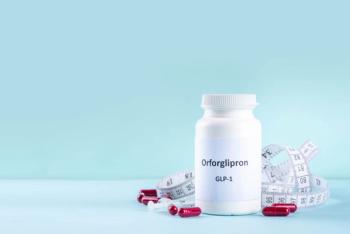
Phase 2b data from EASD 2026 show the amylin-incretin combination also cut HbA1C by up to 2.9% in adults with obesity or overweight and type 2 diabetes.
Modeling in Canada suggests price drops of up to 70% could make dual glucagon-like peptide-1 (GLP-1) RA/SGLT2 inhibitor therapy the preferred strategy for high-risk patients with type 2 diabetes (T2D).
Anticipated price reductions from the arrival of generic semaglutide (generic for Ozempic, Wegovy; Eli Lilly and Company) could remove a long-standing affordability barrier to guideline-recommended cardiorenal therapy for patients with type 2 diabetes (T2D), according to a new health economic analysis published in the Canadian Journal of Cardiology. For pharmacists, the finding reframes a class of drugs long constrained by cost as one that may soon be both clinically indicated and economically defensible for a large, high-risk population.1
“In markets…where generic semaglutide options are becoming available, prices are beginning to decline, and further reductions may be seen as additional generics enter the market and competition increases,” Abhinav Sharma, MD, PhD, assistant professor in the Division of Cardiology at McGill University Health Centre in Montreal, Canada, and study coauthor, told Pharmacy Times in an interview. “This could make these therapies more accessible to a broader range of patients over time.
Glucagon-like peptide-1 receptor agonists (GLP-1 RAs) and sodium-glucose cotransporter-2 (SGLT2) inhibitors are recommended by the Canadian Cardiovascular Society and other international bodies to reduce cardiorenal complications in patients with T2D at high cardiovascular risk, independent of glycemic control. Despite that guidance, uptake has lagged, and price has been a central reason. The authors estimate that treating all guideline-indicated patients in Canada with a GLP-1 RA would have cost about $3.35 billion to $5.31 billion annually at pregeneric 2025 semaglutide prices.1,2
Regulatory exclusivity for semaglutide expired in Canada in January 2026, and the availability of generic versions is expected to drive GLP-1RA price reductions of up to 70%.1
Using a microsimulation model that projected lifetime costs, quality-adjusted life years (QALYs), and cardiorenal complications for 216 patients with T2D and high cardiorenal risk, investigators tested how cost-effectiveness shifts across a range of possible GLP-1 RA prices. Guided by the commonly used Canadian willingness-to-pay threshold of $50,000 per QALY, the analysis found that at a 60% reduction from the 2025 pregeneric semaglutide price, combined GLP-1 RA and SGLT2 inhibitor therapy could become the preferred strategy over either agent alone or other standard-of-care options.1
At an approximate 70% reduction, a GLP-1 RA was predicted to be cost-effective vs non–SGLT2 inhibitor standard-of-care therapy, with a cost-effectiveness value of $22,700. SGLT2 inhibitors alone remained preferred over GLP-1 RA monotherapy, but dual therapy was predicted to be more cost-effective than either agent alone, with a cost-effectiveness value of $31,700 for dual therapy vs SGLT2 inhibitor alone. The authors also estimated that reduced complications would partially offset drug costs, with per-patient direct health care savings of $365 in the first year for a GLP-1RA vs baseline therapy.1
Many provincial public drug plans still restrict GLP-1 RA and SGLT2 inhibitor coverage to patients who cannot reach glycemic targets on cheaper therapies, a "glucocentric" model the authors describe as out of step with guidelines that recommend these agents for cardiorenal protection regardless of hemoglobin A1C. The analysis suggests payers could revisit those criteria as prices fall.1
“One of the most important things pharmacists should flag is whether the regimen addresses the patient’s cardiovascular risk, not simply their glucose levels,” Sharma explained. “Cardiovascular disease remains a leading cause of morbidity and mortality among people with T2D, so eligible high-risk patients should receive guideline-recommended therapies that improve cardiovascular outcomes.”
For pharmacists, the practical relevance is immediate: As coverage criteria potentially loosen, pharmacists are positioned to identify guideline-indicated patients who were previously priced out, counsel on the cardiorenal rationale for therapy independent of blood glucose, and manage the added monitoring considerations of dual therapy.
“Pharmacists should identify missed opportunities to initiate or optimize these therapies, as reducing future cardiovascular risk should be a central treatment priority,” Sharma continued.
The findings may generalize to other countries once generic semaglutide becomes available, but that timeline varies sharply by market. In the US, semaglutide patent protection is expected to run through approximately 2032, delaying comparable price competition. Pharmacists fielding patient questions about "cheaper Ozempic" should be prepared to clarify that Canadian and other international generic pricing does not translate to near-term US availability.3
Sharma explained that international prices are not always comparable with what a patient can access or expect to pay in their own community, as every country has specific regulations, drug approvals, pricing structures, and insurance coverage. He noted, “Pharmacists could acknowledge the positive direction of cost reductions while helping patients understand which approved options, coverage pathways, and prices are realistically available in their own region.”