
At the 2025 Oncology Pharmacists Connect (OPC) meeting, Mya Tran, PharmD, BCOP, highlights the clinical promise, operational challenges, and evolving role of pharmacists in implementing precision medicine and genomics-driven cancer care.
At the 2025 Oncology Pharmacists Connect (OPC) meeting, Mya Tran, PharmD, BCOP, highlights the clinical promise, operational challenges, and evolving role of pharmacists in implementing precision medicine and genomics-driven cancer care.
Victoria Nacher, PharmD, BCOP, offers key insights about the evolving treatment landscape for hematologic malignancies.
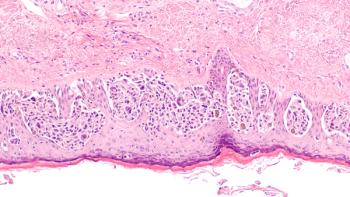
Janet Espirito, PharmD, discusses real-world outcomes from a large community oncology study showing that patients with BRAF-mutated melanoma—including those with brain metastases—experienced similar benefit from frontline immune checkpoint inhibitor (ICI) therapy.
In today’s rapidly evolving health care landscape, pharmacists are playing an increasingly vital role in patient care—but many policymakers remain unaware of the full scope of their expertise and contributions.

The emergence of biomarkers plays a critical role in the growing success of treatment.
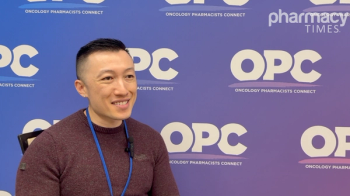
Tim Mok, PharmD, BCOP, BCPS, discusses emerging advancements in treatment of leukemia and lymphoma.
This abstract will be presented at the Oncology Pharmacists Connect (OPC) meeting in Austin, Texas, from June 19 to 20, 2025.
This abstract will be presented at the Oncology Pharmacists Connect (OPC) meeting in Austin, Texas, from June 19 to 20, 2025.

This abstract will be presented at the Oncology Pharmacists Connect (OPC) meeting in Austin, Texas, from June 19 to 20, 2025.
This abstract will be presented at the Oncology Pharmacists Connect (OPC) meeting in Austin, Texas, from June 19 to 20, 2025.
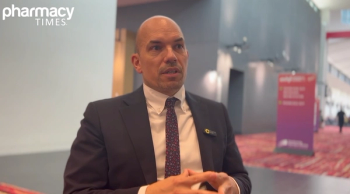
From protecting the 340B Drug Pricing Program to expanding payment pathways through state-level reforms and Medicare Advantage opportunities, Kraus emphasized the critical role pharmacists play in evolving care models.

This abstract will be presented at the Oncology Pharmacists Connect (OPC) meeting in Austin, Texas, from June 19 to 20, 2025.

This abstract will be presented at the Oncology Pharmacists Connect (OPC) meeting in Austin, Texas, from June 19 to 20, 2025.

Zahra Mahmoudjafari, PharmD, MBA, BCOP, FHOPA, co-chair of the 2025 Oncology Pharmacists Connect (OPC) meeting, discusses what makes the event unique, highlights key sessions, and shares her excitement for the educational and networking opportunities.

Manish Agrawal, MD, discusses emerging research on psychedelic-assisted therapy for patients with cancer, including innovative dyadic treatment models, challenges in capturing meaningful outcomes, and growing interest in integrating psychedelics into oncology and palliative care.

Ribociclib plus endocrine therapy shows improved survival in HR+, HER2- breast cancer, but its cost-effectiveness raises concerns in the US market.

Pharmacists and pharmacy technicians are key to offering more accessible and efficient care.

Ribociclib in combination with a nonsteroidal aromatase inhibitor (NSAI) improved invasive disease-free survival (iDFS) while allowing for better quality of life in hormone receptor-positive (HR+)/human epidermal growth receptor 2-negative (HER2−) early breast cancer.

The data from the 5-year analysis of arm C validate and support the efficacy and safety of zanubrutinib for treatment-naive patients with CLL/SLL harboring del(17p).

Biologics and biosimilars have a major role in modern medicine because of their clinical benefits and economic impact on patient care.

This abstract will be presented at the Oncology Pharmacists Connect (OPC) meeting in Austin, Texas, from June 19 to 20, 2025.
Significant challenges persist, particularly in low- and middle-income countries.

Innovative strategies are essential to recruit pharmacy students and transform practices, ensuring equitable access to pharmacy services in underserved areas.

This abstract will be presented at the Oncology Pharmacists Connect (OPC) meeting in Austin, Texas, from June 19 to 20, 2025.
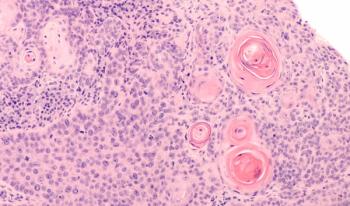
Building on positive event-free survival (EFS) and overall survival (OS) rates in the original analysis of CheckMate 77T, new results indicate sustained survival over 3 years following treatment with nivolumab compared with placebo in non-small cell lung cancer (NSCLC).
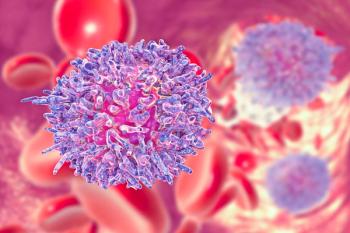
Asciminib shows superior tolerability over nilotinib in newly diagnosed patients with Philadelphia chromosome-positive chronic myelogenous leukemia in chronic phase, enhancing treatment options and patient outcomes.



Nivolumab plus relatlimab does not significantly improve recurrence-free survival in patients with stage 3, 4 melanoma.