

A multicenter registry analysis reveals that high-risk cardiovascular patients often miss opportunities to receive pneumococcal and influenza vaccinations, showcasing gaps that could be filled by pharmacists.
A multicenter registry analysis reveals that high-risk cardiovascular patients often miss opportunities to receive pneumococcal and influenza vaccinations, showcasing gaps that could be filled by pharmacists.

Intravenous immunoglobulin (IVIG) treatment significantly reduces infection rates in multiple myeloma patients receiving BCMA bispecific antibodies, showcasing its clinical benefits.
Outpatient use of bispecifics and CAR T-cell therapies in multiple myeloma can expand access.
Teclistamab shows promising results in frontline multiple myeloma treatment, achieving high MRD negativity rates, but safety concerns remain.

Teclistamab and other bispecific antibodies enhance multiple myeloma treatment but significantly increase infection risks, necessitating proactive management strategies.

Teclistamab shows promising results in newly diagnosed multiple myeloma, enhancing tolerability and achieving high rates of minimal residual disease negativity.

Elranatamab combined with daratumumab and lenalidomide shows promising results for treating newly diagnosed multiple myeloma, enhancing patient outcomes.
An expert discusses the benefits of anti-CD38 quadruplet regimens for elderly multiple myeloma patients.

An expert discusses CAR T therapy's potential in treating relapsed multiple myeloma, highlighting long-term remissions and access challenges.
An expert discusses the promising results of elranatamab as a consolidative therapy for relapsed/refractory multiple myeloma, enhancing patient outcomes.

Cemiplimab was also superior in improving progression-free survival, objective response rate, and duration of response in patients with non–small cell lung cancer (NSCLC).
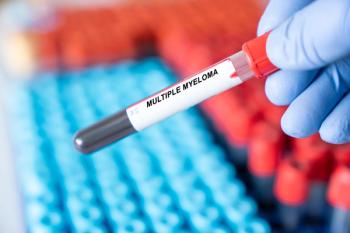
The 2025 International Myeloma Society Annual Meeting unveils crucial updates to IMWG guidelines, enhancing response assessment and treatment strategies for multiple myeloma.

Promising phase 2 results for taletrectinib in ROS1+ lung cancer show significant tumor shrinkage and manageable adverse effects.

A recent phase 3 study reveals osimertinib combined with chemotherapy offers unprecedented survival rates for patients with advanced EGFR-mutated lung cancer.

Cutting-edge insights and expert discussions on multiple myeloma will be presented at the 2025 IMS Annual Meeting in Toronto, shaping future treatment standards.
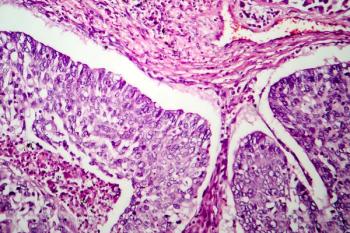
When combined with an anti–PD-L1 therapy, tarlatamab significantly improves overall survival in patients with extensive-stage small cell lung cancer (ES-SCLC).

Experts gathered to discuss the critical need for real-time learning, multidisciplinary collaboration, and comprehensive patient and family support to address unforeseen complications in gene therapy.
The findings were presented at the 2025 American Heart Association Hypertension Scientific Sessions and published in the Journal of the American Society of Nephrology.

Speakers at an ASTCT Gene Therapy Summit highlighted novel conditioning approaches without the use of busulfan, which can cause toxic effects in patients with hematologic malignancies.

Experts at the ASTCT Gene Therapy Summit discussed the multifaceted nature of the gene therapy process for patients with sickle cell disease.

Investigators emphasize that early cardiovascular risk assessments and preventive strategies are necessary for women with polycystic ovarian syndrome (PCOS).

The treatment was generally well-tolerated in patients with ROS1-positive (ROS1+) non–small cell lung cancer (NSCLC).

The 2 abstracts, which were presented at the European Society of Cardiology 2025 Congress, utilized data from the CDC WONDER database.
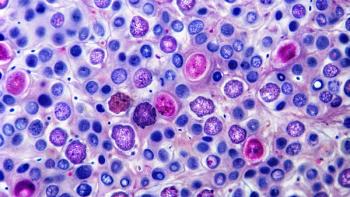
Julio C. Chavez, MD, MS, discusses the distinct pharmacologic profile, clinical activity, and outpatient potential of golcadomide plus rituximab in relapsed/refractory follicular lymphoma, highlighting its selective cereblon modulation, fixed-duration dosing, and promising efficacy in heavily pretreated patients.

Experts discuss HIV management challenges, including HBV coinfections, anal cancer risks, and weight gain, highlighting innovative treatment strategies.
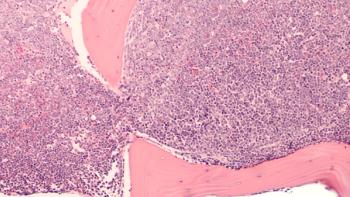
Julio C. Chavez, MD, MS, discusses updated data from the European Hematology Association (EHA) 2025 Congress on the investigational oral CELMoD agent golcadomide (GOLCA) plus rituximab in relapsed/refractory diffuse large B-cell lymphoma (R/R DLBCL).

Jennifer Goldman, PharmD, CDCES, BC-ADM, FCCP, discusses the expanding role of GLP-1 receptor agonists in holistic type 2 diabetes care, highlighting their cardio-renal-hepatic benefits, clinical access challenges, emerging investigational therapies, and practical strategies for individualized, guideline-based prescribing.

Jeffrey I. Weitz, OC, MD, FAHA, FRCPC, FACP, FRSC, FACC, FESC, FCAHS, discusses AZALEA-TIMI 71 trial data showing that the long-acting factor XI inhibitor abelacimab is associated with low periprocedural bleeding risk, supporting potential simplification of anticoagulation protocols for most elective and some urgent procedures.

VMAT2 inhibitors can improve movement symptoms.

Joel Stanley of Ajna Biosciences reflects on the regulatory challenges surrounding MDMA-assisted therapy, outlines lessons for future psychedelic drug trials, and emphasizes the importance of scientific rigor, interdisciplinary infrastructure, and the evolving role of pharmacists in ensuring safe clinical integration.