
As policy developments unfold rapidly at both the state and federal levels, Tom Kraus highlights the expanding scope of pharmacist practice through a wave of state-level legislation as a key opportunity.
As policy developments unfold rapidly at both the state and federal levels, Tom Kraus highlights the expanding scope of pharmacist practice through a wave of state-level legislation as a key opportunity.

Nivolumab (Opdivo) and chemotherapy demonstrated an overall survival benefit at 5 years, affirming its role as a standard of care option.

A new study reveals the combination therapy enhances safety and efficacy for high-risk BRAF-mutated stage II melanoma.

A multidisciplinary team enhances psychiatric care by empowering community pharmacists to administer long-acting injectable antipsychotics, improving patient adherence and outcomes.

The findings highlight the need for improved prescribing practices and patient outcomes.

Standardized online modules ensure consistent, high-quality care in collaborative practice agreements.

Pharmacists lead the charge in implementing advanced therapeutics, navigating complex challenges and shaping the future of health care innovation.
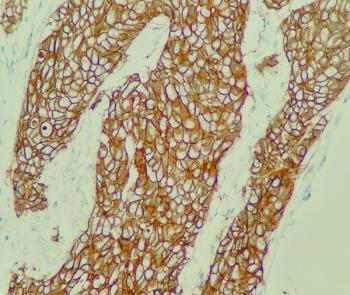
About 64.1% of patients receiving taxane, trastuzumab, and pertuzumab (THP) without carboplatin had pathological complete response rates (pCRs).
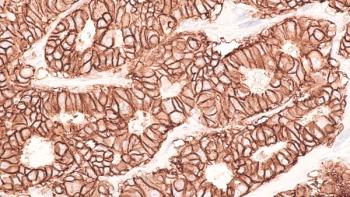
Vepdegestrant was the first PROTAC to be evaluated in a phase 3 clinical trial.

Ambulatory pharmacists innovate care delivery, enhancing patient access and outcomes through home visits and harm reduction clinics for complex health needs.

Integrating specialty pharmacists into neurology teams enhances patient care, medication management, and clinical outcomes for chronic conditions.

Innovative pain management strategies emerge as experts advocate for personalized, multifaceted approaches to chronic pain, likening treatment to a tailored cupcake.

Granted accelerated approval by the FDA in 2024, tarlatamab continues to demonstrate efficacy and safety in patients with small cell lung cancer, with results showing improved overall survival and progression-free survival in patients who had progressed or previously received chemotherapy.

Pharmacists navigate reimbursement challenges while advocating for legislative support and innovative models to enhance patient care and financial sustainability.
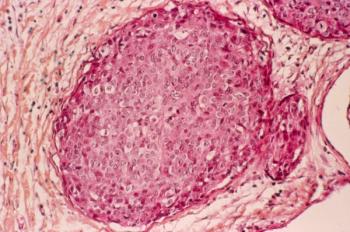
Compared with standard of care, camizestrant in combination with a CDK4/6 inhibitor shows promise in enhancing progression-free survival (PFS) for patients with advanced breast cancer.
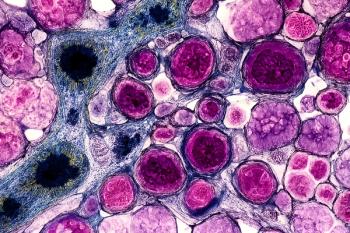
Vincent Chung, MD, discusses key findings from the NAPOLI-3 trial and offers guidance for pharmacists on managing toxicities, adjusting dosing, and supporting patients receiving NALIRIFOX for metastatic pancreatic ductal adenocarcinoma.
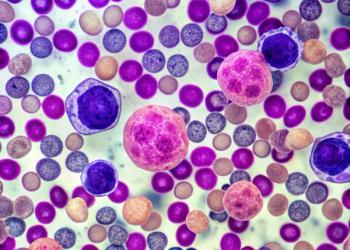
Saad Usmani, MD, MBA, FACP, FASCO, explores treatment duration, patient characteristics, and toxicity profiles in transplant-ineligible patients with newly diagnosed multiple myeloma.

Results from the NeoADAURA trial demonstrate the sustained efficacy of osimertinib in patients with epidermal growth factor receptor-mutated (EGFRm) non-small-cell lung cancer (NSCLC).

Ibrutinib plus venetoclax shows promising long-term survival rates, including those who are considered high risk.

New research finds that adding carboplatin to paclitaxel and adjuvant chemotherapy shows no significant survival benefits in triple-negative breast cancer (TNBC).

Explore the latest advancements in myelofibrosis treatment, focusing on JAK inhibitors and pegylated interferons for improved patient outcomes.

The 2025 ASCO Annual Meeting discusses the latest advancements in understanding and treating precursor diseases.

Zongertinib shows promising efficacy and safety for HER2-mutant NSCLC, with a 71% response rate and low toxicity, paving the way for future treatments.

The NJSHP's 2nd Annual Symposium fosters networking and education for pharmacy professionals, featuring expert insights on compliance and regulation in pharmacy compounding.

Laura Momoko Asakura, PharmD, BCOP, BCSPS, discusses the equitable use of oncology treatment pathway tools, highlighting that their utilization remains consistent across patient groups regardless of race, ethnicity, or insurance status.
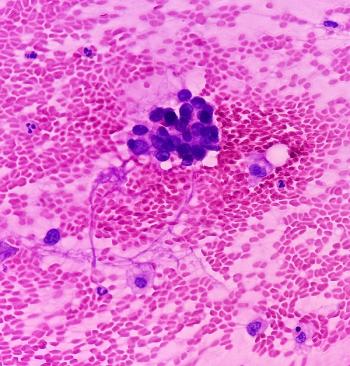
A study reveals a 14-gene assay guides chemotherapy decisions effectively in patients with early-stage non-small cell lung cancer (NSCLC).

Saad Usmani, MD, MBA, FACP, FASCO, discusses the subgroup analysis of transplant-ineligible patients with newly diagnosed multiple myeloma from the CEPHEUS trial.

Frank Qian, MD, MPH, discusses the integration of omega-3 fatty acid therapy alongside statins and PCSK9 inhibitors in cardiovascular risk management, highlighting the distinct mechanisms of benefit and lack of significant drug interactions.

Explore the complexities of managing toxicities in breast cancer treatments, including endocrine therapies, antibody drug conjugates, and immune checkpoint inhibitors.

Bempedoic acid is an effective option for statin-intolerant patients or those needing additional low-density lipoprotein cholesterol (LDL-C) reduction, with clinical trials showing cardiovascular benefits, key drug-drug interaction considerations, and special management factors in patients with comorbidities.