





Reimbursement
Latest News
Advertisement
Latest Videos







Shorts



Podcasts
Advertisement
More News
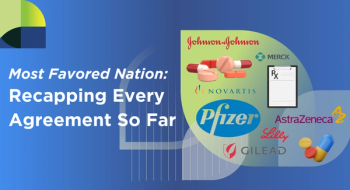
Explore all 16 agreements struck thus far between pharmaceutical companies and the White House to adhere to most favored nation pricing for drugs sold in the United States.
Exclusive insights from Ned Milenkovich, PharmD, JD, help parse what pharmacists should be aware of as most favored nation initiatives are agreed upon with the federal government.

A panel of 4 experts discussed the most favored nation (MFN) initiative and its impacts on research and development, market and payer distributions, and pharmacists and patients.

These changes are creating operational challenges for oncology infusion centers.

The Ensuring Community Access to Pharmacist Services (ECAPS) Act would enhance Medicare coverage for pharmacist services and ensure seniors can access essential care in underserved areas.

The Inflation Reduction Act of 2022 (IRA) drug negotiation provisions will fundamentally reshape Medicare drug pricing, provider reimbursement, and health care delivery dynamics across Part B and commercial markets, according to panelists at Asembia’s AXS25 Summit.

Experts at Asembia’s AXS25 Summit discussed the economics of specialty pharmacy for rare diseases, addressing high treatment costs and strategies for balancing innovation.

Scott A. Soefje, PharmD, MBA, BCOP, explained how the expanding use of the FDA’s 505(b)(2) drug approval pathway is creating operational and reimbursement challenges for oncology infusion centers.

Building on a previous report that revealed corrupt business practices among the big 3 PBMs, a second interim report finds that PBMs heightened prices for important specialty generic drugs to increase their profit margins.

It is valuable for pharmacists to understand exactly how price transparency data are sourced, what information can be found, antitrust concerns, and implications for the pharmaceutical industry.

As the end of this Congress approaches, the National Community Pharmacists Association is lobbying members to pass pharmacy benefit manager reforms.

Jenni Zilka discusses the growing issue of "pharmacy deserts" and the need to maintain the financial viability of pharmacies.

For biosimilars to overcome these entrenched market dynamics, they must not only compete on price but actively work to build a network of support among providers and patients.

Drawing on years of experience, Rina Shah explains how sustainable care models are essential for a thriving pharmaceutical industry.

Brandon Newman highlights the need for balanced regulation, transparency, and real-time data access to ensure fair competition and optimal outcomes for pharmacy benefit mangers.

The decision by the Supreme Court has the potential to upend the power of regulatory agencies to shape the health care landscape of the country.

Brandon Newman discusses the significant influence of the "big 3" pharmacy benefit managers and the key legislative and regulatory efforts around transparency.

The new prices are expected to go into effect for patients with Medicare Part D on January 1, 2026.

Investigators find that this could suggest the biosimilar uptake alone may not be a complete measure of the market competition and lowering prices.

Australia, Québec, and Sweden have defined processes for reimbursements by health technology assessments, but the United States has a low reliance rate.

In an ambitious effort to address the ongoing uncertainty within the 340B Program space, 6 senators released a draft discussion bill earlier this year titled the SUSTAIN Act.

By empowering pharmacy technicians to actively participate in billing and reimbursement processes, health care practices can streamline operations, mitigate billing errors, and optimize revenue generation.

The COVID-19 pandemic spring boarded the evolution of pharmacies toward establishing their position as sites of care.

Jonathan Levitt, Esq, discusses legislation and legal action taken to rein in pharmacy benefit managers’ DIR fees.

Scott Soefje, PharmD, BCOP, FCCP, FHOPA, MBA, addresses some of the key steps pharmacists should take when conducting a financial analysis for cancer drugs.
Advertisement
Advertisement
Trending on Pharmacy Times
1
Finerenone Expands MRA Options as Pharmacists Address Underrecognized HFpEF
2
Finerenone in Heart Failure: Evidence and Practice a Year Later
3
Researchers Target Viral Fusion for Universal Flu, HIV Vaccines
4
FDA Approves Zilucoplan Autoinjector for Myasthenia Gravis
5