
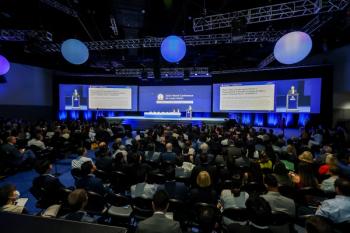
Longer-term data from the phase 3 MARIPOSA trial confirm superior outcomes of a chemotherapy-free amivantamab-vmjw plus lazertinib regimen compared to osimertinib monotherapy as first-line therapy.
Longer-term data from the phase 3 MARIPOSA trial confirm superior outcomes of a chemotherapy-free amivantamab-vmjw plus lazertinib regimen compared to osimertinib monotherapy as first-line therapy.

At the 2024 World Conference on Lung Cancer, Ana Baramidze, MD, PhD, presented 5-year outcomes of the trial, which investigated cemiplimab monotherapy in first-line advanced non–small cell lung cancer (NSCLC) with PD-L1 expression of 50% or greater.

Investigators report the study met its primary end point, demonstrating that a single, oral dose reduced the transmission by those infected to others in their household.
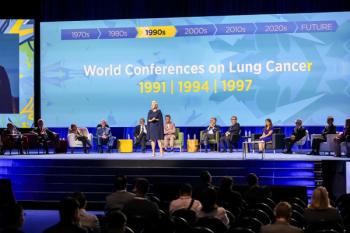
At the 2024 World Conference on Lung Cancer, Benjamin Besse, MD, PhD, discussed the findings of the phase 3 CARMEN-LCO3 trial, which led to the discontinuation of the study drug by the manufacturer.

Pharmacists and health care providers can counsel around vitamin D supplements and natural intake to increase a child’s vitamin D consumption.

The benefits of the daratumumab-based regimen were seen in all patients, including those with high and standard cytogenic risk levels.

Brooke Peters, PharmD, BCOP, discusses a study conducted at American Oncology Network (AON) to evaluate luspatercept dosing for patients with low- to intermediate-risk myelodysplastic syndromes (MDS).

Small molecule agents continue to be beneficial additions to multiple myeloma treatment, even with the development of T-cell redirected therapies.
These interim trial results support the ongoing phase 3 ITHACA trial.

Experts discuss emerging targets in the immunotherapy landscape and how to improve patient outcomes through innovative approaches.

Ashraf Badros, MBCHB, discussed new data from the AURIGA study presented at the International Myeloma Society 2024 Annual Meeting, happening September 25 through 29 in Rio de Janeiro, Brazil.

Experts discuss immunotherapy advancements and challenges of resistance, efficacy, and toxicity in patient management.

The trial is evaluating ciltacabtagene autoleucel (cilta-cel, Carvykti; Johnson & Johnson) in patients with relapsed and lenalidomide-refractory multiple myeloma.

Minimal residual disease has been a major topic of discussion during the IMS 2024 Annual Meeting.

Ashraf Badros, MBCHB, discussed findings from the AURIGA study being presented at the International Myeloma Society 2024 Annual Meeting, happening September 25 through 29 in Rio de Janeiro, Brazil.

Promising depth of response and consistent safety profile support the use of talquetamab as a combination agent.

Banerjee also discussed data being presented at the International Myeloma Society 2024 Annual Meeting that he is particularly excited for this year.
The CEPHEUS trial also highlights the importance of minimal residual disease (MRD) as a study end point.

Notably, of the 38 participants who remained on treatment, 37 have switched to less frequent dosing and all have maintained responses.

Experts discuss current knowledge and future indications for immunotherapies and CAR T in early treatment lines.

Rahul Banerjee, MD, FACP, discussed his presentation at the International Myeloma Society 2024 Annual Meeting on available T cell-directed therapies for myeloma treatment, including CAR T-cell therapies and bispecific antibodies.

Banerjee addressed factors to consider when selecting a regimen, the available treatments in this category, and their key differences.

Artificial intelligence shows promise in improving diagnosis and treatment for patients with multiple myeloma.

Early diagnosis of monoclonal gammopathy of undetermined significance (MGUS) and smoldering multiple myeloma (SMM) may mitigate progression.

Although Madabhushi said there are emerging tools for clinical decision support, he said there is a greater need for tools further downstream in the post-diagnosis stages.

The meeting will focus on the basic, preclinical, and clinical aspects of myeloma, including precursor disease, high-risk disease, immunotherapies, novel biomarkers, and more.

Ponsegromab displayed significant and robust increases in body weight at the completion of the study for all doses.

Shifting from a vertical, isolated care model into a collaborative approach can improve the clinician and patient experience.

The CRAFT (NCT04551521) trial is still ongoing to assess findings in the remaining patient arms.

Patients with for HER2-positive breast cancer have an increased risk of developing brain tumors.