

Understanding and accounting for linguistic diversity is critical in diagnostics and treatment for dementia.
Understanding and accounting for linguistic diversity is critical in diagnostics and treatment for dementia.

Joshua Hare describes how Lomecel-B addresses neuroinflammation, unlike other treatments which typically target amyloid disposition.

An extension of a long-acting cabotegravir study shows safety prior to and during pregnancy in cisgender women, with full results being presented at the 2024 International AIDS Conference.

Adherence and efficacy were both higher in patients with HIV who took twice-yearly lenacapavir compared to those on oral preexposure prophylaxis medication.

In the session at the 2024 American Association of Colleges of Pharmacy Annual Meeting, presenters highlighted the importance of fostering inclusion for LGBTQ students.

Educators should prioritize integrating social determinants of health (SDOH) for the next generation of pharmacists.

Students express interest in whole-person care and identify it as a gap in their education.

Both economic factors and supply chain fragility play a role.

Safety and efficacy findings on Lomecel-B will be presented at the upcoming 2024 Alzheimer’s Association International Conference, which will be held July 28 to August 1.

The Pharmacy Quality Alliance Annual Meeting highlighted social determinants of health, oral oncolytics, and screening opportunities.

NADINA trial results support a new standard of care for these patients.

Data presented show significant advancements in treatment options.

The 2024 American Society. ofClinical Oncology (ASCO) Annual Meeting in Chicago, Illinois, highlighted significant advancements across various oncology disciplines.

Panelists identify key public policies that pharmacies would benefit from acting on in 2024.

McKesson and state associations are advocating for community pharmacies through initiatives like McKesson Amplify that support advocacy work.

Pharmacists can play a crucial role in diabetes management by implementing standing order protocols for medication titration and serving as a bridge between patients and other health care providers.

Many patients who took technosphere insulin saw improvements in hemoglobin A1c, but other patients saw worsening with the drug.

The CATALYST trial has identified hypercortisolism as a significant factor in approximately 1.2 to 1.3 million poorly controlled diabetes patients in the United States.

Omar Nadeem, MD, discusses positive outcomes associated with GPRC5D-targeted CAR T-cell therapy.

Follow-up data reveal 10-year impact of ibrutinib in treatment of patients with chronic lymphocytic leukemia or small lymphocytic lymphoma (CLL/SLL).

Pharmacists can also play a role in SDOH by replacing drug delivery with something else, such as food or transportation delivery, according to speakers at the ATOPP conference.

The European Union (EU) has successfully created a competitive market for biosimilars, while the US faces challenging market dynamics and tactics by pharmacy benefit managers that hinder the adoption of lower-cost therapies.

Collaboration between community centers and academic medical centers can improve patient access to these complex therapies.
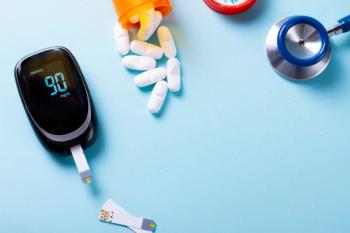
Approximately 81% of individual said Tandem Mobi reduced the burden of managing diabetes and 87% said it helped manage diabetes effectively.

Laura Bray, founder of Angels for Change, explains that addressing the 4 key economic causes to drug shortages can also help lead to effective solutions long-term.

American Diabetes Association Scientific Sessions speaker Ivan de Araujo discusses how regulation of blood glucose levels and the influence of food preferences can be significant for diabetes care.

Site-of-care considerations can pose challenges with these therapies.

Heath Mart, part of McKesson, offers an online resource to locate resources near independent pharmacies.

Heidi Finnes, PharmD, BCOP, FHOPA, discusses the evolving landscape of treatment for patients with cutaneous malignancies and melanoma.

These findings build off research from March 2023 that demonstrated efficacy and safety of renizgamglogene autogedtemcel in patients with sickle cell disease.