
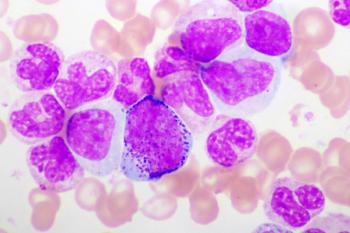
Constantine Tam, MD, discusses zanubrutinib's efficacy in CLL/SLL, emphasizing its durability, high response rates, safety considerations, and evolving therapeutic potential in combination with other agents.
Constantine Tam, MD, discusses zanubrutinib's efficacy in CLL/SLL, emphasizing its durability, high response rates, safety considerations, and evolving therapeutic potential in combination with other agents.
Pharmacists are crucial in educating patients, identifying eligible individuals, and promoting uptake of the newly expanded RSV vaccination recommendations for older adults.
Yi Lin, MD, PhD, highlights the importance of achieving MRD negativity in multiple myeloma, CAR T-cell therapy outcomes, and the critical role of pharmacists in patient care.
Adoption barriers include insurance coverage, patient and provider education, and regulatory hurdles that require aligned initiatives across stakeholders.
Pharmacists can significantly improve chronic obstructive pulmonary disease (COPD) management by promoting non-pharmacological interventions.
Pharmacists are encouraged to work closely with health care providers to ensure appropriate use of high-cost Intravenous immunoglobulin (IVIG) therapy for BK nephropathy.

Pharmacy Times attended the 2024 San Antonio Breast Cancer Symposium from December 10 to December 13.
The 2025 GOLD Report emphasizes the importance of tailoring combination treatments based on patient factors like eosinophil counts and exacerbation history.
Pharmacists can optimize IVIG treatment for BK nephropathy in kidney transplant recipients by educating providers and monitoring for infusion reactions.
Pharmacists are essential in preventing the significant health and economic burden of respiratory syncytial virus (RSV) infections in older adults through vaccination.
Pharmacists identify appropriate patients for new oral and antibody drug conjugate treatments and provide counseling to help patients navigate the evolving treatment landscape.

Compounding pharmacies play a vital role in meeting the unique needs of patients, but pharmacists must adhere to strict safety standards and regulations.
The evolving regulatory policies around biosimilar interchangeability is crucial for driving successful biosimilar adoption in the marketplace.
Pharmacy errors can happen due to manual processes, but they can be mitigated through adoption of automated IV workflow technology and comprehensive compounding records.
Standardizing observational competencies and utilizing technology to improve compounding accuracy can ensure safety and quality of compounded medications.

Higher costs of efgartigimod alfa are primarily driven by its status as a newly approved, brand-name therapy without a generic alternative.
Food insecurity in rural communities can affect hypertension, but pharmacists can mitigate the impact by educating themselves on nutrition options for low-income individuals.
Firas El Chaer, MD, discusses newly-presented data at ASH demonstrating nuvisertib's effectiveness in myelofibrosis.
Snehal Bhatt discusess the need to individualize antiplatelet therapy decisions based on a comprehensive assessment of each patient's unique risk factors for thrombosis and bleeding.

Obesity is associated with increased distant recurrence and breast cancer mortality in all types of early-stage breast cancer.
Rural pharmacies and hospitals face unique challenges in maintaining adequate staffing and drug supply inventory to serve patients who often travel long distance.
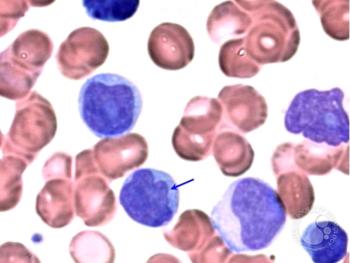
Alison Moskowitz, MD, discusses the clinical considerations, dosing strategies, and the critical role of pharmacists in managing toxicities and tailoring treatment plans for dual-targeted therapy with ruxolitinib and duvelisib.

Emerging research in triple-negative breast cancer highlights the promise of molecular-based approaches to improve treatment outcomes.
AI-powered analysis of mammography images can identify women at high long-term risk of breast cancer, enabling targeted prevention strategies.

Adding anthracyclines to chemotherapy may improve survival in high-risk breast cancer patients.

Advancements in prevention address cancer risk in high-risk patients and BRCA mutation carriers.

Combining CDK4/6 and PDL-1 inhibitors enhances treatment responses in patients with hormone receptor positive and triple-negative breast cancer.
Pharmacists can make a significant impact by providing medication management, promoting nonpharmacologic approaches, supporting patients through life transitions.

Improvements were observed regardless of whether patients initiated ruxolitinib in the second or third line of treatment.
Daily operational tasks and quality assurance measures in pharmacy compounding ensures patient safety and maintains compliance.