

Pembrolizumab is an anti-programmed death receptor 1 (PD-1) therapy designed to increase the immune system’s ability to detect and fight tumor cells.
Pembrolizumab is an anti-programmed death receptor 1 (PD-1) therapy designed to increase the immune system’s ability to detect and fight tumor cells.

The combination of amivantamab and lazertinib showed improved intracranial efficacy, progression-free survival, and overall survival for non-small cell lung cancer.

In 2 studies, durvalumab improved overall survival for those with unresectable hepatocellular carcinoma and event-free survival for muscle-invasive bladder cancer.

The trial demonstrated that the combination of lenvatinib, pembrolizumab, and transarterial chemoembolization (TACE) significantly improves progression-free survival and objective response rates compared to TACE alone.
The efficacy and safety profiles of CAR T-cell and bispecific antibody therapies have led to their investigation in earlier lines of therapy, with several new treatments in development.

Data from the second interim analysis of the DETECT V trial, presented at ESMO Congress 2024, suggest that a chemotherapy-free regimen combining dual HER2-targeted therapy with endocrine therapy, particularly with the addition of ribociclib, may be an effective treatment for patients.

There is a need for continued research and awareness in the diagnosis and management of alopecia in diverse populations.
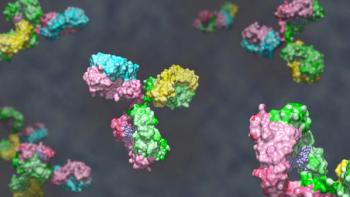
Abstracts from the OrigAMI-1 and MARIPOSA-2 trials indicated the treatment benefits of amivantamab-vmjw and chemotherapy in multiple cancer indications.
At ESMO Congress 2024, Shuji Ogino, MD, PhD, MS, explained that the rising incidence of young-onset cancer may be due to generational risk factors such as lifestyle, diet, and environmental changes, emphasizing the need for long-term research and follow up to understand early-life influences on cancer development.
Overall survival results from the phase 3 KEYNOTE-522 study provide evidence of improved long-term outcomes from this pembrolizumab-based regimen.
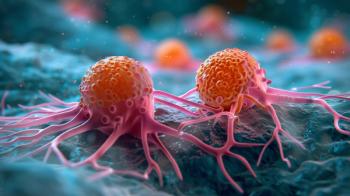
Clinical research presented at ESMO 2024 highlights the significant survival benefits of perioperative and neoadjuvant immunotherapy with nivolumab and nivolumab plus ipilimumab, while emphasizing the role of biomarkers such as ctDNA and KRAS mutations in guiding treatment decisions.

An ESMO 2024 presentation explores the growing role of the gut microbiome in immunotherapy response, emerging diagnostic tools such as PCR chips, and innovative therapies such as fecal microbiota transplantation and microbiome-preserving strategies to improve patient outcomes.

Not only do diverse clinical cohorts improve the strength of the data, but it improves public trust in clinicians and the medical system as a whole.

The gut and intratumoral microbiota influence cancer development, progression, and treatment responses, highlighting the potential for treatment strategies that leverage these microbial interactions to enhance cancer therapies.

Disparities continue in younger patients, raising the need for novel interventions to mitigate challenges associated with younger age at diagnosis.

Christian Rolfo discusses 6 different treatment options that are being developed across immunotherapies and antibody drug conjugates for non–small cell lung cancer and small cell lung cancer.

An overview of the potential treatment strategies for patients were presented at the 2024 World Conference on Lung Cancer.
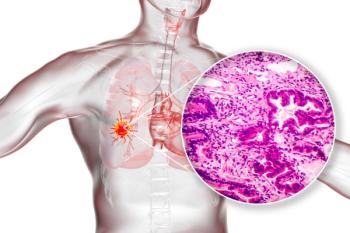
Promising abstracts surrounding DLL3 targeting for patients with lung and neuroendocrine cancer were presented at WCLC 2024.

As of May 2024, follow-up and exploratory analyses of MARIPOSA show improvements in outcomes for patients with EGRF-mutated non–small cell lung cancer (NSCLC).
In a session at the 2024 World Conference on Lung Cancer, presenters highlight the most significant developments in local therapy for metastatic non–small cell lung cancer and advanced disease.
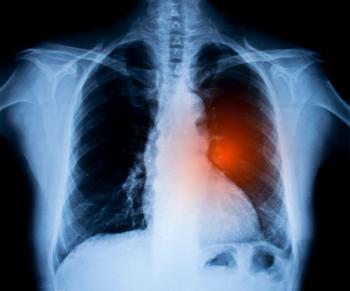
Highlights from multiple trials investigating novel treatments for mNSCLC were presented at 2024 World Conference on Lung Cancer.

Mark Fendrick, MD, speaks about the importance of improving financial toxicity for patients while optimizing their outcomes.

Presentations highlighted the potential of tarlatamab in treating solid tumor cancers.

Lalan Wilfong, MD, discusses the road to value-based care and payment reform in cancer care.
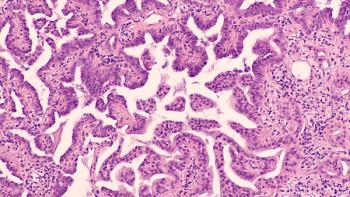
Datopotamab deruxtecan was effective in patients with TROP2-QCS biomarker-positive tumors for non–small cell lung cancer
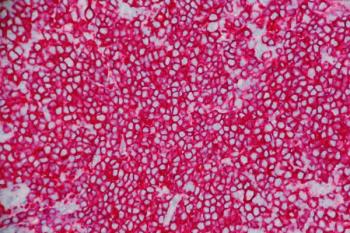
Presenter Krish Patel, MD, discusses the use of epcoritamab (Epkinly; AbbVie) and glofitamab (Columvi; Genentech) in aggressive B-cell lymphomas as monotherapies and in combination regimens.

Lazertinib with amivantamab was found to be similar in efficacy to osimertinib in the MARIPOSA study.
Alessandra Ferrajoli, MD, discusses the importance of renal function for BCL2 inhibitors to avoid tumor lysis syndrome and cardiovascular history for BTK inhibitors to mitigate arrhythmia risks.

Reid Merryman, MD, discusses the potential for minimal residual disease (MRD) to inform treatment decisions, identify lymphoma subgroups, and infer gene expression.
Disease-related factors include several prognostic scoring systems, such as DIPSS, whereas patient-related factors involve age, comorbidities, spleen size, and anemia.