





Hematology
Latest News

Advertisement
Latest Videos









CME Content

























































































Advertisement
More News
The 2025 International Myeloma Society Annual Meeting unveils crucial updates to IMWG guidelines, enhancing response assessment and treatment strategies for multiple myeloma.

Cutting-edge insights and expert discussions on multiple myeloma will be presented at the 2025 IMS Annual Meeting in Toronto, shaping future treatment standards.
World Lymphoma Day highlights the rising prevalence of lymphoma and innovative treatments, emphasizing the role of pharmacists in patient care.

Experts gathered to discuss the critical need for real-time learning, multidisciplinary collaboration, and comprehensive patient and family support to address unforeseen complications in gene therapy.

Pharmacists play a crucial role in managing myelofibrosis, enhancing patient education, adherence, and financial navigation for optimal care.

Subcutaneous bortezomib shows fewer adverse effects in multiple myeloma treatment compared with intravenous administration, enhancing patient outcomes.
For pharmacists, understanding the evolving therapeutic landscape is essential—not only to optimize drug selection and dosing but also to counsel patients on complex regimens, manage adverse effects, and monitor for treatment-related toxicities.

A patient, who formerly had previously been treated with CAR therapy for multiple myeloma, achieved remission for both multiple myeloma and lymphoma.

The action follows phase 3 trial data that demonstrated reduced phlebotomy dependence, improved hematocrit control, and eased symptoms.
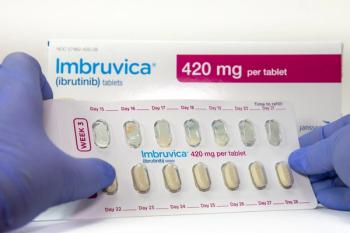
Ibrutinib combined with venetoclax significantly improved measurable residual disease and progression-free survival in patients with chronic lymphocytic leukemia.

New research reveals that immunoglobulin replacement therapy fails to lower infection-related hospitalizations in those with chronic lymphocytic leukemia (CLL), raising treatment concerns.

New research uncovers the complex tumor microenvironment in multiple myeloma, revealing unique plasma cell ecosystems that challenge existing treatment approaches.

Revumenib shows promise in treating NPM1-mutant AML, expanding its role in precision oncology and offering hope for targeted leukemia therapies.

Acalabrutinib shows improved safety and survival rates in chronic lymphocytic leukemia (CLL), reducing risks of mortality and cardiovascular complications.

SWIFT-seq revolutionizes multiple myeloma diagnosis, offering a noninvasive blood test that enhances monitoring and risk assessment for patients.

CPX-351 shows promise for younger adults with therapy-related AML, offering improved survival post-transplant despite lower initial remission rates.

Pharmacists play a crucial role in managing headaches in patients on complement inhibitors for PNH, ensuring proper education and risk mitigation strategies.

Birelentinib gains FDA fast track designation, offering hope for relapsed CLL/SLL patients resistant to current BTK and BCL2 therapies.

Discontinuing lenalidomide after 3 years of MRD negativity shows low relapse rates in multiple myeloma, offering hope for treatment-free remission.

Sanofi's SAR446523 receives orphan drug designation for relapsed/refractory multiple myeloma, enhancing treatment options and patient outcomes.

Pirtobrutinib shows promising results in a head-to-head trial against ibrutinib for chronic lymphocytic leukemia (CLL)/small lymphocytic leukemia (SLL).
Luspatercept shows promise in reducing transfusion dependence for myelofibrosis-associated anemia, despite not meeting primary trial end points.
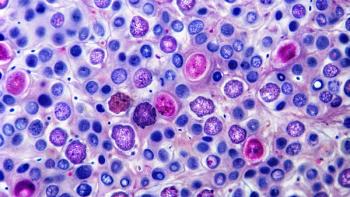
Julio C. Chavez, MD, MS, discusses the distinct pharmacologic profile, clinical activity, and outpatient potential of golcadomide plus rituximab in relapsed/refractory follicular lymphoma, highlighting its selective cereblon modulation, fixed-duration dosing, and promising efficacy in heavily pretreated patients.

Targeting BRD4 with BET inhibitors shows promise in reversing immune suppression by myeloid-derived suppressor cells in chronic lymphocytic leukemia.
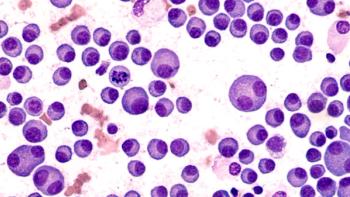
Sundar Jagannath, MD, discusses how prophylactic tocilizumab reduced cytokine release syndrome incidence and severity with talquetamab in relapsed or refractory (R/R) multiple myeloma.
Advertisement
Advertisement
Trending on Pharmacy Times
1
Ramantamig's 93.6% ORR and Outpatient CRS Control
2
FDA Approves Tavapadon, First D1/D5 Agonist for Parkinson Disease
3
Teclistamab-Daratumumab Intensification Achieves 73% MRD-Negative CR Rate in High-Risk Multiple Myeloma
4
Nearly Two-Thirds of Patients With Long COVID Meet Diagnostic Criteria for POTS
5