



Hematology
Latest News
Advertisement
Latest Videos







CME Content

























































































Advertisement
More News
Discover the vital role of oncology pharmacists in cancer care, exploring their daily challenges, responsibilities, and impact on patient outcomes.

A pharmacist-led deep vein thrombosis (DVT) clinic revolutionizes outpatient care, reducing emergency visits and costs while enhancing medication adherence through collaborative practices.
FDA grants a national priority voucher to teclistamab and daratumumab for relapsed/refractory multiple myeloma, enhancing treatment approval speed.

Research reveals that isatuximab on-body injector shows consistent safety and efficacy across various body weight groups in multiple myeloma treatment.

New research highlights the benefits of adding isatuximab to standard therapy for newly diagnosed multiple myeloma (NDMM), improving patient outcomes and quality of life.

Teclistamab combined with daratumumab and hyaluronidase shows significant efficacy in relapsed multiple myeloma, potentially redefining treatment standards.

New long-term data reveal avapritinib's impressive efficacy and safety in advanced systemic mastocytosis.

Explore the advancements and challenges of allogeneic CAR T-cell therapies, including immune rejection and innovative engineering strategies for cancer treatment.

The Isa-VRd regimen shows consistent efficacy results across all age and frailty levels in patients with newly diagnosed multiple myeloma.
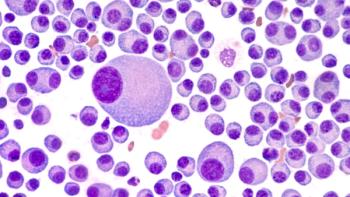
Pharmacists play a crucial role in optimizing CAR-T therapy outcomes by guiding bridging therapy decisions and enhancing patient safety through proactive collaboration.

Pharmacists enhance multiple myeloma care by managing cytokine release syndrome and advocating for safe vaccination strategies at ASH 2025.

New research reveals that effective bridging therapy before cilta-cel infusion significantly enhances safety and long-term outcomes in patients with multiple myeloma.
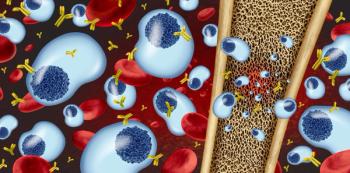
In an analysis of the intention-to-treat population of the BENEFIT study, investigators demonstrated improved sustained minimal residual disease negativity with the Isa-VRd regimen in newly diagnosed multiple myeloma (NDMM).
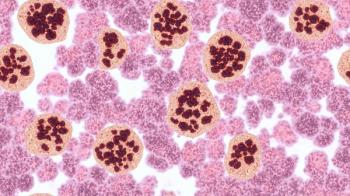
Experts at the ASH Annual Meeting and Exposition in Orlando, Florida, explored innovative strategies and treatments for improving outcomes in diffuse large B-cell lymphoma.

The American Society of Hematology (ASH) Annual Meeting and Exposition will feature the latest news, clinical trial updates, and key opinion leaders in the hematology field.

Breyanzi becomes the first FDA-approved CAR-T therapy for relapsed marginal zone lymphoma, offering hope with impressive response rates and durable outcomes.

MRD and ctDNA testing could revolutionize monitoring and diagnosing precursor diseases of multiple myeloma.

High-dose busulfan-melphalan enhances VRd therapy, improving progression-free survival in high-risk multiple myeloma patients undergoing ASCT.
Oncology pharmacists unpack cGVHD care, highlighting axatilimab’s mechanism, safety monitoring, and team-based strategies to optimize outcomes.

Mount Sinai's study uncovers how ciltacabtagene autoleucel enhances long-term remission in multiple myeloma by leveraging the patient's immune response.
Ziftomenib gains FDA approval as a targeted treatment for relapsed acute myeloid leukemia with NPM1 mutations, offering new hope for patients.
Advertisement
Advertisement
Trending on Pharmacy Times
1
Ramantamig's 93.6% ORR and Outpatient CRS Control
2
FDA Approves Tavapadon, First D1/D5 Agonist for Parkinson Disease
3
Teclistamab-Daratumumab Intensification Achieves 73% MRD-Negative CR Rate in High-Risk Multiple Myeloma
4
Nearly Two-Thirds of Patients With Long COVID Meet Diagnostic Criteria for POTS
5