



Hematology
Latest News
Advertisement
Video Series
Latest Videos









Shorts

1:00
Anagrelide: Platelet-Reducing Agent for Cancer-Related Thrombocytosis
4 months ago
by
Saro Arakelians, PharmD(+1 more)

0:24
Defining Success for Hem-Onc Pharmacy’s Future
6 months ago
by
Amy H. Seung, PharmD, BCOP, FHOPA, CHCP(+1 more)

6:53
Why Oncology Pharmacist Day Matters: Oncology Pharmacists Share What the Milestone Means to Them
6 months ago

1:27
Beyond CRS and Neurotoxicity: Underappreciated Adverse Events With Bispecific T-Cell Engagers
6 months ago
by
Megan May, PharmD, BCOP, FHOPA, FAPO(+2 more)

1:04
Making Evidence-Informed Decisions When irAE Data Falls Short
6 months ago
by
Emma Jones, PharmD, BCOP(+1 more)
Podcasts



CME Content
























































































Advertisement
More News

IRAKLIA shows isatuximab OBI boosts comfort and satisfaction vs IV in multiple myeloma, enabling fast at-home dosing with strong completion.

Gut microbiome disruption from anti-anaerobic antibiotics weakens CAR T cell therapy, raising relapse and CRS/ICANS risk; stewardship and microbiome repair may improve cancer outcomes.

Isatuximab plus Iberdomide maintenance helps MRD-positive myeloma patients turn MRD-negative after transplant, with manageable safety.

Long-term CASSIOPEIA Registry results show that daratumumab maintenance supports sustained minimal residual disease negativity in transplant-eligible patients with newly diagnosed multiple myeloma.

Infection prevention during bispecific antibody treatment requires pharmacists to coordinate baseline screening, antimicrobial prophylaxis, immunoglobulin monitoring, vaccination, and rapid evaluation of suspected infections.
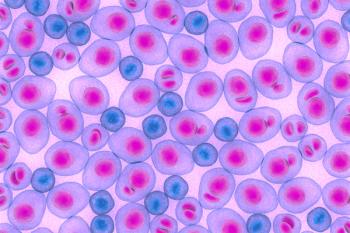
For as long as practicing oncology pharmacists have been in the field, multiple myeloma has carried a standard caveat: treatable, not curable. Now that is changing.
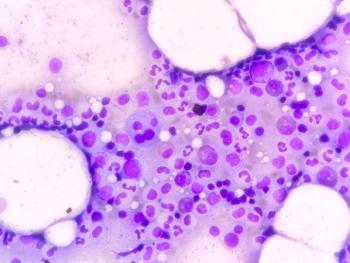
Linvoseltamab drives deep, MRD-negative responses in high-risk smoldering multiple myeloma, raising earlier-treatment and payer coverage questions.
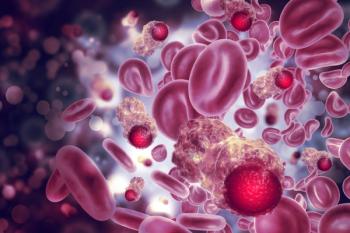
A phase 1/2 analysis found rapid, deep responses with mezigdomide plus elranatamab in patients with relapsed or refractory multiple myeloma, but the small cohort and limited follow-up require cautious interpretation.

Phase 3 CERVINO results show that monthly etentamig significantly improved PFS and response rates compared with investigator-selected therapy in patients with previously treated multiple myeloma.

The randomized ALLIANCE A051701 trial closed early when treatment-related toxicity and mortality were increased without improving PFS in patients with newly diagnosed double-hit lymphoma.
September highlights Blood Cancer Awareness Month, focusing on education, early diagnosis, and support for multiple myeloma, lymphoma, and leukemia patients.
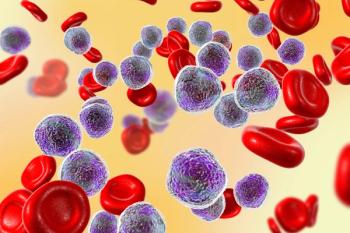
A prospective multicenter study found high response rates with first-line obinutuzumab plus bendamustine across several indolent B-cell lymphoma subtypes, although short follow-up and the absence of a comparator limit conclusions about long-term benefit.
Blood Cancer Awareness Month highlights types of blood cancer and how pharmacists flag multiple myeloma symptoms early, speeding referral and care.
August 2026 brought first-in-class approvals in multiple myeloma, warm autoimmune hemolytic anemia, and polycythemia vera alongside important findings involving bispecific antibodies, sickle cell pain, and infection risk.
FDA Approves Rusfertide, First Hepcidin Mimetic for Polycythemia Vera
Published: | Updated:
Rusfertide gives adults with polycythemia vera a first-in-class option to cut phlebotomy dependence and control hematocrit.

The FDA's decision makes iberdomide the first approved CELMoD for patients with relapsed/refractory multiple myeloma.

The warning has prompted new CDC recommendations for prevention and molecular diagnostic testing.

The combination also produced a 78.6% complete response rate in heavily pretreated patients with R/R mantle cell lymphoma following BTK inhibitor therapy.

Phase 3 MajesTEC-9 findings show teclistamab monotherapy significantly improves progression-free survival and overall survival compared with PVd or Kd.

A first-in-class RNA degrader targeting MYC mRNA showed preclinical antimyeloma activity, offering a potential new strategy for targeting a historically difficult-to-drug driver of multiple myeloma.

Patients with nodal TFHL had a 5.3% 5-year incidence of subsequent myeloid neoplasms, with shared TET2 mutations supporting divergent evolution from underlying clonal hematopoiesis.

Jessica Lewis-Gonzalez, PharmD, BCOP, discusses how pharmacists can layer mediator-symptom management with cytoreductive or targeted therapy in systemic mastocytosis (SM) and interdisciplinary communication.
An investigational KRAS-targeted peptide vaccine generated durable immune responses and demonstrated early potential to intercept pancreatic cancer development in high-risk patients.

Revumenib and ziftomenib in NPM1-mutated AML: practical guidance on differentiation syndrome, QTc monitoring, and drug interactions.

Radiopharmaceuticals force oncology pharmacists to master safety, timing, waste, and costs—see how departments build radioactive therapy workflows.
Advertisement
Advertisement
Trending on Pharmacy Times
1
Ramantamig's 93.6% ORR and Outpatient CRS Control
2
FDA Approves Tavapadon, First D1/D5 Agonist for Parkinson Disease
3
Teclistamab-Daratumumab Intensification Achieves 73% MRD-Negative CR Rate in High-Risk Multiple Myeloma
4
Nearly Two-Thirds of Patients With Long COVID Meet Diagnostic Criteria for POTS
5