




Hematology
Latest News
Advertisement
Latest Videos
CME Content

















































































Advertisement
More News
Long-term data show that frontline zanubrutinib significantly improved second progression-free survival (PFS2) and preserved the effectiveness of subsequent BCL2 inhibitor–based therapies compared with bendamustine-rituximab in treatment-naive CLL/SLL.
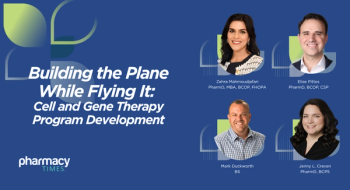
Leaders unpack governance, SOP scalability, and payer hurdles in cell and gene therapy program development, helping the cell and gene therapies community build sustainable programs.

Specialty pharmacy technicians address barriers in oral anticancer therapy and transitions of care through improved care coordination and therapy access.
European Hematology Association 2026 data show sonrotoclax plus zanubrutinib drives rapid, durable undetectable minimal residual disease in frontline chronic lymphocytic leukemia, even in patients with TP53 mutations and 17p deletions.
Data presented at the 2026 European Hematology Association Congress continue to support venetoclax plus obinutuzumab as a first-line treatment for patients with chronic lymphocytic leukemia.
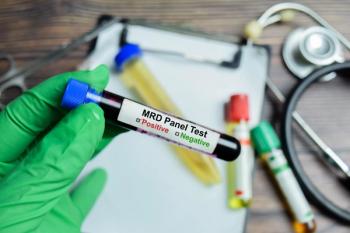
MRD monitoring detects microscopic disease levels to guide treatment decisions, providing actionable insights for pharmacists.

Phase 3 frontMIND phase 3 trial data show tafasitamab plus lenalidomide with R-CHOP boosts PFS and has manageable safety in high-risk newly diagnosed DLBCL.

Time to next treatment (TTNT) is an emerging real-world end point in CAR T-cell therapy that reflects treatment durability, clinical outcomes, and health care system factors beyond traditional efficacy measures.

Infection following CAR T-cell therapy is a common and clinically significant complication driven by prolonged immune dysregulation, cytopenias, and hypogammaglobulinemia, requiring phase-based risk awareness and proactive preventive management across the treatment continuum.

A panel of clinical pharmacists meets to discuss the complex process of operationalizing cell and gene therapy at an academic medical center.
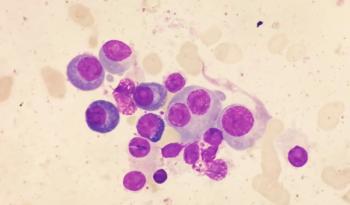
Elranatamab monotherapy produced a 92% overall response rate and a 45% complete response rate in patients with high-risk smoldering multiple myeloma, supporting the potential of BCMA-directed bispecific antibody therapy as an early intervention strategy before progression to active disease.
Elizabeth Budde, MD, discusses the phase 3 data behind the mosunetuzumab plus polatuzumab vedotin combination in the SUNMO trial.

Findings presented at the 2026 Joint ASTCT + EBMT Basic and Translational Scientific Meeting offer potential therapeutic targets to reduce GI toxicity and GVHD.

At ASCO 2026, GLORA investigators report on lisaftoclax as an addition to BTK inhibitors to deepen responses and delay progression in high-risk CLL/SLL.
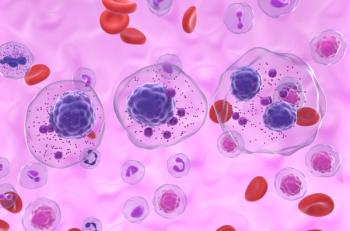
DREAMM-9 data show belantamab mafodotin in TI NDMM delivers high responses, with longer dosing improving eye safety and quality of life.

ASCO 2026: Glofitamab monotherapy shows durable remissions in relapsed mantle cell lymphoma after BTKi, with manageable CRS.

ASCO pooled phase 3 data show that pirtobrutinib in treatment‑naive CLL/SLL delivers 93% responses, durable control, and low cardiac risk.

FACT-accredited centers vs nonaccredited centers may influence CAR T-cell therapy outcomes.

Zanubrutinib Delivers 74% Progression-Free Survival at 6 Years in Frontline CLL
Published: | Updated:
Six-year follow-up data from the SEQUOIA trial showed that zanubrutinib provided durable PFS and strong long-term outcomes in treatment-naïve CLL/SLL.

An overview of how earlier use of CAR T-cell therapy is reshaping multiple myeloma treatment and what pharmacists should know about toxicity management, supportive care, and evolving clinical practice.

Data from a phase 1/2 trial revealed that CRISPR–Cas9–edited donor stem cell transplants lacking CD33 enabled rapid engraftment and allowed posttransplant gemtuzumab ozogamicin maintenance in high-risk patients with AML/MDS without prolonged hematologic toxicity.

FDA approval brings the first all-oral AML combination therapy, decitabine/cedazuridine with venetoclax, for older or unfit patients, cutting clinic visits.
FDA approves sonrotoclax for patients who have received at least 2 lines of systemic therapy, including a Bruton tyrosine kinase inhibitor.

Effective real-world management of cytokine release syndrome (CRS) and immune effector cell–associated neurotoxicity syndrome (ICANS) is critical to safely delivering CAR T-cell therapies and bispecific antibodies.

The ACCESS trial found that expanding hematopoietic cell transplant eligibility through mismatched unrelated donors increased racial, ethnic, and socioeconomic diversity among recipients.
Advertisement
Advertisement
Trending on Pharmacy Times
1
Ramantamig's 93.6% ORR and Outpatient CRS Control
2
Nearly Two-Thirds of Patients With Long COVID Meet Diagnostic Criteria for POTS
3
Teclistamab-Daratumumab Intensification Achieves 73% MRD-Negative CR Rate in High-Risk Multiple Myeloma
4
Influenza Vaccines Continue to Reduce Severe Disease and Death Across High-Risk Groups, Evidence Review Finds
5