
Hematology
Latest News
Advertisement
Latest Videos
Podcasts




























































































Advertisement
More News
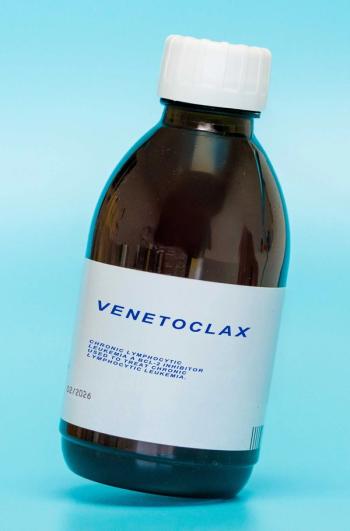
A combination regimen of azacitidine, venetoclax, and gilteritinib shows encouraging benefits in patients with newly diagnosed FLT3-mutated AML who were ineligible for intensive chemotherapy.
Updated ASTCT infectious disease guidelines reshape approaches to prophylaxis, treatment thresholds, and drug-drug interactions in opportunistic infections.
Single-cell findings presented at EHA 2026 identify B cells as potential drivers of immune dysregulation in acquired hemophilia A.

Oncology pharmacists decode 2026 ASCO/EHA breakthroughs, from breast cancer to myeloma, highlighting real-world steps for safer, faster care.
Minimal residual disease (MRD) negativity exceeded 90% with 100% response and no progression in patients with treatment-naive chronic lymphocytic leukemia/small lymphocytic lymphoma (CLL/SLL).
Fixed-duration pirtobrutinib plus venetoclax-rituximab reduced the risk of progression or death by 45% and achieved higher undetectable MRD rates than venetoclax-rituximab alone.
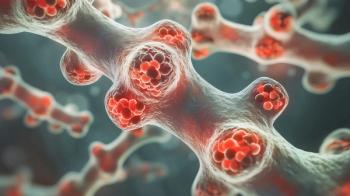
Data showed that talquetamab combined with daratumumab, with or without pomalidomide, significantly improved PFS, OS, response rates, and MRD negativity.
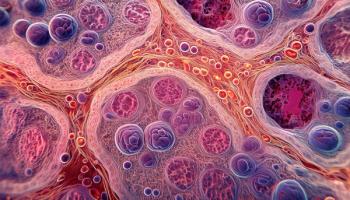
FDA clears teclistamab plus daratumumab after first relapse, delivering striking PFS gains—plus practical tips to manage CRS, ICANS, and infections.

Data presented at EHA 2026 showed that epcoritamab significantly improved progression-free survival and complete response rates compared with standard chemoimmunotherapy in patients with relapsed or refractory (RR) large B-cell lymphoma (LBCL).
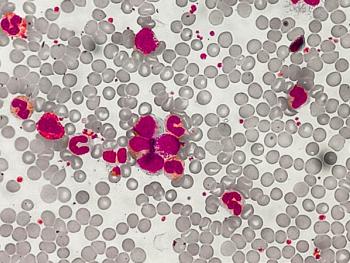
Long-term data show that frontline zanubrutinib significantly improved second progression-free survival (PFS2) and preserved the effectiveness of subsequent BCL2 inhibitor–based therapies compared with bendamustine-rituximab in treatment-naive CLL/SLL.
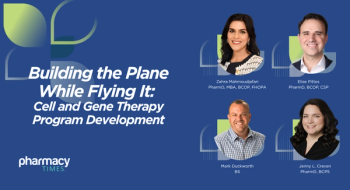
Leaders unpack governance, SOP scalability, and payer hurdles in cell and gene therapy program development, helping the cell and gene therapies community build sustainable programs.

Specialty pharmacy technicians address barriers in oral anticancer therapy and transitions of care through improved care coordination and therapy access.
European Hematology Association 2026 data show sonrotoclax plus zanubrutinib drives rapid, durable undetectable minimal residual disease in frontline chronic lymphocytic leukemia, even in patients with TP53 mutations and 17p deletions.
Data presented at the 2026 European Hematology Association Congress continue to support venetoclax plus obinutuzumab as a first-line treatment for patients with chronic lymphocytic leukemia.
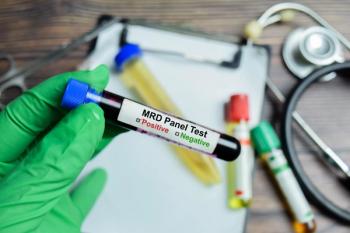
MRD monitoring detects microscopic disease levels to guide treatment decisions, providing actionable insights for pharmacists.
Phase 3 frontMIND phase 3 trial data show tafasitamab plus lenalidomide with R-CHOP boosts PFS and has manageable safety in high-risk newly diagnosed DLBCL.

Time to next treatment (TTNT) is an emerging real-world end point in CAR T-cell therapy that reflects treatment durability, clinical outcomes, and health care system factors beyond traditional efficacy measures.

Infection following CAR T-cell therapy is a common and clinically significant complication driven by prolonged immune dysregulation, cytopenias, and hypogammaglobulinemia, requiring phase-based risk awareness and proactive preventive management across the treatment continuum.

A panel of clinical pharmacists meets to discuss the complex process of operationalizing cell and gene therapy at an academic medical center.
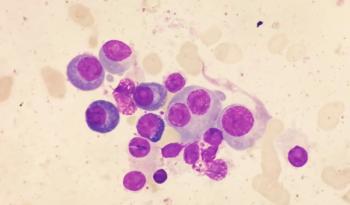
Elranatamab monotherapy produced a 92% overall response rate and a 45% complete response rate in patients with high-risk smoldering multiple myeloma, supporting the potential of BCMA-directed bispecific antibody therapy as an early intervention strategy before progression to active disease.
Elizabeth Budde, MD, discusses the phase 3 data behind the mosunetuzumab plus polatuzumab vedotin combination in the SUNMO trial.
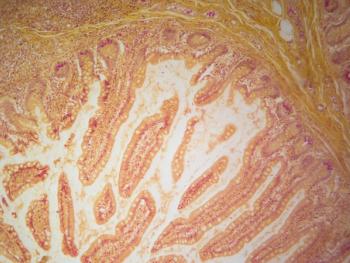
Findings presented at the 2026 Joint ASTCT + EBMT Basic and Translational Scientific Meeting offer potential therapeutic targets to reduce GI toxicity and GVHD.

At ASCO 2026, GLORA investigators report on lisaftoclax as an addition to BTK inhibitors to deepen responses and delay progression in high-risk CLL/SLL.
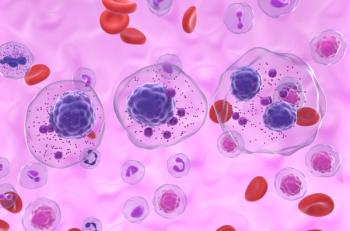
DREAMM-9 data show belantamab mafodotin in TI NDMM delivers high responses, with longer dosing improving eye safety and quality of life.
ASCO 2026: Glofitamab monotherapy shows durable remissions in relapsed mantle cell lymphoma after BTKi, with manageable CRS.
Advertisement
Advertisement
Trending on Pharmacy Times
1
FDA Approves Zilganersen Injection, First Drug for Alexander Disease
2
New CKD Outcome Set Tells Pharmacists What to Measure
3
AAP Issues 2026-2027 Guidance on RSV and COVID-19 Immunization
4
Fast-Acting Meloxicam Demonstrates Postoperative Pain Relief and Opioid-Sparing Potential
5