





Biosimilars
Latest News
Advertisement
Latest Videos


Advertisement
More News

Switching from aflibercept (Eylea; Regeneron Pharmaceuticals) to biosimilar ranibizumab (Lucentis; Genentech) for neovascular age-related macular degeneration could be more cost effective for patients.

After failure with methotrexate, treatment with leflunomide is typically recommended, but treatment with biosimilars could have greater quality-adjusted life years.

Following the previous FDA approval of faricimab-svoa to treat some of the leading causes of vision loss, the Administration has approved a single-dose prefilled syringe of the drug which could lead to safer and more efficient administration while easing patient burden.
Ustekinumab-ttwe (Pyzchiva; Sandoz) is approved for all of the same indications as Stelara.

The European Union (EU) has successfully created a competitive market for biosimilars, while the US faces challenging market dynamics and tactics by pharmacy benefit managers that hinder the adoption of lower-cost therapies.

Health professionals have expressed concerns regarding consistent naming standards, the regulatory process surrounding the approval of biosimilar drugs, and the lack of education they have about biosimilars.

Investigators compared the reference products of adalimumab (Humira; AbbVie) and etanercept (Enbrel; Amgen) with biosimilar products.

The new findings were presented as an oral presentation at the 2024 European Calcified Tissue Society Congress, held from May 25, 2024, to May 28, 2024.

FKS518 (Fresenius Kabi) would be indicated for the treatment of osteoporosis in men and women, including glucocorticoid-induced osteoporosis and bone loss due to prostate or breast cancer.
Eculizumab-aeeb (Bkemv; Amgen) is approved for the treatment of paroxysmal nocturnal hemoglobinuria and atypical hemolytic uremic syndrome.

Australia, Québec, and Sweden have defined processes for reimbursements by health technology assessments, but the United States has a low reliance rate.

Aflibercept-jbvf (Yesafili; Biocon Biologics) and aflibercept-yszy (Opuviz; Biogen, Samsung Bioepis) are the first interchangeable biosimilars to aflibercept (Eylea; Regeneron).

Original biologic products, and more recently biosimilar products, are a groundbreaking advancement in modern medical treatments. Pharmacists should understand biologic products and concerns with biosimilars.

These options are typically more cost-effective, enhancing patient accessibility

A provisional determination is also provided for the 40 mg/0.4 mL strength due to remaining interchangeability designation for another biosimilar to Humira.

Study participants’ overall satisfaction with a mandatory nationwide adalimumab transition in New Zealand varied but was generally low.
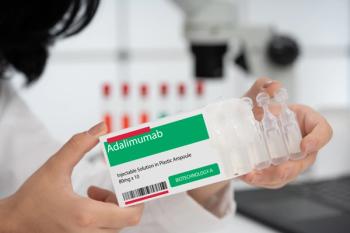
This citrate-free and high-dose approval of the biosimilar Humira provides another option to treat patients who are living with various inflammatory diseases.

With 50 biosimilar products approved by the FDA, questions arise regarding biosimilar lifecycles and sustainability of the industry.
Fran Gregory discusses the challenges posed by rising drug costs and emphasized that optimizing the use of biosimilars, which are entering the market at much lower prices than their reference products.
Tasmina Hydery, PharmD, BCGP, discusses how stakeholders can work together to generate and share real-world evidence on biosimilar effectiveness and switching in order to drive adoption and realize cost savings potential.

The trial will compared the efficacy, safety, pharmacokinetics, and immunogenicity between SB27 and pembrolizumab for metastatic non-squamous non-small cell lung cancer.

Ustekinumab (Stelara; Janssen Immunology) is a human monoclonal antibody that treats immune-mediated diseases such as psoriasis and psoriatic arthritis.

There was no difference observed between adalimumab (Humira; AbbVie) and adalimumab-aacf (Idacio; Fresenius Kabi) for those who switched to the biosimilar.

In a review, investigators focused on ranibizumab (Lucentis; Genentech), aflibercept (Eylea; Regeneron), and bevacizumab (Avastin; Genentech) as growth opportunities in the biosimilar space.

The results indicate the need for targeted policies so that biosimilar competition can increase cost savings and affordability for patients with commercial insurance.
Advertisement
Advertisement
Trending on Pharmacy Times
1
Flu Vaccination Linked to Fewer Severe Outcomes in Older Adults, Fewer ED Visits in Children
2
FDA Approves Awiqli, Once-Weekly Insulin, for Children Aged 10 Years and Older With T2D
3
Combined Cardiometabolic Biomarker Burden Tracks CKM Progression
4
Kidney Week 2026: What to Know for Nephrology's Biggest Meeting
5