

Pharmacy Times will be at McKesson ideaShare 2024 Conference in New Orleans, Louisiana from June 23 to June 26, 2024.
Pharmacy Times will be at McKesson ideaShare 2024 Conference in New Orleans, Louisiana from June 23 to June 26, 2024.

Ryan Haumschild discusses the evolving treatment landscape for patients with multiple myeloma.

Additionally, the high cost of the cell therapy raises concerns for broader access.

Pharmacy Times will be at the American Diabetes Association (ADA) 84th Scientific Sessions in Orlando, Florida from June 21 to June 24, 2024.

Brentuximab vedotin in combination with lenalidomide and rituximab had a favorable safety profile for patients with relapsed/refractory diffuse large B-cell lymphoma.

At ASHP Pharmacy Futures 2024, Mei T. Liu, PharmD, BCPP, highlights the global prevalence and multifaceted nature of depression, its bidirectional relationship with medical conditions, and the need for diverse, evidence-based treatment options.

Lindsey P. Sheehan, PharmD, MPA, MBA, discusses ongoing challenges of diagnosing and treating hepatitis C, emphasizing its increased incidence among younger populations and ongoing low rates of diagnosis.

Individuals with very low- to intermediate-risk myelodysplastic syndromes treated with luspatercept (Reblozyl; Bristol Myers Squibb) achieved improvements in hemoglobulin levels.

Speakers at American Society of Health-System Pharmacists (ASHP) Pharmacy Futures 2024 discuss the significant increase in published clinical literature during and after the COVID-19 pandemic, and the evolving role and reliability of AI tools such as ChatGPT in providing accurate medical information.

At ASHP Pharmacy Futures 2024, Casey Olsen, PharmD, explains that AI can affect patient trust in providers, with implications for the importance of learning to balance use of technology with human elements in clinical settings.

At the ASHP Pharmacy Futures 2024 conference, Scott D. Nelson, PharmD, MS, ACHIP, FAMIA, discusses research showed that although AI models can significantly enhance diagnostic accuracy, they can also exacerbate existing disparities.

Kenneth A. Richman, PhD, discusses the disruptive nature of artificial intelligence (AI) in health care, highlighting both its transformative potential and the ethical considerations of governability and sustainability in its implementation.

The impact of artificial intelligence (AI) on health care is growing, from diagnostics to drug discovery.

Expert discusses the challenges faced by pharmacists in palliative and hospice care.

Guidance for pharmacy technicians as they continue to learn and start their careers.

Expert discusses the challenges faced by pharmacists in palliative and hospice care.

Nicolas Girard, MD, PhD, discusses the results of the PALOMA-2 trial, highlighting the subcutaneous (SC) delivery of amivantamab combined with lazertinib as a first-line treatment for advanced non-small cell lung cancer (NSCLC) with EGFR mutations.

Lisocabtagene maraleucel is being investigated for mantle cell lymphoma, relapsed or refractory (R/R) large B-cell lymphoma, and R/R follicular lymphoma.

In addition to racial inequities in access to care, socioeconomic challenges are very common for the specialty medications necessary in MS.

Data from the PERSEUS trial supports use of daratumumab in combination with bortezomib, lenalidomide, and dexamethasone followed by daratumumab and lenalidomide maintenance as a new standard of care for patients with newly diagnosed multiple myeloma.

Results from the initial safety run-in of MajesTEC-7 indicate that the combination of teclistamab, daratumumab, and lenalidomide in newly diagnosed multiple myeloma (NDMM) shows a manageable safety profile with early signs of efficacy.
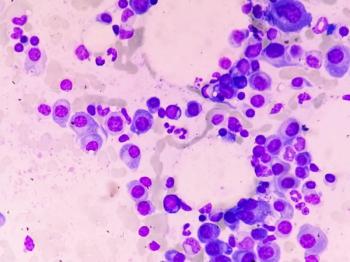
The study showed that belantamab mafodotin plus pomalidomide and dexamethasone (BPd) significantly improved progression-free survival compared to pomalidomide plus bortezomib and dexamethasone (PVd).

The PALOMA-3 trial showed subcutaneous amivantamab was better than IV for lung cancer patients.
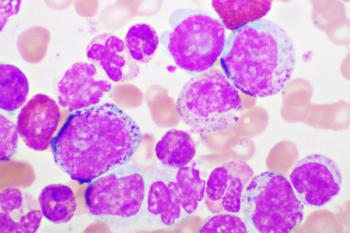
Asciminib demonstrated stronger efficacy, safety, and tolerability, as well as less adverse events in patients compared with those who received investigator-selected standard-of-care tyrosine kinase inhibitors.

Data presented at ASCO 2024 show fam-trastuzumab deruxtecan-nxki (T-DXd) delayed cancer growth in patients with hormone receptor-positive (HR+), HER2-low or -ultralow disease that progressed following endocrine therapy (ET).

The phase 3 LAURA trial data presented at ASCO 2024 showed osimertinib (Tagrisso; AstraZeneca) reduced risk of disease progression or death in patients with stage 3 EGFR-mutated (EGFRm) non–small cell lung cancer (NSCLC) by 84%.

Results from the trial provide evidence bolstering ASCO’s clinical practice guideline supporting the integration of early palliative care into standard oncology practice.

Matthew A. Gubens, MD, MS, FASCO, highlights the importance of identifying genetic targets in metastatic non–small cell lung cancer (NSCLC), emphasizing the latest updates and strategies.

Understanding patients’ specific experiences and challenges is crucial to helping them improve medication adherence.

This is the largest dataset of pregnancy outcomes for an anti-CD20 therapy in MS, enabling a more comprehensive understanding of ocrelizumab’s safety.