
Amir Ali, PharmD, BCOP, and Allison Hsieh, PharmD share insights from their presentation about cytokine release syndrome, ICANS, and CAR T-cell therapy.
Amir Ali, PharmD, BCOP, and Allison Hsieh, PharmD share insights from their presentation about cytokine release syndrome, ICANS, and CAR T-cell therapy.

Alexandra Wolff, PharmD, BCOP, FHOPA, was awarded a fellow of HOPA at the 2025 annual meeting.

Mya Tran, PharmD, BCOP, offers insights for navigating the complex treatment landscape for non-small cell lung cancer.

Michael Arnold, PharmD, discussed the role of oncology pharmacists in enhancing biomarker testing for patients with metastatic colorectal cancer.

The future holds the promise of earlier diagnosis, more targeted therapies, and personalized neurological care, said speaker William D. Freeman, MD, FAAN.

Huntington disease (HD) has no curative treatments, therefore, there is a great need for therapies that can reduce or slow the progression of symptoms.

Matthew Lei, PharmD, BCOP, highlights the value of community, collaboration, and innovation at the HOPA Annual Conference.

Nilufer Ertekin-Taner contrasts current one-size-fits-all Alzheimer disease treatments with the promise of precision medicine and emphasizes the vital role of collaborative, multidisciplinary care.

Erin Harrell, PharmD, offers insights about managing peripheral neuropathy in patients receiving bortezomib.
The HERCULES trial demonstrates tolebrutinib's potential to slow disability progression in non-relapsing secondary progressive multiple sclerosis, offering a new treatment option for patients with limited therapeutic choices.

Numerical differences were observed as early as Month 1.

Sophie Jabban discusses research presented at the SGO Annual Meeting highlighting significant disparities in MRI access for patients with cervical cancer receiving chemoradiation, with delays linked to both race and insurance status, underscoring systemic barriers that may impact timely treatment.

Pharmacy professionals gathered at the American Pharmacists Association 2025 Annual Meeting and Exposition and discussed critical insights in interviews with Pharmacy Times®.

Advanced practice provider (APP) care models allow for health systems to better individualize care for patients, effectively meeting their needs.
Kara Melmed, MD, emphasizes the critical importance of rapid, team-based intervention for intracerebral hemorrhage (ICH) patients, with pharmacists playing a key role in blood pressure management.

Pharmacists are essential navigators in the complex landscape of gene therapy.
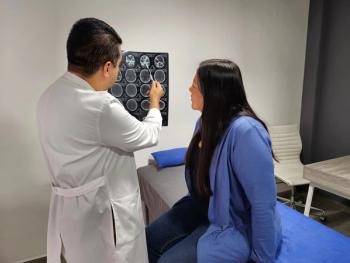
Kayla Johnson, PharmD, BCPS, BCPP, highlights how integrating pharmacists into neurology clinics drives significant cost savings, high intervention acceptance rates, and improved care coordination.
Enriqueta Felip, MD, PhD, discussed the benefits of subcutaneous pembrolizumab for patients with metastatic non–small cell lung cancer.

Sophie Jabban discusses findings from 2 studies that highlight how geographic location, race, ethnicity, and social determinants of health contribute to delays in initiating chemoradiation for patients with cervical cancer.
Stephanie Miller, PhD discusses how artificial intelligence can revolutionize medical research by assisting in drug development and potentially providing more targeted treatments across various diseases.
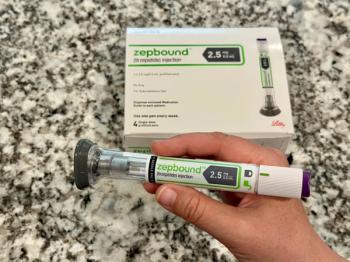
Tirzepatide-treated patients with chronic kidney disease (CKD), obesity, and heart failure with preserved ejection fraction (HFpEF) had improved renal function both by cystatin C and creatinine.
Glucagon-like peptide-1 (GLP-1) analogs demonstrate potential to address multiple pathological processes in Alzheimer disease, with promising early research suggesting cognitive improvements and potential for future treatment.
Andrew Charles, MD, outlines why calcitonin-gene-related peptide (CGRP) antagonists are increasingly favored as first-line migraine treatments and how pharmacists play a key role in patient education and support.
A study led by Kayla Johnson, PharmD, BCPS, BCPP found that integrating specialty pharmacists into non-multiple sclerosis (MS) neurology clinics led to significantly enhanced patient care and treatment outcomes.

Beth A. Malow, MD, MS, FAAN, said that pharmacists and health care professionals are at the frontlines of collaborating and raising awareness of climate change’s impacts.

Malow also emphasized the importance of staying educated on the potential neurological risks that may occur as a result of climate change.
Nilufer Ertekin-Taner outlines how embracing the biological complexity of neurodegenerative diseases can guide the development of precision therapies akin to those used in oncology.

Nicolas Girard, MD, explains the benefits observed in the MARIPOSA clinical trial among patients with epidermal growth factor receptor (EGFR)-mutated non-small cell lung cancer (NSCLC) treated with amivantamab plus lazertinib.

Evolving breast cancer risk models and prevention methods are necessary to improve patient outcomes, according to Sagar Sardesai, MD.
John Ostrominski, MD shares insights into the safety and efficacy of finerenone, based on data from the FINEARTS-HF trial.