


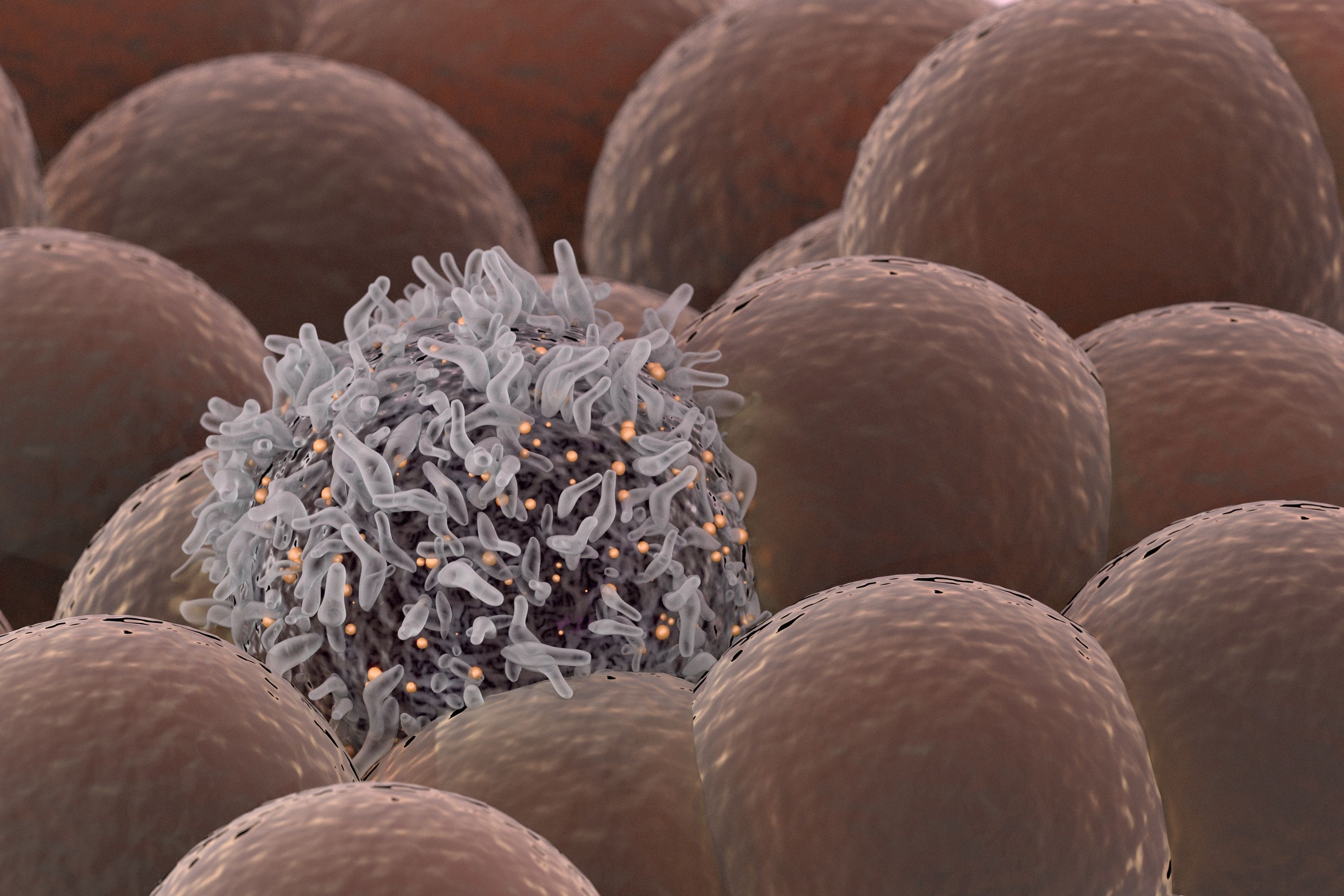



































































































New technology provides information on the benefit of adding atezolizumab to chemotherapy as a neoadjuvant treatment for patients with early high-risk and locally advanced triple-negative breast cancer.
New technology provides information on the benefit of adding atezolizumab to chemotherapy as a neoadjuvant treatment for patients with early high-risk and locally advanced triple-negative breast cancer.

Axicabtagene ciloleucel (Yescarta) was the first CAR T-cell immunotherapy to be approved for relapsed or refractory large B-cell lymphoma.

The new sFIS assay may be capable of identifying immune biomarkers indicative of survival chances and treatment effectiveness for patients with ovarian cancer.

Patients with advanced renal cell carcinoma who were given the combination of nivolumab and ipilimumab demonstrated a significantly longer overall survival than those who received sunitinib.

Investigators have developed an immunotherapy that is a potential option for children with hard-to-treat brain cancer.

The results of a study showed that non-Hispanic Black patients treated with immunotherapy had a 15% lower risk of death from non–small cell lung cancer than non-Hispanic white patients.

Clinical trial findings show that the 2-year overall survival rate for those who received this was 72%.

According to Genentech, atezolizumab is the first and only cancer immunotherapy approved for adjuvant treatment of NSCLC.

Survey participants saw potential for immunotherapy use in earlier stages of several diseases, including melanoma, lung cancer, and bladder or urothelial cancer.

Study suggests potentially expanding the use of immunotherapies in the elderly, a population in whom these therapies may be under-prescribed.

Atezolizumab was granted accelerated approval for the mTNBC indication in March 2019, making it the first immunotherapy agent to be approved in this setting.

Tisagenlecleucel is a CD19-directed genetically modified autologous T cell immunotherapy already indicated for B-cell precursor acute lymphoblastic leukemia and diffuse large B-cell lymphoma.

Patients with microsatellite stable (MSS) colorectal cancer, which represents 95% of all metastatic colorectal cancer cases, are more responsive to checkpoint blockade immunotherapy if the patient’s tumors have not spread to the liver.