

Opinion|Videos|November 18, 2026
Two-Drug HIV Regimens, Archived M184V Resistance, and Long-Acting Preference
Reassuring data on archived M184V resistance and strong patient uptake of injectables in VOLITION are challenging long-held assumptions about who is a candidate for simplified or long-acting therapy.
Advertisement
Episodes in this series
In "Two-Drug HIV Regimens, Archived M184V Resistance, and Long-Acting Preference," the panel explores how evolving evidence is changing assumptions about two-drug therapy and patient preference.
Dr. Madison cites real-world and observational data on dolutegravir/lamivudine, including the TANGO and LAMRES studies. These data suggest the two-drug regimen remains effective even with archived M184V resistance, one of the most common NRTI mutations. Dr. Astle explains how he weighs these findings. Archived resistance is typically detected through proviral DNA genotyping, which leaves considerable room for error. Mutations may appear in proviral DNA without being truly present or clinically meaningful. He therefore takes those results with a grain of salt. A baseline genotype at diagnosis remains the best tool. Once patients are suppressed, obtaining a usable sample for archive testing is challenging. He found the studies reassuring because they confirmed that dolutegravir is as potent as expected. It appears strong enough to overcome the reduced lamivudine activity associated with M184V. He is confident continuing the regimen when archived results are the only source of resistance data. Dr. Madison welcomes this for clinicians still uncertain about proviral DNA testing.
Dr. Durham then discusses the VOLITION study. By month 11, 85% of treatment-naive adults chose to switch from daily dolutegravir/lamivudine to long-acting cabotegravir/rilpivirine. Of those, 95% maintained viral suppression. He says the key takeaway is that many patients simply prefer not to take something every day, even when adherence is not a problem. He also acknowledges the other side. Some patients do not want injections or cannot easily attend a clinic every other month. He admits he is not sure he would want that trip himself. Therapy must be tailored to each patient. Dr. Madison notes that early thinking limited injectables to patients with adherence challenges. VOLITION suggests patients without those challenges may also start injectables successfully.
Up next, in "Long-Acting HIV Injectables in Viremia and New Tenofovir-Free Oral Options," Dr. Burkhart and Dr. Nguyen examine two developments that expand who qualifies for newer regimens.
Funding supported by Gilead. Content independently developed by Pharmacy Times.
Advertisement
Related to this article

Neladalkib received accelerated approval for adults with advanced ALK-positive NSCLC after specified prior therapies, supported by durable responses in the ALKOVE-1 trial.

Adrabetadex cut the risk of death by 55%, but its boxed warning for permanent hearing loss means patients need regular hearing tests.

PAHO confirmed endemic measles transmission in the US, Mexico, and Bolivia, putting pharmacists' role in vaccination and case detection in focus.

Safe storage and responsible disposal help protect patients from accidental poisoning and drug misuse while keeping medications stable and effective.

A new US DOL rule will require PBMs to disclose their compensation to large self-insured employer plans starting in 2027.

Salia Farrokh describes how neurocritical care pharmacists have moved from answering questions to leading research, policy, and teaching, and why health systems must fund dedicated ICU pharmacists and protected time to sustain that growth.
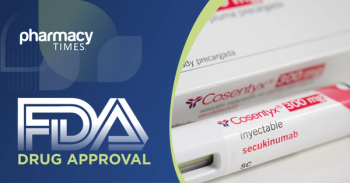
The FDA approved secukinumab for adults with polymyalgia rheumatica who respond inadequately to corticosteroids or cannot tolerate tapering, supported by improved sustained remission and reduced steroid exposure in REPLENISH.

Preserving patient access requires attention to the people, workflows, and financial structures behind the pharmacy counter, not just the number of open pharmacy locations.
Advertisement
Advertisement
Trending on Pharmacy Times
1
Giredestrant Plus Everolimus Wins FDA Approval in ESR1-Mutated Advanced Breast Cancer
2
FDA Grants Accelerated Approval to Neladalkib for Previously Treated ALK-Positive NSCLC
3
FDA Approves Secukinumab as First IL-17 Biologic for Polymyalgia Rheumatica
4
When Medicine Changes Faster Than Health Care: Preparing for a New Era
5