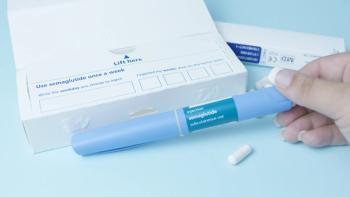
In a phase 3 trial of children aged 6 to younger than 12 years, once-weekly semaglutide reduced BMI 16.2 percentage points more than placebo at 68 weeks.
Extended INDIGO and FIREFLY-1 results presented at SNO 2026 put seizure burden during vorasidenib therapy and time off tovorafenib in pediatric low-grade glioma into focus.
Longer follow-up from 2 glioma trials at the 2026 Society for Neuro-Oncology (SNO) Annual Meeting addressed questions that can arise well after the first prescription. For patients with grade 2 IDH-mutant glioma, the phase 3 INDIGO trial (NCT04164901) examined what happens over time on vorasidenib (Voranigo; Servier Pharmaceuticals LLC), including how often patients experience seizures. For children and young adults with relapsed or refractory BRAF-altered low-grade glioma, the phase 2 FIREFLY-1 trial (NCT04775485) tracked how long a subset of patients remained off treatment after stopping tovorafenib (Ojemda; Day One Biopharmaceuticals, Inc).1,2
INDIGO enrolled 331 patients with residual or recurrent grade 2 IDH-mutant glioma whose only prior anticancer treatment was surgery. In the original randomized analysis, median progression-free survival was about 27.7 months with vorasidenib and 11.1 months with placebo (HR, 0.39; 95% CI, 0.27-0.56). At SNO, investigators reported that among 144 patients who crossed over from placebo to vorasidenib, median progression-free survival after crossover was 37.2 months by investigator assessment. The crossover analysis describes how that group fared after starting treatment. The randomized comparison remains the basis for estimating the treatment effect versus placebo.1,3
A separate exploratory INDIGO analysis presented at SNO examined seizure activity and quality of life. At the January 2025 cutoff, the estimated seizure rate with vorasidenib was about 0.28 times the rate with placebo (95% CI, 0.14-0.55). Investigators also reported findings suggesting that worsening in brain tumor–specific quality of life was delayed among patients who experienced seizures.1
At a refill call, pharmacists can ask about changes in seizure frequency and recent adjustments to antiseizure medications. Documenting when those changes began gives the oncology team a clearer account of symptoms between visits and helps keep the medication list current.1
In the single-arm FIREFLY-1 trial, patients could enter observation after 26 cycles of once-weekly tovorafenib. Among the 41 patients who entered optional observation, 31 (76%) remained treatment-free for at least 12 months and 22 (54%) for at least 24 months, according to the 4-year update. Median time to next treatment was about 50.9 months among 76 efficacy-evaluable patients. That measure includes time on the initial course of therapy. The percentages in the observation group describe time off therapy after patients stopped.2
The observation group was a selected subset of patients, leaving the optimal time to stop treatment an open question. If the oncology team plans a pause, pharmacists can confirm that the family knows when the next assessment is due and whom to contact if symptoms change. Having those details in the medication plan also helps explain why a refill is being deferred and who will tell the family if treatment should restart.2
Vorasidenib is approved after surgery for patients 12 years of age and older with grade 2 astrocytoma or oligodendroglioma and a susceptible IDH1 or IDH2 mutation. Its prescribing information calls for liver laboratory tests at baseline, every 2 weeks during the first 2 months, then monthly for the first 2 years and as clinically indicated. A refill call can also surface a change in tobacco use or a new medication that affects CYP1A2. For patients who use hormonal contraception, review the label’s recommendations for effective nonhormonal contraception.4
Tovorafenib has accelerated approval for patients aged 6 months and older with relapsed or refractory pediatric low-grade glioma harboring a BRAF fusion or rearrangement, or a BRAF V600 mutation. Confirm the precise alteration and prescribed formulation, since tablets and an oral suspension are available. The label also calls for routine growth monitoring in pediatric patients. When a family picks up the next supply, pharmacists can check that the once-weekly schedule is clear and that the family knows when growth will next be assessed.5