

Hackensack Meridian Health uses a multifaceted approach to diversion auditing and DEA/state reporting requirements, and is beginning to integrate artificial Intelligence (AI) to shift surveillance from a reactive to a proactive process.
Hackensack Meridian Health uses a multifaceted approach to diversion auditing and DEA/state reporting requirements, and is beginning to integrate artificial Intelligence (AI) to shift surveillance from a reactive to a proactive process.

Discover how specialty pharmacists boost TD screening, speed treatment starts, and sustain adherence through proactive check-ins, texts, and empathy.
Boost VMAT2 adherence by counseling side effects, streamlining refills with auto or mail-order options, using medication packs, and embedding AIMS screening into team workflows.
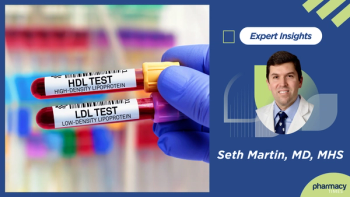
Seth Martin, MD, MHS, discusses a simplified machine-learning equation that helps labs deliver more accurate LDL-C results at no cost.

Deepika Nayyar outlines how HMH built a multidisciplinary drug diversion prevention program and shares the core elements any institution needs to detect and respond to diversion effectively.
Craig Beavers shares takeaways on congestion-monitoring tools, self-education, and pharmacist advocacy in preventing heart failure readmissions.
This week's episode covers a new AHA scientific statement on caffeine safety and cardiovascular benefit; pharmacist guidance for protecting patients with asthma, COPD, and allergies during wildfire smoke events; and regulatory updates in obstructive sleep apnea and ROS1-positive lung cancer.

In an interview with Pharmacy Times, Erin J. Walsh, PharmD, MS, RPh, MCST, discusses where VER-01 could fit in chronic pain management and why advances in standardized cannabinoid therapies may represent a pivotal moment for the future of evidence-based cannabis-derived medicines.
Jordan Hill, PharmD, BCOP, discusses the expanded first-line role of sacituzumab govitecan in metastatic triple-negative breast cancer and how PD-L1 status informs its use alone or with pembrolizumab.

In an interview with Pharmacy Times, Erin J. Walsh, PharmD, MS, RPh, discusses what the phase 3 data reveal about VER-01's potential and explains how pharmacists could help integrate standardized cannabinoid therapies into evidence-based chronic pain management.
Craig Beavers previews the ReadyFlow autoinjector, a seconds-long subcutaneous furosemide dose that could reshape at-home heart failure care.

Oncology pharmacy teams can integrate newly approved breast cancer therapies into practice while addressing operational barriers, monitoring requirements, and financial toxicity.

In an interview with Pharmacy Times, Erin J. Walsh, PharmD, MS, RPh, explains how VER-01 differs from dispensary cannabis products, emphasizing the importance of pharmaceutical standardization, consistent dosing, and rigorous clinical evaluation.

Zahra Mahmoudjafari, PharmD, MBA, BCOP, FHOPA, highlights key bispecific antibody updates from ASCO and EHA, including updated data from the MajesTEC-6 trial evaluating elranatamab plus daratumumab and lenalidomide in newly diagnosed patients, and the MajesTEC-5 data demonstrating high response rates and minimal residual disease negativity with teclistamab-based induction in transplant-eligible patients, as well as a growing trend toward less frequent dosing schedules to reduce treatment burden and infection risk, and increasing real-world evidence supporting outpatient step-up dosing administration at both academic and community sites.
Zepcan establishes the monitoring timeline pharmacists need to implement, including QTc surveillance intervals, laboratory testing schedules, and symptom escalation protocols.
Anjulie Quick explained that belantamab mafodotin affects corneal epithelial cells in addition to myeloma cells, leading to keratopathy and symptoms including decreased vision, dry eye, and photophobia, and outlined the ophthalmologist's critical role within the Risk Evaluation and Mitigation Strategy (REMS) program, which requires baseline eye exams prior to treatment initiation and ongoing examinations before every dose.
In this episode, Ali outlines the non-negotiable items on the first-fill consultation checklist, including baseline ECG requirements, medication review for drug interactions, and enrollment in manufacturer support programs.

In an interview with Pharmacy Times, Erin J. Walsh, PharmD, MS, RPh, discusses what sets VER-01 apart from previous cannabis-derived therapies, why it has generated significant interest in chronic pain research, and how its standardized pharmaceutical approach could shape the future of evidence-based pain management.

Cassandra Perkey, PharmD, BCOP, discusses how pharmacists support community CAR T-cell programs through SOP development, treatment planning, education, emergency preparedness, and lessons learned from treating the first patient.
Adding palbociclib to anti-HER2 and endocrine maintenance therapy provides a new treatment option for patients with HR-positive, HER2-positive metastatic breast cancer.

In 'Pharmacists at the Center: Managing REMS Education, Compliance, and Collaboration Across Care Settings,' our panel of experts delve into the following critical question:
Craig Beavers details how pharmacists coordinate Furoscix from identification through discharge—and how to build a diuresis model from scratch.
This episode, titled 'Navigating REMS: Challenges, Perspectives, and the Path Forward for Bispecific Antibody Programs,' features oncology pharmacists discussing the following critical question:

In an interview with Pharmacy Times, Cassandra Perkey, PharmD, BCOP, explains the staffing, infrastructure, hospital partnerships, and scheduling strategies needed to safely deliver outpatient CAR T-cell therapy in a community oncology setting.

Erica Marini, PharmD, MS, BCPS, the host of "Mind the Meds," discusses the show's format, guest conversations, and upcoming episodes covering CAR T therapy and a Consortium of Multiple Sclerosis Centers Annual Meeting roundup.
Megan May, PharmD, BCOP, FHOPA, FAPO, discusses unanswered questions surrounding antibody-drug conjugate sequencing, biomarker testing, and medication safety in personalized breast cancer care.
Pharmacists boost VMAT2 success with med reviews, safe titration, AIMS monitoring, and access support—spotting tardive dyskinesia earlier.
Learn how pharmacists navigate prior authorizations, coverage, and patient education to start and sustain tardive dyskinesia treatment.
Antibody-drug conjugates, evolving HER2 guidelines, and biomarker-driven treatment decisions are transforming breast cancer care and expanding the oncology pharmacist’s role.

In an interview with Pharmacy Times, Cassandra Perkey, PharmD, BCOP, outlines the essential teams, SOPs, financial planning, and safety protocols community oncology practices need to launch outpatient CAR T-cell therapy successfully.