
Craig Beavers breaks down how Furoscix works, which patients are candidates, and what pharmacists should track once therapy begins at home.
Craig Beavers breaks down how Furoscix works, which patients are candidates, and what pharmacists should track once therapy begins at home.

In an interview with Pharmacy Times, Steib explains how structured monitoring, patient education, emergency protocols, and pharmacist involvement support the safe delivery of outpatient bispecific therapy.

Cherise Steib, PharmD, HDDP, discusses how bispecific therapies expand treatment options and the factors that determine whether patients are appropriate candidates for outpatient administration.
Craig Beavers explains what worsening congestion looks like clinically and why oral furosemide fails right when patients with heart failure need it most.
This week's episode tracks the growing nationwide cyclosporiasis outbreak and its link to lettuce, a new Utah pilot using artificial intelligence to authorize prescription refills, and FDA approvals in Alzheimer disease, precision oncology, and metastatic breast cancer.

In an interview with Pharmacy Times, Maksour explained how payer restrictions on prophylactic tocilizumab and the need for intensive patient and caregiver education can influence the safety and feasibility of outpatient bispecific therapy.

Pharmacists step up in menopause care by educating patients, personalizing treatment for hot flashes, and closing follow-up gaps with new FDA-approved options.
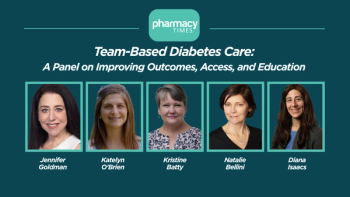
A panel of pharmacists and nurse practitioners discussed how interdisciplinary diabetes teams divide technology education, medication management, and follow-up care.
In an interview with *Pharmacy Times*, Manale Maksour, PharmD, BCOP, BCPS, explained that standardized protocols, multidisciplinary coordination, proactive supportive care, and clear escalation pathways are essential for safely managing CRS and ICANS during outpatient bispecific step-up dosing.
Compare revimumab and ziftomib dosing, food rules, tablet crushing, PPI interactions and half-life—key counseling tips to boost patient adherence.
Pharmacists compare revumenib and ziftomenib in AML—QTc thresholds, CYP3A4 interactions, acid suppression limits, and differentiation syndrome monitoring to optimize safety.
Choosing revimumab vs ziftomab in NPM1 AML depends on KMT2A status, transplant plans, drug interactions, adherence, and QTc monitoring.

Al-Ola Abdallah provided an overview of the DREAMM-7 trial, a multicenter phase 3 study in which belantamab mafodotin plus bortezomib and dexamethasone demonstrated a progression-free survival of approximately 3 years compared with 13 months for the daratumumab plus bortezomib and dexamethasone comparator arm, along with a 42% reduction in the risk of death and higher rates of minimal residual disease (MRD) negativity.
Menin inhibitors show promising AML responses—revumenib enables remissions and transplant bridging, while new combinations target KMT2A and NPM1.
The panelists discussed how BCMA-targeted therapies have rapidly evolved from last-resort options for heavily pretreated patients to agents now considered earlier in the treatment continuum, driven by their remarkable response rates, depth of response, and improving survival outcomes.
Menin inhibitors offer new hope in relapsed KMT2A/MP1 AML, controlling disease to reach remission and allogeneic stem cell transplant.

In an interview with Pharmacy Times, Manale Maksour, PharmD, BCOP, BCPS, associate director of pharmacy services at American Oncology Network, discusses the growing use of outpatient step-up dosing for bispecific T-cell engager therapies and the operational challenges clinics must address to safely implement these programs.

In 'Remote Patient Monitoring in Myeloma: How Technology Is Transforming Bispecific Antibody Management,' our panel of experts delve into the following critical question:
In this episode, 'When Transitions Break Down: Real-World Challenges and Lessons Learned in Myeloma Care Handoffs,' the oncology pharmacists explore the following question:

VMAT2 inhibitors show lasting benefit and strong tolerability; dosing, drug interactions, swallowing needs, and liver changes guide switching and long-term use.
Learn how pharmacists use simple talks, handouts and motivational interviewing to start TD therapy early—and choose VMAT2 dosing for adherence.

A member of the cardio-kidney-metabolic syndrome (CKM) guideline writing committee outlines steps pharmacists can take to ensure the kidney component of CKM is not overlooked.
Andrew Li, PharmD, BCOP, discusses key targeted therapy updates in the 2026 ASCO living guideline for stage IV non–small cell lung cancer and how pharmacists can help manage treatment-related toxicities and access barriers.

Boston University researchers say flat chronic kidney disease (CKD) prevalence conceals a growing diabetes-linked burden, and pharmacists have a key role in closing screening gaps.
Beckley Retreats CEO Neil Markey discusses how the recent executive order on psychedelic therapies for veterans could reshape access to ibogaine and other investigational treatments.
This week's episode covers a multistate rise in cyclosporiasis infections, insights from a Yale psychiatrist on safety monitoring for psychedelic therapies, and a wave of FDA approvals spanning nephrology, gene therapy, and cell therapy—plus a major expansion of the NIH's All of Us Research Program.

Pharmacy Times interviews Nicole McMullen, PharmD, regional clinical pharmacist at American Oncology Network, on patient and caregiver education, home monitoring, multidisciplinary coordination, and key lessons for community oncology practices implementing outpatient BiTE therapy.
Learn how pharmacists secure access to new therapies with co-pay cards, BlinkRx pricing, and prior authorization tips that cut delays.
The panelists examined the practical pathways available to community pharmacists who want to build their menopause expertise, with a strong consensus around The Menopause Society as a foundational starting point, offering position statements, continuing education, an annual meeting boot camp, and a certification pathway open to pharmacists, nurse practitioners, physical therapists, mental health counselors, and physicians.

In an interview with Pharmacy Times, Deanna Horner, PharmD, BCPS, discusses how pharmacists can serve as patient advocates in GLP-1 care and how direct access models may simplify the patient journey while preserving clinical oversight.