
Opinion|Videos|July 27, 2026
Pharmacist Takeaways: Monitoring Tools and Advocacy
Fact checked by: Ron Panarotti
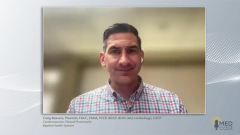
Craig Beavers shares takeaways on congestion-monitoring tools, self-education, and pharmacist advocacy in preventing heart failure readmissions.
In the closing section, Craig Beavers urges pharmacists to look beyond weights and labs to newer congestion-monitoring technologies, including CardioMEMS, wearables such as the Zoll HFMS, and sensors embedded in pacemakers and implantable cardioverter-defibrillators. Pharmacists should know how to read and interpret these tools, encourage their use, and build workflows around them—because they can reveal developing congestion before labs do, creating an opening to act aggressively and prevent readmission. He then frames how to make the internal case for a pharmacist-led transitions-of-care program built around Furoscix (furosemide injection): understand access and affordability, identify the patient characteristics that fit on the inpatient and outpatient sides, articulate why the product is being used, and track a small subset of outcomes in pilot patients before expanding. On self-education, Beavers recommends PubMed research, manufacturer resources, medical science liaisons, and hands-on familiarity—noting the autoinjector is the same one used for Wegovy and Ozempic (semaglutide; Novo Nordisk). His broader takeaway: Pharmacists have a profound ability to change patient trajectory, improve quality of life, and reduce readmissions, and should be the squeaky wheel driving adoption of new technologies rather than waiting for physician direction.
Related Content



























































































Trending on Pharmacy Times
1
Beyond Cost Avoidance: Advancing Unit-Level Pharmaceutical Economics in Health Systems
2
Pharmacist Care Gets BP Patients to Goal Faster, Safer
3
Higher Pulmonary Microplastic Burden Observed in Patients With Lung Cancer
4
Adult Pneumococcal Immunizations: A Practical Guide for Pharmacists
5