





Pharmacy Management
Latest News
Advertisement
Latest Videos





Shorts
1:45
New England Ambulatory Care Pharmacists Have a Community With NEIAP
a month ago
by
Katelyn O'Brien, PharmD, BCPS, CDCES, BC-ADM(+3 more)

0:57
Experts at McKesson ideaShare Discuss the Importance of the Meeting
4 months ago
by
Suzanne Feeney, PharmD(+4 more)

1:14
McKesson ideaShare Brings Advocacy and Pharmacy Together
4 months ago
by
Sandie Kueker, RPh(+1 more)

0:31
Independent Pharmacy Furthers Health Outcomes for All | McKesson ideaShare 2026
4 months ago
by
Niki Shah, MHSA, MBA, CCHW(+2 more)
0:52
What to Know as McKesson ideaShare Comes to Denver
4 months ago
by
Luke Halpern, Associate Editor

0:38
Pharmacists Want Pulse by NABP Scanning Tool: "It's Not How, It's When"
5 months ago
by
John Kirtley, PharmD(+1 more)

0:37
Why NABP's English Proficiency Exam Uses Computer-Based Speaking Tests Over Live Conversations
6 months ago
by
Jasmina Bjegovic, PharmD(+1 more)
0:35
How Pulse by NABP Is Strengthening Pharmaceutical Supply Chain Investigations
6 months ago
by
John Kirtley, PharmD(+1 more)
0:35
Why English Proficiency is Essential for US Pharmacists
6 months ago

0:34
Is your medicine legitimate? This new tool changes everything
6 months ago
by
Josh Bolin(+1 more)
Podcasts





Advertisement
More News

Artificial intelligence (AI) transforms a chaotic, reactive process into an adaptive, proactive system that improves workflow and patient safety.

When a PA is incomplete or missing the right documentation, the rejection lands at the pharmacy counter, not the prescriber's desk.

Robust reporting and analysis of medication errors allows health care institutions to identify systemic vulnerabilities, revamp workflows, and build a resilient infrastructure.

The future of 340B depends on integrating quality, compliance, technology, and pharmacist-led care to improve patient outcomes and strengthen audit readiness.

Darren Evans, PharmD, discusses what pharmacy leaders at other rural or regional health systems should consider before building a similar model.

Prepare your pharmacy for flu season with updated vaccine formulations, screening, staffing, ordering, cold-chain controls, billing workflows, and patient outreach to boost vaccination uptake.

Utah's AI-powered prescription refill pilot is fueling debate over how artificial intelligence can improve medication access and workflow efficiency while preserving the clinical oversight needed to ensure patient safety.

Pharmacists who understand both the clinical and the contractual dimensions of these policies are positioned to translate between the payer's cost logic and the provider's patient safety argument.

As OTC drink-spiking detection products become more widely available, pharmacists can play a critical role in counseling patients on their benefits, limitations, and appropriate response to suspected drink tampering.

Medicare Is Finally Covering GLP-1s for Weight Loss: What the Bridge Program Means for Your Practice
Pharmacists who understand the workflow before July 1 will be the ones patients and prescribers depend on when the program launches.

From AI-driven dispensing to grassroots advocacy wins, here are the key insights Pharmacy Times gathered at McKesson ideaShare 2026 in Denver.

Specialty dispensing and infusion services offer real opportunity—but the path requires careful planning, sequencing, and the right resources.

Three finalist pharmacies shared the mindsets, tools, and community-rooted strategies driving their operational success and patient-centered care.

Two pharmacy owners share real-world strategies for integrating artificial intelligence (AI) and automation to boost efficiency, expand clinical capacity, and elevate patient care.
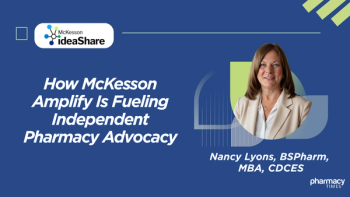
Nancy Lyons, vice president and chief pharmacy officer at Health Mart, explains how McKesson Amplify and pharmacist-told patient care stories are driving advocacy wins for independent pharmacies at the state and federal levels.

Niki Shah, MHSA, MBA, CCHW, discusses how Project Oasis, a new diabetic retinopathy screening pilot, and the company's Community Health Worker scholarship program are working together to reduce barriers to care in under-resourced communities

From artificial intelligence (AI)-driven dispensing to specialty service diversification, Jaime Montuoro, PharmD, previews the education lineup at McKesson ideaShare 2026.

McKesson ideaShare 2026 brings independent pharmacy's premier gathering to Denver, June 18-21, with Pharmacy Times on-site for exclusive interviews and coverage.

Although overall drug shortages declined in 2025, USP findings suggest that long-standing supply chain vulnerabilities continue to fuel persistent shortages across multiple therapeutic areas.

Hidden payer site-of-care restrictions delay specialty infusions, driving administrative burden and patient harm—and show why transparent criteria and better coordination matter.
The ability to anticipate access delays, navigate benefit changes, and protect continuity of care has become a defining role of modern pharmacy practice.
As pharmacies expand into offering immunizations and other clinical services, the rules for the Part B medical side have moved away from the traditional pharmacy side.

Pharmacists must remain in a constant state of readiness by implementing structured shortage management plans and guiding patients through access challenges as supply disruptions persist.

Walgreens pilots hybrid pharmacists—4 days in-store, 1 day remote—seeking less burnout and more steady staffing.

Walgreens’ hybrid pharmacist pilot is delivering early positive results while serving as a foundational element of a broader workforce modernization strategy.
Advertisement
Advertisement
Trending on Pharmacy Times
1
Pneumonic Plague: What Pharmacists Need to Know About Treatment
2
Could Cemdisiran Keep Patients With Myasthenia Gravis Out of the Hospital?
3
FDA Approves Pritelivir for Refractory HSV Lesions in Immunocompromised Adults
4
FDA Approves First Once-Monthly Subcutaneous Olanzapine LAI for Adults With Schizophrenia
5