

Pediatric and obstetric groups expand high-risk criteria and extend vaccination windows as federal vaccine guidance remains unsettled.
Pediatric and obstetric groups expand high-risk criteria and extend vaccination windows as federal vaccine guidance remains unsettled.

A real-world analysis of matched adults links glucagon-like peptide-1 (GLP-1) receptor agonist use to fewer major cardiovascular events, driven by a mortality benefit.

A minimum agreed set of outcomes could let pharmacists compare chronic kidney disease (CKD) interventions head-to-head and cut the heterogeneity that has long muddied trials.

Trial investigator Claudia R. Morris, MD, said substantial variation in pain phenotypes, treatment practices, and trial end points may offer broader lessons for future acute sickle cell disease research.

Both virtual and in-person interviews have their benefits.
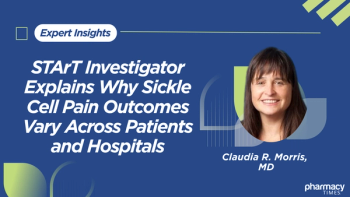
In an interview with Pharmacy Times, Claudia R. Morris, MD, lead investigator and author of the phase 3 STArT trial and a pediatric emergency medicine physician at Children’s Healthcare of Atlanta, discussed how patient history and institutional pain-management practices may influence time to crisis resolution and how care teams, including pharmacists, can help standardize treatment.
This episode covers the importance of considering vaccine timing, selection, and hesitancy in patients on immunomodulating and immunosuppressive therapies, along with emerging data linking several vaccines to reduced dementia risk.

Time-to-vaccination data from a large diabetes cohort reveal delayed, incomplete uptake of pneumococcal vaccination, with age and citizenship emerging as the strongest predictors.

The phase 3 findings support MR-107A-02's potential as a nonopioid option for certain patients with moderate to severe acute pain.

Five "essential" outcomes, including medication error and adherence, should anchor every pharmacist intervention study in chronic kidney disease.

Melissa Seifert, PharmD, of UPMC Health Plan, explains how managed care pharmacists guide DMT selection and address adherence barriers in patients with MS.

A clinical pharmacy specialist at UPMC Health Plan discusses how pharmacists help select disease-modifying therapies, address adherence barriers, and coordinate whole-person care for those with MS.
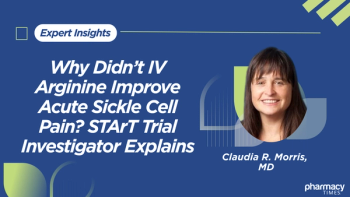
In an interview with Pharmacy Times, Claudia R. Morris, MD, lead investigator and author of the phase 3 STArT trial, discusses why intravenous arginine did not shorten time to crisis resolution and how institutional variation, pain heterogeneity, shorter hospital stays, and treatment timing may have influenced the findings.

Glucagon-like peptide-1 (GLP-1) and GIP/GLP-1 agents are just the start: amylin- and glucagon-based mono-, dual-, and tri-therapies are on the horizon.

A subsequent dispute between state and federal officials over the deaths' classification has thrust the state into the center of a national vaccine policy fight.

A multicohort study finds divergent complication patterns and raises the prospect that millions are being treated for the wrong mechanism.

This FAQ describes what oncology pharmacists should know ahead of Gynecologic Cancer Awareness Month in September.

In an interview with Pharmacy Times, Claudia R. Morris, MD, lead author of the phase 3 STArT trial and professor of pediatrics and emergency medicine at Emory University School of Medicine, discusses findings from the phase 3 STArT trial of intravenous arginine for acute sickle cell pain, limitations of time to crisis resolution as a clinical trial end point, and opportunities for pharmacists to improve opioid-use data collection.

Pharmacists’ medication expertise can mitigate GI adverse effects and improve outcomes for patients beginning obesity pharmacotherapy

A Medicare GLP-1 bridge program marks 2026, while multiagonists like CagriSema are poised to lead the next wave of obesity therapy.
From statins after 70 to aspirin-free STEMI care, the pharmacist takeaway across 13 trials: identify disease earlier, treat precisely, deliver reliably.

August 2026 brought major oncology advances, including new FDA approvals and pivotal phase 3 data that expanded targeted, immune-based, and personalized treatment strategies.

August 2026 brought first-in-class approvals in multiple myeloma, warm autoimmune hemolytic anemia, and polycythemia vera alongside important findings involving bispecific antibodies, sickle cell pain, and infection risk.
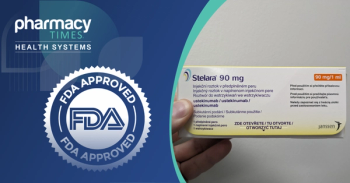
The approval makes ustekinumab the first non-TNF-alpha monoclonal antibody available for both major forms of pediatric inflammatory bowel disease (IBD).

Rusfertide gives adults with polycythemia vera a first-in-class option to cut phlebotomy dependence and control hematocrit.

Suzetrigine postoperative pain data grows, but buprenorphine access gaps persist; naloxone patch and sickle cell pain trial reshape nonopioid care.

From enlicitide to Lp(a)-lowering siRNAs, a look at the add-on therapies helping high-risk patients reach stricter LDL targets below 55 mg/dL.

Pharmacist Jennifer Goldman on why expectation-setting, GI counseling, and nutrition drive GLP-1 persistence and long-term success.

Tarlatamab targets DLL3 in lung cancer; learn step-up dosing, CRS/ICANS monitoring, and pharmacy tips to keep patients safely on therapy.

IPD survivors face years of sharply elevated recurrence risk, yet vaccination remains low.