About the Author
Juliett Bartecki is the student forum vice president at the Psychedelic Pharmacists Association.

As psychedelic medicines near approval, pharmacists will become essential guides in safety and education.
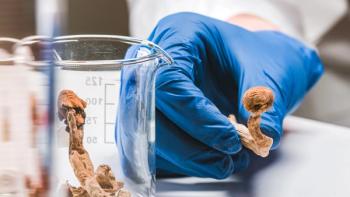
he world of mental health medicine is changing because of new research on psychedelic drugs. After being stigmatized and subsequently ignored by researchers for decades, substances such as psilocybin, derived from certain mushrooms, and 3,4-methylenedioxymethamphetamine (MDMA), commonly referred to as ecstasy, are now being researched for their potential to treat serious medical conditions. Psychedelic medicines are demonstrating promise as a treatment for various conditions, including posttraumatic stress disorder (PTSD), anxiety disorders, major depressive disorder, treatment-resistant depression, and substance use disorders. A landmark 2021 study on MDMA-assisted therapy for severe PTSD found that 71% of participants who received the therapy no longer met the diagnostic criteria for PTSD at the end of the trial, compared with 48% in the placebo group, demonstrating its significant potential for treatment-resistant cases.1
Five psychedelic medications have received FDA breakthrough therapy designations, suggesting approvals may be on the horizon. Pharmacists will be essential in guiding patients on safe use, drug interactions, and harm reduction. Unfortunately, these medicines have a poor reputation, which has led to many misunderstandings.
Many people believe that psychedelics are highly addictive, like heroin or cocaine. This is not true for most of them. This common fear stems from their classification as Schedule I drugs, which implies a high potential for abuse; however, the scientific evidence paints a very different picture. Classic psychedelics (eg, psilocybin and lysergic acid diethylamide) work on a specific serotonin receptor in the brain and do not affect the brain’s reward system in the same way that addictive drugs do. The human body rapidly builds a tolerance to classic psychedelics, which makes getting physically addicted to them exponentially more difficult.2
Not all psychedelics are the same, which is why understanding their pharmacology is so critical for health care providers. MDMA causes the brain to release a lot of serotonin and dopamine. This neurochemical activity can produce feelings of euphoria that some individuals might seek out, making it slightly more likely to be misused. Ketamine, which is a dissociative drug, can also be habit-forming for some people if it is not used carefully in a medical setting. Its rapid antidepressant and dissociative effects can lead to psychological dependence in vulnerable individuals.
A pharmacist’s job entails knowing the difference and helping patients understand the risks. This involves careful screening for a patient’s history of substance misuse and providing clear guidance on each substance’s unique safety profile.
Due to recreational use—and misuse—of psychedelic medicines, many envision “trips” with scary hallucinations and are fearful that this will happen during therapy. In a medical setting, psychedelic-assisted therapy (PAT) allows for a controlled experience. Patients receive a pure, measured dose in a safe and calm environment.3
PAT is a structured treatment model built upon 3 critical stages: preparation; administration, also known as the dosing session; and integration. This framework ensures that the medicine is just 1 component within a comprehensive therapeutic process, fundamentally distinguished from recreational use. The entire approach is guided by the principle of “set and setting,” which intentionally manages the patient’s mindset (set) and the physical and social environment (setting) to maximize safety and therapeutic potential.
The process begins with preparation, in which patients work with trained guides or therapists to establish intentions and build a foundation of trust. This leads to the administration session, typically in a carefully designed setting. This often includes a calm room with music, an eye mask, and supportive guides; however, it can be adapted to other environments, like nature. It is important to note that the specific model can vary. For instance, although some protocols use 2 therapists (“sitters”), others may involve a single guide. Their presence is crucial not only for safety but also to provide grounding, as patients may sometimes navigate challenging or frightening moments. The goal is healing, not recreation, and these difficult passages are often where the most profound work occurs. This makes the final integration phase essential, as therapists help patients process and make meaning of their entire experience, transforming insights and challenges into lasting positive change. This creates a safe environment where the mind can safely explore and heal.
The most effective clinical studies—such as those using MDMA for PTSD or psilocybin for depression—all follow a similar plan. The psychedelic substance is always given alongside several therapy sessions, acting as a tool that assists in loosening rigid ways of thinking and increasing brain flexibility. This openness makes it easier for patients to work with their therapists to navigate through painful memories and learn new ways to cope. Therapy before and after the drug session is crucial, as it helps patients understand their experience and apply what they have learned to their everyday lives.
New and promising research has led to a hopeful idea that is often exaggerated. Some people believe psychedelic medicines will one day make all other types of therapy and mental health treatments unnecessary, painting a future where just 1 psychedelic session can “cure” a mental health condition, eliminating the need for long-term treatment; however, both current medical practice and science point toward a more balanced future. Psychedelics are not considered a cure by themselves; instead, they are seen as powerful tools that can boost the effectiveness of therapy.4
Pharmacists can use this mistaken belief as an opportunity to provide clarity and a chance to educate. It is important to understand that psychedelic medicine is not meant to take the place of existing treatments. Instead, it offers a new and strong option for people who have not been helped by other treatments, especially those with hard-to-treat conditions. Pharmacists can help patients have realistic expectations by explaining that these therapies are designed to be part of a complete mental health plan. They are meant to work together with, not against, other well-known forms of care.
If these medicines are approved, a pharmacist’s role will be crucial for patient safety. Their most critical job will be to check for dangerous drug interactions. This process can begin with a comprehensive medication review, where the pharmacist uses the patient’s profile to screen for potential issues before the prescription is even prepared. Such proactive screenings are the most effective defense against serious adverse events. They will also need to screen for other health problems (eg, heart conditions, family history of psychosis), which could make these treatments risky. Finally, pharmacists will have to become teachers. They can explain the facts to patients and other health care workers, helping to overcome the old stigma with new science.
For any pharmacy student, pharmacist, or professional looking to navigate the emerging field of psychedelic medicine, membership in the Psychedelic Pharmacists Association (PPA) is an invaluable investment. The PPA is a professional organization dedicated to uniting and educating pharmacists with the specialized knowledge and resources needed to ensure patient safety and effective care. As detailed on the website
Juliett Bartecki is the student forum vice president at the Psychedelic Pharmacists Association.
Psychedelic medicine is a fast-growing field that future pharmacists cannot ignore. Understanding the truth behind common myths is the first step. Evidence shows that when used carefully, these substances can help people with severe depression and PTSD. For pharmacy students, learning about this now is a wise choice. By becoming experts, pharmacists can ensure they are ready to guide patients safely into this new era of medicine.
5 months ago
Spring 2026 Quiz: Test Your Pharmacy Knowledge!11 months ago
Fall 2025 Quiz: Test Your Pharmacy Knowledge!11 months ago
A Silent Struggle Behind the White Coat