

Theresa Tolle, owner of Bay Street Pharmacy in Sebastian, Fla., was recognized with the award.
Theresa Tolle, owner of Bay Street Pharmacy in Sebastian, Fla., was recognized with the award.

Offering immunizations (and making sure to carefully assess immunizations are up to date), medication therapy management (MTM), medication synchrnonization, and point of care testing are all ways, Kneeland explained, that pharmacists can carve out a niche for themselves.

Pharmacy Times® and Parata Systems named the winners of the 2018 Next-Generation Pharmacist® Awards yesterday at a ceremony held concurrently with the 2018 NCPA Annual Meeting in Boston, Massachusetts.

HR 6—which was passed in the Senate on Wednesday and in the House of Representatives last week—instructs the Secretary of Health and Human Services to establish a technical expert panel to review quality measures regarding opioids and opioid use disorders.

The Qualified Business Income Deduction proposed rule would expand the "specified service trade or business," or SSTB, definition of "services performed in the field of health" to include pharmacists.

This event continues through tomorrow until the start of the National Community Pharmacy Association’s annual meeting.

A pair of bipartisan bills that would lift ‘gag clauses’ prohibiting lower prescription drug price information to be shared with customers have been passed by the House of Representatives and the Senate.

NCPA officials applaud passage.
In this clip, Laura Davis Taylor and Ed King, co-founders of The High Street Collective share their 5 tips to make your pharmacy stand out and keep customers coming back.
In this video from the National Association of Chain Drug Store's Total Store Expo (NACDS TSE), Anthony Pudlo, PharmD, MBA, Vice President of Professional Affairs at the Iowa Pharmacy Association, talks about technician product verification in Iowa, and how this has benefitted both technicians and pharmacists.
In this interview from the National Association of Chain Drug Store's (NACDS) Total Store Expo, Laura Davis Taylor and Ed King, Co-founders of the High Street Collective, share what they think retail pharmacy will need to look like in the future to stay relevant.
Pharmacists can help eliminate certain barriers to condom use by understanding the range of products available.
On our own Instagram page, Pharmacy Times asked our followers if they had heard about menstrual cups at their pharmacy and if they were interested in learning more.
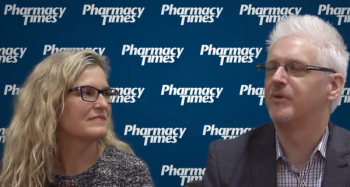
Laura Davis Taylor and Ed King, who are consultants on retail sales strategy, discuss some key take away points from their presentation at the National Association of Chain Drug Stores (NACDS) Total Store Expo,

Advice for patients who are considering menstrual cups.

Patient outcomes are often the result of what patients do when they are away from their providers.

Medical cannabis has been a hot topic of discussion in the state of Colorado.

The adoption of digital health options is growing rapidly, with more than 318,000 health related apps available in the app store on most smart phones, and almost 200 more being added each day.

Speaker at NACDS Total Store Expo explains how Facebook and Instagram can boost retail pharmacy performance.

Watch as our Executive Vice President for Pharmacy Advocacy discusses pharmacy roles in immunizations, and record his "word of the day" for a chance to win $1000 gift card!


Paul Burton, MD, the Vice President of Janssen Scientific Affairs, LLC, explains the role of pharmacists in diagnosing and treating diabetes with their drug, Invokana (canagliflozin).

In addition to showing no significant imbalance of BKLE amputation, the study also identified a HHF reduction in the general T2D population.

People with T2D have an increased risk of damage to the eyes, kidneys, nerves, legs, heart and brain, and many of these complications can ultimately affect mortality.
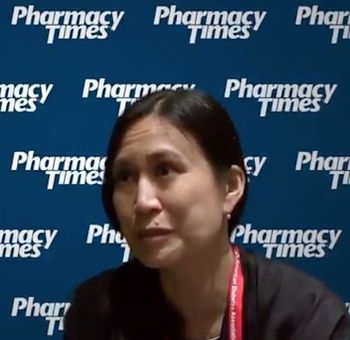
Risk factor modification remains key to managing patients with HIV and diabetes.