

Our team is on site in Denver all week covering from ASHP Summer 2018.
Our team is on site in Denver all week covering from ASHP Summer 2018.
In this clip, Traci Fritschle, PharmD, explains why pharmacists are uniquely positioned to be utilized in a team-based model for diabetes care.
In this clip, Lucinda L. Maine, PhD, RPh, AACP, discusses how the APhA platform encourages leadership in the pharmacy profession.
At the American Pharmacists Association Annual Meeting, Lucinda L. Maine, PhD, RPh, AACP, was honored with the Gloria Niemeyer Francke Leadership Mentor Award.
In Idaho, pharmacists are able to delegate tasks, such as final product verification, transferring prescriptions, and even administering vaccines, to pharmacy technicians.
In this clip, Brooke Griffin, PharmD, from Midwestern University, discusses the pharmacist's role in assessing patient eligibility for hormonal contraception.
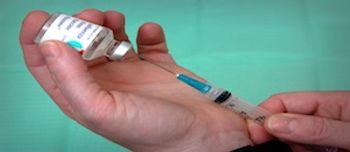
In a session at APhA2018, the national president of the American Pharmacists Association Academy of Student Pharmacists, spoke about organizing events, such as a flu vaccine clinic or presentation.

Following NDPP guidelines for early prevention programs, The Kroger Co. established patient-centered processed that involved collecting and assessing patient records, while connecting those enrolled in the study with lifestyle coaches.
Assure patients they'll be able to forward their medications, and counsel on how to administer them.

Two pharmacy professors address this issue in a session at APhA2018 called "Loosening Controls on Birth Control: Helping Women Get the Care They Need."
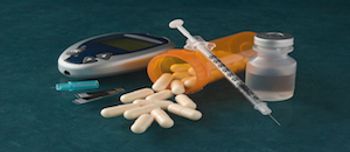
WellDyneRx has created a comprehensive program to control costs while improving communication and outcomes.
The recipients of the 2018 APhA Immunization Champion Awards have been announced
She is director of the Bristol-Myers Squibb Foundation, which works to promote health equity and improve the health outcomes of those disproportionately affected by serious conditions and diseases.

The APhA annual meeting is about to kick off, and we will be there all weekend covering it live.

Tanios Bekaii-Saab, MD, FACP, Mayo Clinic Cancer Center, talks about key takeaways from the phase 2 ReDOS clinical trial for specialty pharmacists.

Kohei Shitara, MD, Department of Gastrointestinal Oncology of National Cancer Center Hospital East, Japan, discusses the importance of the REVERCE clinical trial for specialty pharmacists.

Prior treatment with sorafenib followed by pembrolizumab (Keytruda) shows promising progression-free survival and overall survival in patients with advanced hepatocellular carcinoma.

Cetuximab (Erbitux) with pembrolizumab (Keytruda) shows promise in patients with mCRC.

Induction therapy shows the potential to achieve disease control in patients with locally advanced pancreatic cancer.

A novel CTC assay showed up to 88% accuracy detecting precancerous and cancerous colorectal lesions.

Nivolumab (Opdivo) alone and in combination with ipilimumab (Yervoy) induced responses in patients with heavily pretreated gastrointestinal stromal tumors.

The addition of ramucirumab did not improve overall survival in patients with HER2-negative gastric cancer.

A combination VEGFR-2 inhibitor plus an anti–PD-L1 agent demonstrated antitumor activity in patients with previously treated advanced gastric or gastroesophageal junction adenocarcinoma.

Cabometyx found to improve median overall survival by 2.2 months in patients with previously treated advanced hepatocellular carcinoma.

There may not be a significant survival benefit from a surgical procedure for gastric cancer.
Median progression-free survival was 5.8 months among patients with HER2-positive gastric cancer who were treated with DS-8201.

Given the crucial role that pharmacists play in promoting and ensuring medication safety, it is important to that they remain educated on common medication errors and ways to prevent them, according to the Institute for Safe Medication Practices.
In this clip, Mathen talks about why he wanted to share his hospital's experience with the technology and how it can potentially help other hospitals approach the implementation process.

At the ASHP Midyear Clinical Meeting and Exhibition, Andrea White, PharmD, Pharmacy Administrative Resident at Texas Children's Hospital, discussed her presentation on Baxter's DoseEdge System, including the implementation process that Texas Children's Hospital underwent to adopt the new technology in their institution and assess the system's benefits.