




Vaccines
Latest News
Advertisement
Latest Videos






Shorts

0:43
Why Targeting a Constrained Epitope May Make COVID-19 Monoclonal Antibodies More Durable
a month ago
by
Michael Mina, MD, PhD(+1 more)
0:48
Inside the LIBERTY Study: Testing mRNA Vaccination and Monoclonal Antibodies Side by Side
2 months ago
by
Michael Mina, MD, PhD(+1 more)

0:43
Why Pharmacists Are Your Best Defense Against Misinformation
3 months ago
by
Jennifer Griffin, PharmD, MS(+1 more)

1:19
Pneumococcal Disease Insights: Why Vaccination Matters
7 months ago
by
Luke Halpern, Associate Editor

1:16
The Truth About Vaccine Preservatives and Safety
8 months ago
by
Sharon Nachman, MD(+1 more)

0:32
Clinicians Face Challenges Amid Shifts in Immunization Guidance
9 months ago
by
Lora Sparkman, MSN, RN(+1 more)
0:32
Has Science-Based Guidance Changed at the Federal Level?
10 months ago
by
Lora Sparkman, MSN, RN(+1 more)

0:38
Changes to HPV Vaccine Guidance Could Be Problematic for Cancer Prevention
10 months ago
by
Jeff Goad, PharmD, MPH(+1 more)
0:46
Why the US' and Denmark's Vaccine Schedules Aren't Comparable
10 months ago
by
Jeff Goad, PharmD, MPH(+1 more)

1:20
Pharmacists: The Critical Final Link in Turning Vaccine Science Into Patient Care
10 months ago
by
Aislinn Antrim, Associate Editorial Director
Podcasts







CME Content






































































































Advertisement
More News

In every practice setting, pharmacists can meet vaccine hesitancy with evidence, effective communication, and vetted resources that move patients toward “yes.”

PAHO confirmed endemic measles transmission in the US, Mexico, and Bolivia, putting pharmacists' role in vaccination and case detection in focus.

A meta-analysis presented at IDWeek 2026 found responses were stronger after chemotherapy but waned within a year, supporting a 2-dose strategy.

Inconsistent state immunization laws complicate pharmacy operations and limit patient access.
Getting patients vaccinated matters more than which COVID-19 vaccine they receive, says Jodi Longueil, PharmD.

RSV hospitalization raised short-term invasive pneumococcal disease risk, especially among unvaccinated individuals.

VAX-31 met all primary immunogenicity end points against PCV20 and PCV21 in the pivotal OPUS-1 trial.

Pharmacists can reduce COVID-19 vaccine hesitancy through honest, nonjudgmental communication and by using every patient touchpoint as an opportunity to offer vaccination.
Expert Q&A: Geisinger Investigator Discusses Low Flu Vaccination Rates, ICU Findings in Older Adults
A study author explains how pharmacists can help close vaccination gaps in rural communities and what lower ICU admission rates among vaccinated older adults may mean.

Two IDWeek 2026 studies link influenza vaccination to fewer ICU admissions in older adults and fewer emergency visits in children.

Early data suggest the 7 PCV20-added serotypes are causing a smaller share of invasive pneumococcal disease in children younger than 2 years.

The project maps how flu and HIV proteins enter cells, with the aim of developing longer-lasting vaccines.

VAX-31 met all primary end points against PCV20 and PCV21 in the pivotal phase 3 OPUS-1 trial.

Despite the controversy surrounding mRNA's role in the COVID-19 response, the technology's broader promise—to prevent, treat, and even cure a host of diseases—is coming into focus.
Age is the leading factor in influenza vaccine selection, and vaccination remains effective well beyond the ideal September-to-October window.

Pharmacists can help overcome influenza vaccine hesitancy by correcting common misconceptions, routinely asking every patient about vaccination, and leveraging their standing as trusted health care professionals.
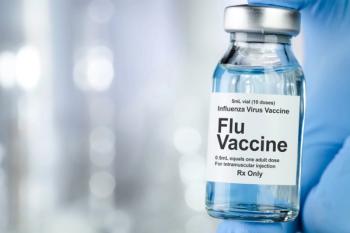
Influenza Vaccines Continue to Reduce Severe Disease and Death Across High-Risk Groups, Evidence Review Finds
Published: | Updated:
A review of 69 studies finds influenza vaccines continue to reduce hospitalization and death, with no new safety concerns.

Authors of a pharmacist-directed transitions-of-care study discuss what drives pneumococcal vaccine hesitancy and how pharmacists can build systematic vaccine screening into inpatient workflows.

Most patients screened by a hospital pharmacist–led transitions-of-care service had unmet pneumococcal and other vaccine needs, and most accepted vaccination when offered.
Advertisement
Advertisement
Trending on Pharmacy Times
1
GLP-1 RA Adverse Effects: What Pharmacists Should Monitor
2
FDA Approves Bacfenssi to Reduce Surgical Site Infections After Colorectal Surgery
3
From Prediction to Practice: Why Oncology Pharmacists Must Remain the Decision Makers in AI-Assisted Toxicity Prediction
4
Why an Oral PCSK9 Inhibitor May Motivate More LDL-C Lowering
5