

Cardiovascular Health
Latest News

Advertisement
Latest Videos
Shorts
1:36
Understanding Hydrophilic vs. Lipophilic Statins
5 months ago
by
Saro Arakelians, PharmD

0:45
Finerenone in HFmrEF and HFpEF: Findings From FINEARTS-HF
5 months ago
by
Jawad Butt, MD, PhD(+1 more)

0:38
Mavacamten in Adolescents with Obstructive HCM
5 months ago
by
Joseph Rossano, MD, MS, FAAP, FACC

0:38
2026 Guideline Updates for Dyslipidemia
6 months ago
by
John Bucheit, PharmD, BCACP(+1 more)

0:34
Why 2026 Will Be a Huge Year for Dyslipidemia Care
7 months ago
by
Joseph J. Saseen, PharmD, BCPS, BCACP, CLS(+1 more)

0:33
How Pharmacists Can Identify Patients With Familial Chylomicronemia Syndrome
8 months ago
by
On Chen, MD(+2 more)

0:53
How Texts Can Remind You to Fill Your Prescriptions
8 months ago
by
Weston Blakeslee, PhD(+1 more)

0:34
Pharmacists Are Key to Cardiovascular Counseling for Patients With Narcolepsy
10 months ago
by
Richard Kovacs, MD(+1 more)
Podcasts


























































































Advertisement
More News
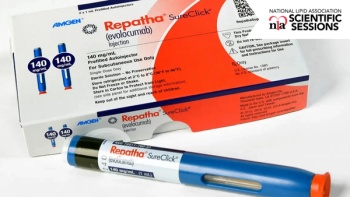
TIMI Study Group investigators presented new VESALIUS-CV data showing that intensive LDL-C lowering with evolocumab reduces major cardiovascular events, reinforcing the "lower is better, earlier is better" approach to lipid management.

The landscape of cardiovascular prevention is shifting from a focus on surrogate biomarkers to a more granular, image-based assessment of actual disease burden.
New 2026 lipid guidelines push earlier screening, PREVENT risk scoring, and tougher LDL/ApoB targets with expanded nonstatin options.

Although polypharmacy is common in older adults and may increase the risk of adverse events and drug-drug interactions, statin therapy may continue to provide benefit in patients older than 75 years.
Craig Beavers, PharmD, shares his initial thoughts on the new 2026 CKM guidelines, which highlights a landmark shift in cardiovascular care.

Although evidence supports safety of apixaban and rivaroxaban relative to warfarin, researchers had not directly compared their bleeding risk until last year.

A cross-sectional analysis of nearly 30,000 US adults found that economic instability, food insecurity, limited education, and poor social context each independently elevated the odds of advanced cardiovascular-kidney-metabolic (CKD) syndrome—but not equally across all groups.
What's Making Headlines in Cardiovascular Care: A Pharmacist's Breakdown of the Latest Breakthroughs
Craig Beavers highlights 3 major developments in cardiovascular and cardiometabolic medicine that pharmacists should have on their radar.

Emerging data support less intensive antithrombotic strategies for LVADs that could reduce bleeding complications without compromising thromboembolic protection.

A large analysis found that measurable declines in processing speed, global cognition, and executive function began up to 8 years before a cardiovascular event.

The FDA approved baxdrostat based on meaningfully positive results from the phase 3 BaxHTN trial.

Clinical pharmacists Andrew Willeford and Laura Velazquez explore the paradigm shift in oHCM management, highlighting best practices for pharmacist-led clinical workflows in health-system practice.
Rhonda Monroe discusses her harrowing journey as a 3-time heart attack and stroke survivor, highlighting the critical importance of patient self-advocacy.

Inflammation fuels residual ASCVD risk; survey reveals hs-CRP testing gaps, persistent angina, and new therapies for cardiovascular health.

The ACACIA-HCM trial marks the first time a therapy has shown statistically significant improvements in exercise capacity and symptom burden in patients with non-obstructive hypertrophic cardiomyopathy.
Pharmacists are vital in identifying at-risk patients, supporting diagnostic testing, optimizing therapy, and monitoring medication adjustments.

Joseph Saseen, PharmD; and Joel C. Marrs, PharmD, discuss key updates in the 2026 dyslipidemia guidelines and their implications for clinical and pharmacy practice.
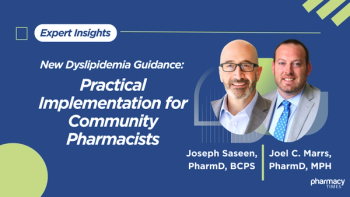
2026 dyslipidemia guideline updates highlight earlier risk-based lipid management, expanded biomarker use, and a growing pharmacist role in cardiovascular prevention.
Craig Beavers and Kyle Fischer debrief on key late-breaking cardiovascular trials from the 2026 American College of Cardiology Scientific Sessions.

Ferric carboxymaltose is effective and guideline-endorsed, yet underutilized due to high cost and system-level barriers.

A new study supports the use of PREVENT equations in routine clinical practice, reinforcing their role in cardiovascular risk assessment and pharmacist-led prevention strategies.
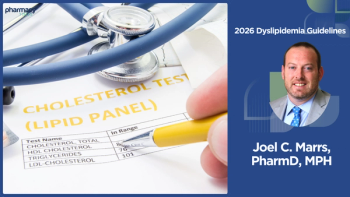
Pharmacists play a central role in shared decision-making by guiding patients through lipid-lowering options, cost considerations, and ongoing monitoring aligned with updated dyslipidemia guidelines.


This decision builds upon the drug’s initial approval for adult patients and introduces a new therapeutic option for clinicians treating pediatric populations with rapid heart rate disturbances.

Team-based hypertension care puts pharmacists and home blood pressure monitoring at the front line, boosting control rates and saving lives and costs.
Advertisement
Advertisement
Trending on Pharmacy Times
1
New Bladder Cancer Regimens Reshape Treatment Across Disease Stages
2
FDA Approves Levacetylleucine to Treat Ataxia in Adult, Pediatric Patients With A-T
3
Radioligand Therapy Doesn’t Need to Be Risk-Free—It Needs to Be Worth It
4
Biologic Stewardship: The Next Frontier for Health System Pharmacists
5