

After identifying 3 novel checkpoints involved in immunosuppression and autoimmune diseases, investigators developed recombinant proteins that could be used in this patient population.
After identifying 3 novel checkpoints involved in immunosuppression and autoimmune diseases, investigators developed recombinant proteins that could be used in this patient population.

The Pharmacy Times® Pharmacy Focus podcast provides the latest industry news and information, thought-leader insights, clinical updates, patient counseling tools, and innovative solutions for the everyday practice and business of pharmacy.

Concerns surrounding the vaccination of this population stemmed from the effects that cancer and its treatments can have on the immune system, but the investigators said this study should alleviate those fears.
Teclistamab is an off-the-shelf, T-cell redirecting, bispecific antibody targeting both B-cell maturation antigen (BCMA) and CD3 receptors.

Because health care is a constantly evolving field, research pharmacist Brian Wortz, PharmD, of Cancer Treatment Centers of America, said pharmacists must be aware of the newest findings and how they could impact their patients.

Data were presented at the virtual 2021 American Society of Clinical Oncology (ASCO) Annual Conference.
Data from a phase 3 trial comparing acalabrutinib against ibrutinib in adults with previously treated CLL showed acalabrutinib presented with non-inferior PFS and significantly fewer events of atrial fibrillation.

In an interview with Pharmacy Times, Brian Wortz, PharmD, said he enjoys the innovation in his research, especially when their findings have the potential to drastically impact patients’ lives.
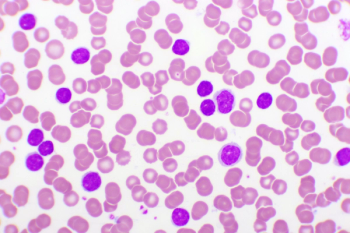
Phase 3 data presented at the 2021 ASCO Annual Meeting have reinforced the long-term survival benefits and well-established safety profile of single-agent ibrutinib for patients with CLL.
Nivolumab and ipilimumab is the first dual immunotherapy combination to demonstrate a superior survival benefit compared to chemotherapy in this setting.
Patients with prostate cancer have to be approached differently depending on the state of their metastases.

Working in clinical research combines skills from both the retail and health system pharmacy spaces, as well as other, more unique skillsets, according to research pharmacist Brian Wortz, PharmD, of Cancer Treatment Centers of America, in an interview with Pharmacy Times.

Although historic study results with mantel cell lymphoma showed discouraging findings, new CAR T-cell therapies routinely show between 40% and 50% of patients respond long-term without relapsing.

Investigative and newly approved drugs targeting RET activity and KRAS-related mutations are showing deep, durable responses in several types of cancers.

While discussing a few case studies, the panel was able to make appropriate treatment decisions for each patient and emphasized the importance of communicating with patients as a physician.
The definition of oligometastatic disease has continued to be shrouded in uncertainty due to the varying assessment criteria that exist at present during trial analyses.

The development of precision medicine for pancreatic cancer has faced a number of challenges, including a lack of specific molecular-targeted drugs.

Margetuximab, trastuzumab deruxtecan, and tucatinib have all been approved in the past 2 years for the treatment of various subsets of patients with breast cancer.

Jonathan Spicer, MD, medical director of the McGill University Health Center Thoracic Oncology Network, discusses what is still needed to be investigated in the future following the phase 3 trial assessing nivolumab plus platinum-doublet chemotherapy as neoadjuvant treatment for resectable non-small cell lung cancer.

Jonathan Spicer, MD, medical director of the McGill University Health Center Thoracic Oncology Network, discusses what some of the most important findings were in regard to patient outcomes from the phase 3 trial assessing nivolumab plus platinum-doublet chemotherapy for resectable non-small cell lung cancer.

Research pharmacist Brian Wortz, PharmD, with Cancer Treatment Centers of America, said working as a pharmacist in clinical research provides interesting opportunities to be at the forefront of drug development.
Jonathan Spicer, MD, medical director of the McGill University Health Center Thoracic Oncology Network, discusses findings regarding adverse events during the phase 3 trial assessing nivolumab plus platinum-doublet chemotherapy as neoadjuvant treatment for resectable non-small cell lung cancer.

Jonathan Spicer, MD, medical director of the McGill University Health Center Thoracic Oncology Network, discusses what the findings of the phase 3 CheckMate 816 trial assessing nivolumab plus platinum-doublet chemotherapy as neoadjuvant treatment for patients with resectable non-small cell lung cancer may mean for future treatment options.
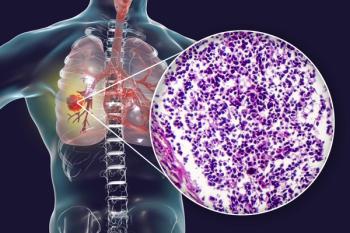
Jonathan Spicer, MD, medical director of the McGill University Health Center Thoracic Oncology Network, discusses his presentation on surgical outcomes from the phase 3 CheckMate 816 trial assessing nivolumab plus platinum-doublet chemotherapy as neoadjuvant treatment for patients with resectable non-small cell lung cancer.
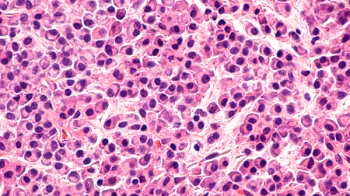
ibrutinib (Imbruvica) plus venetoclax (Venclexta) shows complete response and complete response with incomplete bone marrow recovery rate of 56% among patients with chronic lymphocytic leukemia and small lymphocytic lymphoma.

If it were to be approved now, the drug would be used in patients with metastatic castration-resistant prostate cancer who have progressed on an androgen receptor-directed therapy and 1 to 2 taxane-based chemotherapeutics.
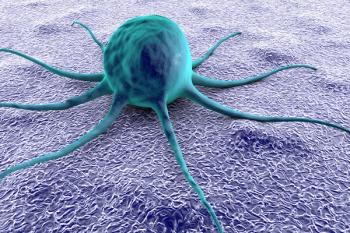
Jonathan Strosberg, MD, section head of the Neuroendocrine Tumor Program and vice president of Medical Oncology at the Moffitt Cancer Center, discusses the overall impact of the research assessing lutetium Lu 177 dotatate for midgut neuroendocrine tumors.
Venetoclax (Venclexta) plus fulvestrant (Faslodex) did not provide superior outcomes compared to fulvestrant monotherapy among patients with locally advanced or metastatic ER–positive, HER2-negative breast cancer.
Jonathan Strosberg, MD, section head of the Neuroendocrine Tumor Program and vice president of Medical Oncology at the Moffitt Cancer Center, discusses patients reports of their quality of life while being treated with lutetium Lu 177 dotatate for midgut neuroendocrine tumors.
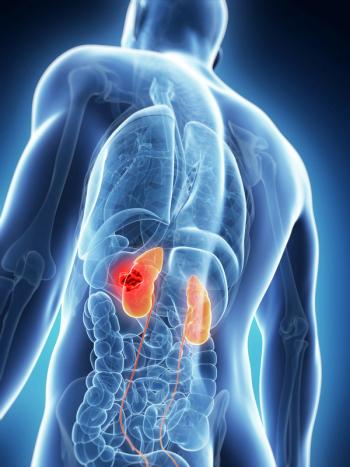
Andrea Apolo, MD, a Lasker clinical research scholar and head of the Bladder Cancer Section at the National Cancer Institute, explained how results from the phase 3 trial could change the treatment opportunities for patients with aRCC, as well as the treatment landscape more broadly.