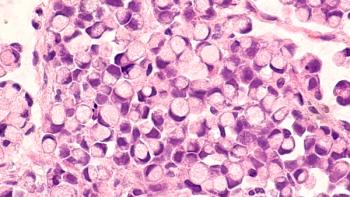
Phase 2 DeLLphi-309 data show comparable activity in previously treated SCLC with less frequent dosing.
Although highly efficacious, patient selection and adverse event management are crucial.
The recent FDA approval of enfortumab vedotin-ejfv (Padcev; Astellas Pharma Inc, Pfizer) combined with pembrolizumab (Keytruda; Merck) for perioperative therapy marks a significant turning point in the management of muscle-invasive bladder cancer (MIBC).1
This regimen, which consists of neoadjuvant therapy followed by radical cystectomy and subsequent adjuvant treatment, has the potential to redefine the standard of care for a vulnerable population: patients ineligible for cisplatin-based chemotherapy. Many patients are considered cisplatin-ineligible due to comorbidities, such as impaired renal or cardiac function or poor performance status.2,3
The efficacy supporting this approval comes from the KEYNOTE-905/EV-303 trial. This phase 3 study demonstrated significant and clinically meaningful improvements when comparing the combination therapy to surgery alone. The regimen reduced the risk of recurrence, progression, or death by 60% and cut the risk of death by 50% compared to surgery alone.2
Furthermore, the pathological complete response (pCR) rate observed with the perioperative combination was remarkably high at 57.1%, significantly surpassing the 8.6% rate seen with surgery alone. Both event-free survival and overall survival were also significantly improved. Median event-free survival was not reached versus 15.7 months, and median overall survival was not reached versus 41.7 months, when compared to the surgery-alone arm.2
Although the clinical benefit is substantial, implementing this combination requires careful management due to its increased toxicity. Grade 3 or higher treatment-emergent adverse events (AEs) were reported in 71.3% of patients receiving enfortumab vedotin plus pembrolizumab, compared to 45.9% in the control arm.2 Notably, the perioperative combination did not negatively affect the ability of study participants to undergo surgery.2
Pharmacists must be vigilant in monitoring and counseling patients on specific high-risk toxicities associated with both components of the regimen2:
The successful use of perioperative enfortumab vedotin plus pembrolizumab depends heavily on the oncology pharmacist’s expertise in 3 crucial areas: patient selection, treatment adherence, and advanced data integration.
Given the high rate of AEs, the pharmacist’s input is vital for appropriate patient selection. This treatment may not be a suitable choice for all patients. For instance, patients with poorly controlled diabetes or severe peripheral neuropathy are likely not good candidates for enfortumab vedotin, while those with severe and active autoimmune conditions should probably not receive pembrolizumab. Pharmacists are instrumental in prescreening patients for these vulnerabilities and providing extensive counseling on managing potential AEs.2,3
The perioperative regimen spans neoadjuvant cycles, surgery, and subsequent adjuvant cycles.1,2 Ensuring continuity across these phases is a major challenge; in the EV-303 study, only 67% of patients who underwent cystectomy started the adjuvant phase.2 Pharmacists are critical in coordinating medication access and addressing practical barriers to maximize the rate of adjuvant therapy completion.3
The evolving landscape of MIBC treatment increasingly relies on biomarkers such as circulating tumor DNA (ctDNA).4 The detection of postsurgical ctDNA positivity helps identify minimal residual disease and is associated with a higher probability of recurrence.4 As clinical trials begin to guide adjuvant treatment based on ctDNA status, pharmacists will be essential partners to the multidisciplinary team, aiding in the interpretation and application of these complex results to personalized treatment decisions.3
The robust clinical data for enfortumab vedotin plus pembrolizumab offers a crucial therapeutic alternative for cisplatin-ineligible MIBC patients. Moving forward, the oncology pharmacist, through rigorous safety monitoring and strategic integration into the complex perioperative pathway, is central to ensuring that patients safely realize the full benefit of this combination.