

Pharmacy Times interviewed Craig Freyer, PharmD, BCOP, and Andrew Lin, PharmD, BCOP, to discuss the emerging data around BCMA-targeted CAR T-cell therapy in multiple myeloma.
Pharmacy Times interviewed Craig Freyer, PharmD, BCOP, and Andrew Lin, PharmD, BCOP, to discuss the emerging data around BCMA-targeted CAR T-cell therapy in multiple myeloma.
Zydelig (idelalisib) is a kinase inhibitor approved in 2014 for 3 oncology indications.

Cabozantinib (Cabometyx, Exelixis) is a kinase inhibitor approved for indications such as advanced renal cell carcinoma and hepatocellular carcinoma.

Clinicians cite long-term complications and younger patients with better prognoses as reasons to pull back on oropharyngeal cancer therapy.

Pharmacy Times interviewed Craig Freyer, PharmD, BCOP, a clinical pharmacy specialist at Penn Medicine in the University of Pennsylvania Health System, and Andrew Lin, PharmD, BCOP, an oncology pharmacy specialist at Memorial Sloan-Kettering Cancer Center, to provide an overview of current CAR T-cell therapies.
The FDA has granted Fast Track Designation to trilaciclib (Cosela) for use in combination with chemotherapy for the treatment of locally advanced or metastatic triple-negative breast cancer (TNBC).
Despite a clear trend toward improvement among patients with tumors expressing programmed death-ligand 1, the trial did not meet its primary endpoints.
Pharmacy Times interviewed Craig Freyer, PharmD, BCOP, and Andrew Lin, PharmD, BCOP, to discuss their presentation at the recent ATOPP 2021 summit on re-examining the why, who, and where of CAR T therapy.

Research presented at the 2021 American Society of Health-System Pharmacists (ASHP) Specialty Pharmacy Conference suggests overall medical expenses for oncology patients were significantly improved by using an integrated health-system specialty pharmacy (HSSP) care model.

A variety of methods can be used to create an individualized approach to removing barriers for patients with cancer.
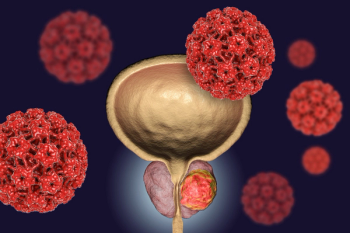
Men with low-risk prostate cancer on active surveillance report fewer problems with sexual function than those on other treatments.

In an interview with Pharmacy Times®and Directions in Oncology Pharmacy®, Chad Hatfield, PharmD, MHA, BCPS, chief pharmacy officer at UC Davis Medical Center, discussed how data analytics are used in oncology pharmacy practice.

Brexucabtagene autoleucel (Tecartus, Kite Pharma) is a cell-based gene therapy for the treatment of adult patients with mantle cell lymphoma who have not responded to or who have relapsed following other treatments.

The FDA has granted enfortumab vedotin-ejfv both a regular approval and a new indication expansion for the treatment of adult patients with locally advanced or metastatic urothelial cancer who are ineligible for cisplatin-containing chemotherapy and have previously received 1 or more prior lines of therapy.

The trial has successfully enrolled 17 patients with clear cell renal cell carcinoma and has reported that the drug is well tolerated at doses of up to 525 mg weekly.

The ASCO-COA Oncology Medical Home standards offer a roadmap for comprehensive high-quality, patient-centered cancer care delivery.

Despite the encouraging progression-free survival findings, data on overall survival resulted in a partial clinical hold instituted by the FDA.

Margetuximab-cmkb (Margenza) was approved in December 2020 in combination with chemotherapy for the treatment of adult patients with metastatic HER2-positive breast cancer who have previously received 2 or more anti-HER2 regimens, at least one of which for metastatic disease.

Results from the APOLLO trial showed a significant 37% reduction in the risk of progression or death, compared to pomalidomide and dexamethasone alone in patients with multiple myeloma.

Nivolumab (Opdivo; Bristol Myers Squibb) is FDA approved for 11 cancer indications, with the most recent approval for use in combination with certain chemotherapy for the initial treatment of gastric cancer.

The FDA granted accelerated approval in 2019 to enfortumab vedotin-ejfv for the treatment of adult patients with locally advanced or metastatic urothelial cancer who have previously received a PD-1/L1 inhibitor and a platinum-containing chemotherapy before or after surgery, or in a locally advanced or metastatic urothelial cancer setting.

Milind Javle, PhD, professor of Gastrointestinal Medical Oncology at the University of Texas MD Anderson Cancer Center, discussed the importance of the FDA’s expedited approval process for infigratinib in the treatment of previously treated locally advanced or metastatic cholangiocarcinoma.

The data show that the maximum tolerated dose of rigosertib in combination with nivolumab was not reached in the 3 cohorts of the trial’s dose-escalation phase in patients with advanced KRAS-positive metastatic lung adenocarcinoma.
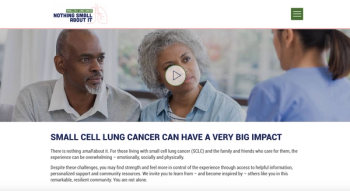
In an interview with Pharmacy Times® and Directions in Oncology Pharmacy®, Abizer Gaslightwala, vice president and head of the U.S. Hematology and Oncology division at Jazz Pharmaceuticals discusses the company’s new digital resource, Nothing Small About It.

Survival for patients with glioblastoma tumors is poor, with close to 75% of patients dying within 2 years of diagnosis and 95% dying within 5 years.

Milind Javle, PhD, professor of Gastrointestinal Medical Oncology at the University of Texas MD Anderson Cancer Center, discussed the importance of the FDA’s expedited approval process for infigratinib in the treatment of previously treated locally advanced or metastatic cholangiocarcinoma.

Milind Javle, PhD, professor of Gastrointestinal Medical Oncology at the University of Texas MD Anderson Cancer Center, discussed how the US FDA evaluated the application for infigratinib to expedite the approval process for treatment of previously treated locally advanced or metastatic cholangiocarcinoma.
The drug is approved for patients after 4 or more failed lines of therapy, although many patients in clinical trials had received 7 or more prior lines of therapy.

New research presented at the ESMO World Congress on Gastrointestinal Cancer suggests the use of antibiotics may increase the risk of colon cancer, especially in individuals under age 50 years.
The 5-year overall survival was 18% in the CPX-351 group compared to 8% in the standard chemotherapy group.