In an interview with Pharmacy Times, Ali A. Habib, MD, discusses hospitalization findings from the NIMBLE trial of investigational cemdisiran in generalized myasthenia gravis and explains why small event numbers require cautious interpretation.

Ryu Kariywasam-Chavez graduated from Kean University in Union, New Jersey in May 2025 with a bachelor of arts in film/television and multimedia. Ryu joined Pharmacy Times as a content associate in April of 2026.
In an interview with Pharmacy Times, Ali A. Habib, MD, discusses hospitalization findings from the NIMBLE trial of investigational cemdisiran in generalized myasthenia gravis and explains why small event numbers require cautious interpretation.

Victoria P. Werth, MD, discusses how litifilimab’s 52-week AMETHYST findings inform treatment expectations and timely reassessment of persistent cutaneous lupus symptoms.

In an interview with Pharmacy Times, Victoria P. Werth, MD, professor of dermatology at the University of Pennsylvania and chief of dermatology at the Philadelphia VA Medical Center, discusses why meaningful improvement extends beyond skin clearance and how response timing affects patients with difficult-to-control disease.

In an interview with Pharmacy Times, Ali A. Habib, MD, clinical professor of neurology at the University of California, Irvine, discusses what the hospitalization findings mean for patients and why they should be viewed as supportive evidence

The FDA approval of pritelivir offers an oral treatment for refractory HSV lesions in immunocompromised adults, with drug interactions creating an important role for pharmacists.

In an interview with Pharmacy Times, Christine Brown, PhD, and John Williams, PhD, discuss how an investigational meditope-enabled CAR T-cell platform could offer control through adapter dosing and the pharmacist’s role in its clinical development.

In an interview with Pharmacy Times, Christine Brown, PhD, and John Williams, PhD, discuss preclinical research on a meditope-enabled platform designed to redirect CAR T cells toward additional tumor targets and support their expansion after infusion.

Investigational inhaled stem cells for COPD raise questions about lasting clinical benefit and the pharmacy controls needed to deliver a living-cell product through a nebulizer.

In an interview with Pharmacy Times, Abdulkader Rahmo, PhD, discusses investigational inhaled cell therapy for COPD, the evidence needed to establish lasting clinical benefit, and pharmacists’ potential role in its delivery.

In an interview with Pharmacy Times, City of Hope researchers discuss a preclinical platform designed to redirect CAR T cells after infusion and how pharmacists could help bring this adaptable approach into clinical practice.
In an interview with Pharmacy Times, Paula Rodríguez-Otero, MD, PhD, discusses less frequent linvoseltamab dosing, CRS monitoring, and how community practices could prepare for its potential use in high-risk smoldering multiple myeloma.
In an interview with Pharmacy Times, Paula Rodríguez-Otero, MD, PhD, discusses patient selection for LINKER-SMM1 and weighs the potential benefits of early linvoseltamab treatment against infection risk in high-risk smoldering multiple myeloma.

William J. Peppard, PharmD, explains how emerging suzetrigine findings after knee arthroplasty connect opioid stewardship with functional recovery and the pharmacist’s role in ensuring treatment access.
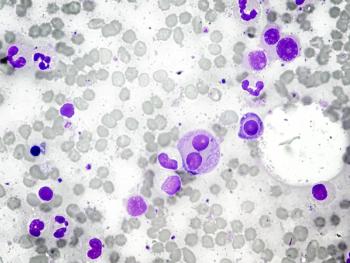
In an interview with Pharmacy Times, LINKER-SMM1 study investigator Paula Rodríguez-Otero, MD, PhD, a hematologist at Clínica Universidad de Navarra in Pamplona, Spain, explains how researchers selected high-risk patients and how she weighs infections against the potential to prevent progression to active disease.

Study coauthor William J. Peppard, PharmD, discusses which patients may benefit most from suzetrigine after knee replacement and how pharmacists can address cost and access barriers to postoperative treatment.
Jose Bazan, MD, discusses how FES PET could refine patient selection for SBRT in ER-positive metastatic breast cancer and highlights considerations for coordinating imaging, radiation, and systemic therapy.

In an interview with Pharmacy Times, William J. Peppard, PharmD, pain stewardship coordinator at Froedtert & the Medical College of Wisconsin and coauthor of a retrospective suzetrigine study, discusses findings suggesting that the nonopioid medication could help reduce postoperative opioid prescribing after total knee arthroplasty.
In an interview with Pharmacy Times, Jose Bazan, MD, who leads the Breast Radiation Oncology program at City of Hope, discusses an ongoing phase 2 trial evaluating whether stereotactic body radiation therapy (SBRT) can help patients with oligoprogressive estrogen receptor (ER)-positive metastatic breast cancer remain on their current systemic therapy longer.

September’s pain management coverage examined postoperative nonopioid options, lessons from sickle cell pain research, and pharmacists’ experiences with controlled-substance prescribing.
September’s hematology coverage examined a new definition of myeloma cure, patient preferences for treatment delivery, and emerging strategies for deepening responses.

September oncology coverage highlighted new breast and kidney cancer combinations, updated lung cancer labeling, and emerging evidence connecting antibiotic exposure with CAR T-cell outcomes.
In an interview with Pharmacy Times, Danielle Roman, PharmD, BCOP, FHOPA, manager of oncology clinical pharmacy services at Allegheny Health Network in Pittsburgh, discusses ASCO’s updated guideline for follow-up and surveillance after primary treatment for early-stage breast cancer.

A detailed LINKER-MM1 analysis found that cytokine release syndrome (CRS) with linvoseltamab occurred early, was predominantly low grade, and became less frequent with successive step-up and full doses.

In a Pharmacy Times interview, study coauthor William J. Peppard, PharmD, discusses the association between suzetrigine and fewer opioid refills after knee replacement, the limits of the evidence, and the access barriers pharmacists can help patients navigate.

An MRD-guided strategy incorporating teclistamab-daratumumab intensification produced deep responses in newly diagnosed high-risk multiple myeloma, although infections affected more than three-fourths of treated patients.

Phase 2 MILESTONE results suggest that postinduction minimal residual disease (MRD) negativity can identify a small subset of transplant-eligible patients with newly diagnosed multiple myeloma who may defer autologous stem cell transplantation.

Fixed-duration KRd slowed progression in high-risk smoldering myeloma, but high rates of severe toxicity temper enthusiasm.
The FDA approved lirafugratinib for adults with previously treated, advanced cholangiocarcinoma harboring an FGFR2 fusion or other rearrangement after the REFOCUS trial showed a 46% ORR.

Long-term CASSIOPEIA Registry results show that daratumumab maintenance supports sustained minimal residual disease negativity in transplant-eligible patients with newly diagnosed multiple myeloma.

Infection prevention during bispecific antibody treatment requires pharmacists to coordinate baseline screening, antimicrobial prophylaxis, immunoglobulin monitoring, vaccination, and rapid evaluation of suspected infections.