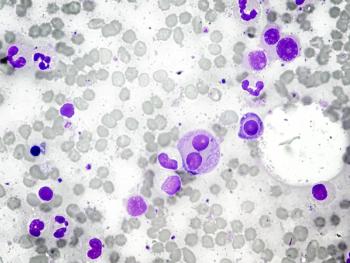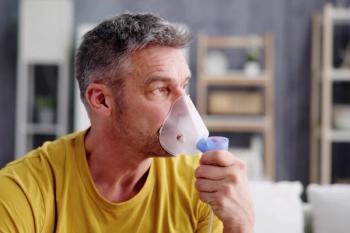
In an interview with Pharmacy Times, Abdulkader Rahmo, PhD, discusses investigational inhaled cell therapy for COPD, the evidence needed to establish lasting clinical benefit, and pharmacists’ potential role in its delivery.
Investigational inhaled stem cells for COPD raise questions about lasting clinical benefit and the pharmacy controls needed to deliver a living-cell product through a nebulizer.
A nebulizer could offer a familiar route for delivering an unfamiliar treatment: living stem cells intended to interact with the lung’s own repair machinery. For chronic obstructive pulmonary disease (COPD), however, the central question is whether that approach can produce lasting benefit—and whether the product can be delivered reliably.
SMSbiotech is investigating Small Mobile Stem (SMS) cells, a proprietary, blood-derived allogeneic cell therapy administered through nebulized inhalation. In September 2026, the company announced that the FDA had issued a “Study May Proceed” notification for its investigational new drug application, allowing a US phase 1b study to begin. Clearance to conduct research is not treatment approval. The FDA states that regenerative medicine therapies have not been approved for COPD.1,2
In an interview with Pharmacy Times, Abdulkader Rahmo, PhD, co-founder, president, and chief science officer at SMSbiotech, described the proposed mechanism and the evidence needed to evaluate it.
According to Rahmo, SMS cells are intended to selectively bind to endogenous lung cells involved in repair and influence gene activity and proliferation. The hypothesis centers on stimulating existing repair pathways rather than replacing damaged lung cells.
That distinction does not establish superiority over mesenchymal stromal cells, whose proposed effects also include signaling. Whether SMS-cell interactions translate into clinical benefit remains unproven.
The company reported that the first Australian cohort completed 28 days of safety monitoring without therapy-related adverse events. That observation concerns a limited early monitoring period; it does not establish long-term safety or efficacy.1
Dose selection also requires more than finding the largest tolerated exposure.
“An important point is that the highest tolerated dose is not necessarily the dose that should automatically be taken forward,” Rahmo said.
He explained that escalating doses should be assessed for biological activity alongside pulmonary reactions and other adverse events. Greater exposure without greater activity would not necessarily justify choosing a higher dose.
A short-term improvement in breathing would not, by itself, demonstrate lung regeneration. Rahmo emphasized longitudinal findings that connect biological changes with patient benefit.
“Ultimately, structural and molecular findings need to translate into meaningful patient benefit,” he said.
He identified quantitative CT changes suggesting preserved lung tissue, sustained gas-exchange improvements, and slower deterioration in lung function as measures worth investigating. Fewer exacerbations and durable improvements in exercise capacity would help establish whether those changes matter clinically.
The FDA lists forced expiratory volume in 1 second (FEV₁) among surrogate end points used in COPD drug approvals. Its acceptability in a particular development program is context dependent, however, and prior use does not automatically validate it for regenerative therapy. A transient FEV₁ increase, therefore, should not be equated with structural repair.3
For pharmacists interpreting emerging results, the distinction is practical: early tolerability can support further investigation, while disease-modification claims require evidence beyond an initial response.
Nebulized delivery could create opportunities for outpatient administration, but a living-cell product introduces challenges beyond those of conventional inhaled medications.
“With an ordinary drug, nebulizers may affect aerosol performance. With a living-cell aerosol, the device could potentially affect the product itself,” Rahmo said.
He described the need to evaluate cell viability and potency after nebulization, along with the viable dose actually emitted and the amount retained in the device. These considerations make the product and designated nebulizer part of an integrated delivery process.
Pharmacists could help verify storage history and product release status before preparation. Their responsibilities could extend to dose reconciliation, lot traceability, and coordination with respiratory therapy when administration is interrupted or a device malfunctions.
AABB’s Cell and Gene Therapy Standards for Pharmacy, effective October 1, 2025, address receipt, storage, handling, and dispensing of approved products under pharmacy management. They do not cover clinical administration or establish requirements specifically for investigational SMS cells.4
“The key is that familiarity of the device does not by itself make the therapy simple: a living-cell product introduces requirements that conventional inhaled drugs do not,” Rahmo said.
Moving treatment into pulmonary clinics would depend on validated handling procedures and monitoring appropriate to demonstrated risks. The clinical evidence and delivery process must develop together before nebulized stem cells can be considered a practical COPD treatment.
Stay informed on drug updates, treatment guidelines, and pharmacy practice trends—subscribe to Pharmacy Times for weekly clinical insights.
Subscribe