

A phase 1/2 analysis found rapid, deep responses with mezigdomide plus elranatamab in patients with relapsed or refractory multiple myeloma, but the small cohort and limited follow-up require cautious interpretation.

Ryu Kariywasam-Chavez graduated from Kean University in Union, New Jersey in May 2025 with a bachelor of arts in film/television and multimedia. Ryu joined Pharmacy Times as a content associate in April of 2026.
A phase 1/2 analysis found rapid, deep responses with mezigdomide plus elranatamab in patients with relapsed or refractory multiple myeloma, but the small cohort and limited follow-up require cautious interpretation.
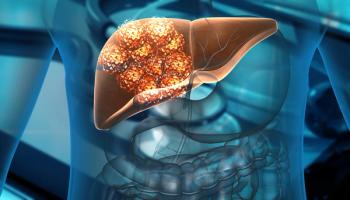
An investigational glypican-3–directed CAR T-cell therapy engineered to express IL-15 and IL-21 produced a complete response lasting at least 1 year in a child with chemotherapy-resistant metastatic hepatoblastoma.

Phase 3 CERVINO results show that monthly etentamig significantly improved PFS and response rates compared with investigator-selected therapy in patients with previously treated multiple myeloma.

Statin initiation after colorectal cancer treatment was associated with only modest survival differences after investigators accounted for biases that can exaggerate benefits in observational research.

The panelists emphasized that selecting a therapy is only one step toward improving outcomes for patients with heart failure.

Robin Tumlinson, PharmD, BCOP, discusses how biomarker-guided treatment and increasingly complex toxicity profiles are expanding oncology pharmacists’ responsibilities in bladder cancer care.

The FDA has approved rebisufligene etisparvovec-hopf (Fayuvi), the first treatment designed to alter the course of mucopolysaccharidosis type IIIA.

In an interview with Pharmacy Times, Robin Tumlinson, PharmD, BCOP, clinical pharmacist specialist in genitourinary oncology at Vanderbilt University Medical Center, discussed recent developments reshaping bladder cancer treatment across disease stages.

The randomized ALLIANCE A051701 trial closed early when treatment-related toxicity and mortality were increased without improving PFS in patients with newly diagnosed double-hit lymphoma.

Robin Tumlinson, PharmD, BCOP, discusses how rapidly expanding bladder cancer options are creating new questions around treatment sequencing, toxicity management, biomarker testing, and multidisciplinary care.

A prospective observational study found microplastics more frequently and at higher levels in lung samples from patients with lung malignancies, although the findings do not establish that the particles cause cancer.

Helicobacter pylori exposure could be associated with approximately 22% of colorectal cancer cases worldwide.

In an interview with Pharmacy Times, Carole R. Berini, PhD, research scientist at Ontada, and Saamir Pasha, MPH, senior biostatistician at Ontada, discussed how validated proxies for missing Eastern Cooperative Oncology Group (ECOG) performance status could strengthen real-world oncology evidence.

Machine-learning and multiple-imputation models could help researchers estimate missing baseline Eastern Cooperative Oncology Group performance status in advanced prostate cancer.

In an interview with Pharmacy Times, Carole R. Berini, PhD, research scientist at Ontada, and Saamir Pasha, MPH, senior biostatistician at Ontada, discussed how artificial intelligence and routinely collected clinical data could help address missing Eastern Cooperative Oncology Group (ECOG) performance status in real-world oncology research.

The expanded approval of leniolisib makes it the first approved treatment for pediatric patients with activated phosphoinositide 3-kinase delta syndrome.

Carole R. Berini, PhD, and Saamir Pasha, MPH, of Ontada discuss a model designed to estimate missing baseline ECOG performance status in advanced prostate cancer and the validation needed before it can support broader real-world evidence research.

Once-daily oral deucrictibant extended-release significantly reduced hereditary angioedema attacks compared with placebo in the pivotal phase 3 CHAPTER-3 trial.

The data support GPRC5D-directed CAR T-cell therapy as a potential option following prior BCMA-targeted treatment.

The FDA expanded the accelerated approval of sevabertinib to include treatment-naive adults with locally advanced or metastatic nonsquamous NSCLC harboring HER2 tyrosine kinase domain-activating mutations.

The investigational IL-33–targeting monoclonal antibody tozorakimab reduced moderate to severe COPD exacerbations across two phase 3 trials, including among patients with low blood eosinophil counts.

The phase 3 DeLLphi-305 trial found that the first-line maintenance therapy improved overall survival in extensive-stage small cell lung cancer (ES-SCLC) compared with durvalumab alone.

Preclinical research identifies tumor-secreted PRDX1 as a potential “redox checkpoint” that suppresses T-cell activity and may contribute to resistance to immune checkpoint inhibitors.

In an interview with Pharmacy Times, Claudia R. Morris, MD, lead investigator and author of the phase 3 STArT trial and a pediatric emergency medicine physician at Children’s Healthcare of Atlanta, discussed the need for more meaningful end points in sickle cell pain trials, future research targeting acute chest syndrome, and how pharmacists can improve the collection of opioid-use data.

A prospective multicenter study found high response rates with first-line obinutuzumab plus bendamustine across several indolent B-cell lymphoma subtypes, although short follow-up and the absence of a comparator limit conclusions about long-term benefit.

In an interview with Pharmacy Times, Claudia R. Morris, MD, lead investigator and author of the phase 3 STArT trial and a pediatric emergency medicine physician at Children’s Healthcare of Atlanta, discussed how treatment timing and patient heterogeneity may inform the design of future sickle cell pain trials.

Trial investigator Claudia R. Morris, MD, said substantial variation in pain phenotypes, treatment practices, and trial end points may offer broader lessons for future acute sickle cell disease research.

In an interview with Pharmacy Times, Claudia R. Morris, MD, lead investigator and author of the phase 3 STArT trial and a pediatric emergency medicine physician at Children’s Healthcare of Atlanta, discussed how patient history and institutional pain-management practices may influence time to crisis resolution and how care teams, including pharmacists, can help standardize treatment.

The phase 3 findings support MR-107A-02's potential as a nonopioid option for certain patients with moderate to severe acute pain.

In an interview with Pharmacy Times, Claudia R. Morris, MD, lead investigator and author of the phase 3 STArT trial, discusses why intravenous arginine did not shorten time to crisis resolution and how institutional variation, pain heterogeneity, shorter hospital stays, and treatment timing may have influenced the findings.