

A new toxicological risk assessment builds on 2024 findings that raised consumer concern, offering pharmacists reassuring data to share with patients.

Gillian McGovern is an editor at Pharmacy Times®. She graduated from Rowan University in 2023 with a BA in Writing Arts and concentrations in Publishing & Writing for the Public, Technical & Professional Writing, and Creative Writing.
A new toxicological risk assessment builds on 2024 findings that raised consumer concern, offering pharmacists reassuring data to share with patients.

The new drug application's submission is supported by data from the phase 3 clinical studies SynAIRgy and LunAIRo.

Pharmacists proactively identify red flags for early detection, navigate complex insurance and access barriers for high-cost disease-modifying therapies, and serve as educators across settings.

If approved, AXS-12 would be a potentially valuable new option for a symptom that significantly impairs the daily functioning of those with narcolepsy.

The approval of the drug combination is supported by findings from the phase 3 VIKTORIA-1 clinical trial.
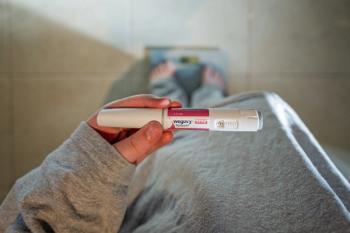
This FAQ breaks down which drugs are covered by the program, who qualifies, how to process claims correctly, and what pharmacists need to know to counsel patients through this landmark shift in obesity drug access.
This approval marks the first time patients can begin treatment with home administration either by themselves or their caregiver.

Kasey Malotte, PharmD, BCPS, discusses the new credential’s strengths and areas for growth as well as why a stronger training ecosystem is necessary for long-term impact.

The regimens are pembrolizumab plus enfortumab vedotin-ejfv (EV) and pembrolizumab with berahyaluronidase alfa-pmph and EV.
Ennumo is approved for the same indications as its reference product, Neulasta (pegfilgrastim).

In addition to the upcoming Annual Forum in September, New England Institute of Ambulatory Care Pharmacists (NEIAP) provides practical education and networking opportunities to support ambulatory care pharmacists.

Katelyn O'Brien, PharmD, BCPS, CDCES, BC-ADM, discusses the New England Institute of Ambulatory Care Pharmacists (NEIAP) Annual Forum and previews key topics of discussion.

Jennifer Goldman, PharmD, RPh, CDCES, BC-ADM, FCCP, shares the history and mission of NEIAP and explains how the organization provides practical education and networking opportunities.
In addition to explaining how NEIAP has evolved over time, Katelyn O'Brien, PharmD, BCPS, CDCES, BC-ADM, previews key topics at the upcoming September meeting.
Guests Adrian Wong, PharmD, MPH, BCCCP; and Cayley Krkljes, PharmD, BCPS, about a systematic review of phenobarbital and primidone drug-drug interactions, highlighting clinically significant risks when used with other therapies.
Tregzi is indicated in matched-donor hematopoietic stem cell transplantation with a myeloablative preparative regimen for hematopoietic and immunologic reconstitution and to improve chronic graft-vs-host disease–free survival.

Compared with placebo, adult patients with ADHD and comorbid anxiety had greater change from baseline in AISRS total score at week 8.

This FAQ outlines current measles cases, key drivers of increasing cases, and the essential role pharmacists play in vaccination, patient counseling, case recognition, and combating vaccine misinformation.
The agent is to be used alongside diet adjustments in adult patients.
Pharmacists should be up-to-date on current outbreak status, US risk level, and how to recognize warning signs and counsel concerned patients as confirmed Ebola cases caused by Bundibugyo ebolavirus continue to rise across the Democratic Republic of the Congo (DRC) and Uganda.
The new indication is for patients aged 12 and older with unresectable or metastatic SS who received prior chemotherapy and are positive for various genetic subtypes.

With this approval, Capvaxive is the only PCV specifically indicated and studied in the US for use in this patient population.
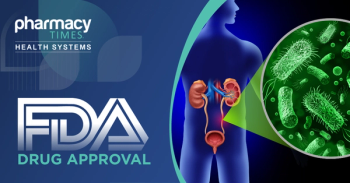
The indication is for complicated urinary tract infections (UTIs) caused by several susceptible microorganisms in adults who have limited or no alternative oral treatment options.

Pharmacists are increasingly positioned to answer questions and address patient interests as peptide therapies expand rapidly across clinical settings.

Advances in Alzheimer disease diagnosis and treatment are reshaping care, highlighting the pharmacist’s role in medication management, patient education, and overcoming barriers to access.
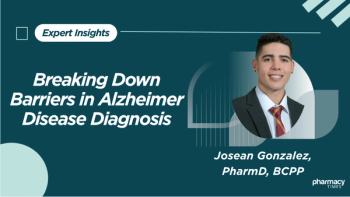
Gonzelez describes advances in Alzheimer disease diagnostics and disease-modifying therapies and highlights the critical role pharmacists play in medication management, caregiver education, and improving treatment access.

Josean Gonzalez, PharmD, BCPP, discusses the expanding role of pharmacists in Alzheimer disease care, Baptist Health South Florida’s multidisciplinary approach, and the promise of emerging therapies for patients with cognitive disorders.

Both slow and fast transition periods were safe and effective, with minimal adverse events.
Erica Marini, PharmD, MS, BCPS; and guest Millad Sobhanian, PharmD, BCPS, discuss 3 major Alzheimer disease developments: a newly approved agitation therapy, the delayed FDA decision on lecanemab subcutaneous initiation dosing, and a controversial review on antiamyloid therapies.
The FDA approved the oral antiviral ensitrelvir (Xocova; Shionogi & Co, Ltd) for post-exposure prophylaxis (PEP) of COVID‑19 in adults and adolescents 12 years and older.