As far as what this looks like as a clinical service, the guideline didn't explicitly say that a pharmacist is the only professional who can provide CMM, but it's widely recognized that pharmacists have the best training to provide it. This guideline points to several randomized controlled studies that support utilization of pharmacists to facilitate initiation and follow-up of these evidence-based therapies for CKM conditions. However, I think it's widely recognized by most pharmacists that models for pharmacist clinical services vary across the United States, and in these studies, it also varied, which isn't surprising given the diverse and fragmented health care systems we have in the US today, as well as state-specific pharmacy practice acts and rules that can limit pharmacists' scope of practice. As pharmacists, we really need to continue to advocate for changes in state practice acts, as well as legislation at the federal level, to recognize pharmacists as health care providers so we can implement a true, standardized, comprehensive medication management practice across the country.
Key Takeaways
- The new CKM guideline names CMM as a standard of practice, giving pharmacists new leverage to advocate for expanded clinical roles.
- Use the KDIGO heat map and AHA PREVENT calculator together—both incorporate eGFR and UACR—to stage CKD risk and guide therapy decisions.
- Deprescribing (e.g., stopping sulfonylureas when starting a GLP-1 RA) can be pharmacist-led under a broad CPA or require provider coordination under a limited or no CPA.
Pharmacy Times: What should pharmacists be paying closest attention to when managing therapy for patients whose kidney function is declining alongside cardiovascular and metabolic risk?
St Peter: First, we need to classify patients into a CKD stage using the KDIGO heat map—KDIGO being the Kidney Disease: Improving Global Outcomes international guideline body—to determine a person's risk for CKD progression and kidney failure. Second, we need to use the new American Heart Association PREVENT calculator, which incorporates all the standard key metabolic and cardiovascular risk factors, but in addition includes eGFR and UACR. All these factors go into the risk equation, and it will determine the patient's risk for cardiovascular disease. We can then use that information to determine the CKM stage, and once we do that, the guideline helps pharmacists decide which evidence-based therapies should be considered.
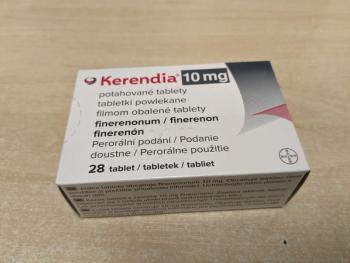
Knowing the patient's eGFR—their kidney function—is important for determining whether specific therapies can be initiated. For example, we know that SGLT2 inhibitors aren't indicated when someone's eGFR is less than 20, and the nonsteroidal mineralocorticoid receptor antagonist finerenone is not recommended for initiation when the eGFR is less than 20, due to increased risk of hyperkalemia. And of course, as pharmacists, we all know it's important to use kidney function assessment—I use eGFR adjusted for a person's body surface area—to determine dosing adjustments for many medications.
Pharmacy Times: Does this guideline give pharmacists more standing to lead deprescribing conversations or simplify regimens, and how should that be approached?
St Peter: That's a really good question. I think of deprescribing as a component of a standardized, comprehensive medication management practice, but of course, state-specific pharmacist scope of practice will dictate how pharmacists can approach deprescribing. If a pharmacist practices under a broad collaborative practice agreement (CPA), then deprescribing can be covered under that agreement. If the pharmacist practices under a more limited CPA, or no CPA, then they'll typically need to address deprescribing directly with the patient's physicians or advanced practice providers to get buy-in.
This is really important because, as we add on some of these guideline-directed therapies, like a GLP-1 receptor agonist, for instance, we should be thinking about taking off other therapies, like sulfonylureas, which don't impact a patient's progression to kidney disease or cardiovascular disease, but can increase the risk of hypoglycemia. It's really important for us to do this, and pharmacists will have to use different mechanisms to accomplish it.