
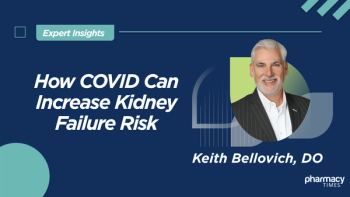
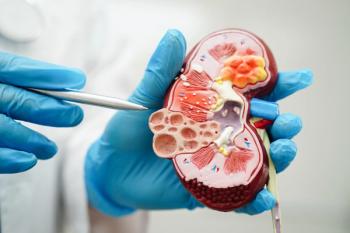
Keith Bellovich, DO, explains how SARS-CoV-2–driven inflammation contributes to kidney injury and may reveal previously undiagnosed chronic kidney disease.
Keith Bellovich, DO, explains how SARS-CoV-2–driven inflammation contributes to kidney injury and may reveal previously undiagnosed chronic kidney disease.

How pharmacists are uniquely positioned to support athlete health, performance, recovery, and regulatory compliance through medication expertise and interdisciplinary care.

Erin Dorval, PharmD, highlights the pharmacist’s role in safe athlete pain management, emphasizing appropriate NSAID use, alternative therapies, and emerging trends such as personalized care and wearable-driven performance optimization.

Ahead of the Sports Pharmacy Summit, Erin Dorval, PharmD, highlights the pharmacist’s role in optimizing athlete performance and recovery through safe medication use, careful supplement evaluation, and a holistic, risk-minimizing approach to care.
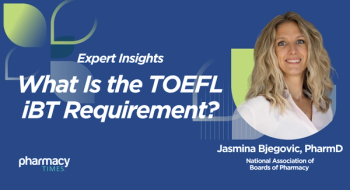
The National Association of Boards of Pharmacy (NABP) opens the door to the Occupational English Test (OET) as an alternative English exam for foreign pharmacy graduate certification.

Brandon Welch, PharmD, highlights the expanding role of sports pharmacists in medication safety, anti-doping, and personalized athlete care.
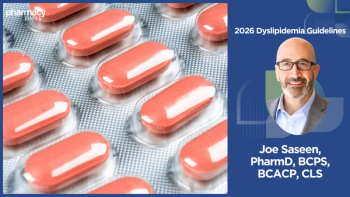
Joseph Saseen, PharmD, addresses statin intolerance and misinformation and provides a look at aggressive new LDL targets and emerging therapies not yet captured in the 2026 guidelines.
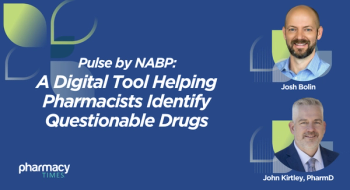
Pulse by NABP is revolutionizing drug supply chain oversight and patient safety.

Deucravacitinib offers a targeted, well-tolerated oral option for patients with psoriatic arthritis, with efficacy comparable to biologics and meaningful benefits in patient-reported outcomes.

NABP weighs OET and best-section scoring to ease FPGEE path while boosting pass rates and safeguarding patient care.
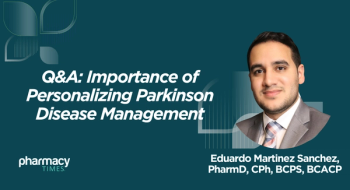
Martinez Sanchez describes early signs of Parkinson disease, how treatment adapts, and how ambulatory pharmacists fine-tune treatment, adherence, and hope amid new therapies.

Experts from NABP and the Arkansas State Board of Pharmacy explain how Pulse by NABP equips pharmacists and regulators with real-time drug supply chain verification tools.
Pharmacists' role in lipid management takes center stage with the 2026 dyslipidemia guideline update.

Eduardo Martinez Sanchez, PharmD, CPh, BCPS, BCACP, discusses key counseling points, the importance of individualizing disease management, and promising therapies to keep an eye on.

Learn how NABP’s FPGEC verifies foreign pharmacists and why TOEFL English proficiency standards remain central to US patient safety.
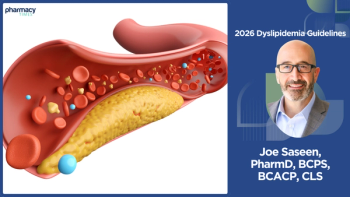
Joseph Saseen, PharmD, explains the 2026 dyslipidemia guidelines' push for universal lipoprotein A screening, clarifies when apolipoprotein B testing adds value, and outlines how new FDA-approved therapies fit into the updated lipid-lowering treatment algorithm.

Craig Beavers urges pharmacists to engage with obstructive hypertrophic cardiomyopathy (oHCM) management and explains how the alignment between mavacamten's clinical trial data and real-world outcomes validates its role as a safe, effective, and sustainable long-term therapy.

Long-acting HIV injections and twice-yearly PrEP reshape care, while pharmacists tackle stigma, insurance hurdles, and adherence to close access gaps.

Joseph Saseen, PharmD, breaks down how the new PREVENT ASCVD calculator improves on its predecessor and what the expanded LDL-C goal framework means for treatment decisions in pharmacy practice.

Pharmacists guide HR+ breast cancer CDK4/6 therapy, tackling interactions, costs, and toxicity monitoring, and applying new clinical trial insights.

Deucravacitinib, a selective TYK2 inhibitor, demonstrates efficacy comparable to biologics while offering meaningful improvements in symptoms and quality of life for patients with psoriatic arthritis.

Craig Beavers discusses how mavacamten's established long-term safety data strengthen shared decision-making conversations, and outlines best practices for multidisciplinary collaboration when implementing cardiac myosin inhibitor therapy in patients with obstructive hypertrophic cardiomyopathy (oHCM).
CDK4/6 inhibitor therapies must by tailored by comorbidities, interactions, cost, and coordinated labs with pharmacist expertise to support high-risk patients.

Nutrition coaching and pharmacist support boost medication adherence, tackle access barriers, and strengthen chronic disease routines.

Craig Beavers explains how mavacamten's REMS program and its clearly defined echo-based monitoring protocols create a unique opportunity for pharmacists to take an active role in managing patients with obstructive hypertrophic cardiomyopathy (oHCM).

Learn why uACR screening flags early vascular damage linking chronic kidney disease and cardiovascular health.

A timely pharmacist referral and collaborative care approach can set off a chain of positive lifestyle changes.
Craig Beavers, PharmD, FACC, FAHA, FCCP, BCCP, BCPS-AQ Cardiology, CACP, breaks down the key distinctions between obstructive and nonobstructive hypertrophic cardiomyopathy (oHCM) and explains how cardiac myosin inhibitors target the underlying disease mechanism.

Icotrokinra, a first-in-class oral IL-23 receptor blocker, fills a long-standing gap in the treatment of moderate to severe plaque psoriasis.