

The authors stress that health care providers should explain false positive results to their patients, reassure them that results may be negative, and stress the significance of continued screenings.
The authors stress that health care providers should explain false positive results to their patients, reassure them that results may be negative, and stress the significance of continued screenings.
These companion diagnostics are poised to provide simpler and detailed insights into a patient’s genomic alternations, which could improve outcomes for patients with prostate cancer.

Jose Tinajero, PharmD, BCOP, discusses the results of a retrospective study evaluating patients with B-cell acute lymphoblastic leukemia.
Patients with DLBCL on Medicaid had worse survival outcomes than those on commercial insurance, but there were no statistically significant differences in survival between races.

Mary McGann, PharmD, BCOP, offers insights into CAR T-cell therapy and the crucial role of pharmacists in mitigating resistance.

The risk of late-stage diagnosis was higher for Asian, Black, and Native Hawaiian or Other Pacific Islander adolescent and young adult patients with cancer.

Expert shares reasons why many women are behind on their annual breast cancer screenings, along with the latest cutting edge treatments in the breast cancer space.

Pharmacists support treatment adherence as well as monitor adverse effects, drug-drug interactions, and quality of life.

Mirdametinib is an oral, allosteric small molecule MEK inhibitor to treat pediatric patients with neurofibromatosis type 1-associated plexiform neurofibromas (NF1-PN).

In survivors of lymphoma with fragmented transition of care, preparedness and activation for the next phase of their survivorship was lacking.

Pharmacists play a crucial role in supporting patients with HR+/HER2– breast cancer.

Accurate, effective screening is crucial for connecting patients with needed financial resources and support.

With diagnostic tools, oncology pharmacists and other health care providers can help to identify treatments that have the best probability of working for a specific patient.

Pharmacists have been shown to contribute to improved adherence rates, therapy optimization, patient safety, and cost-savings.

The indication is for adults with relapsed or refractory chronic lymphocytic leukemia or small lymphocytic lymphoma who were treated with at least 2 prior lines of therapy.

Patients can face barriers to BCMA-targeted treatments.

Aligning with previous data, the drug combination was modestly effective in patients with large B-cell lymphoma pre- and post-CAR-T-cell therapy.

The financial burden has increased significantly since 2015.

The proposed diagnostic agent has a long half-life, enables imaging the next day, and correlates to a longer shelf life in the pharmacy.

Bendamustine resulted in a greater risk of treatment complications in patients with lymphoma.

The FDA assigned the combination a Prescription Drug User Fee Act goal date of April 21, 2025.
The breakthrough therapy designation was granted based on ongoing data from the ARTEMIS-001 phase 1 open-label, multi-center trial.

Vimseltinib (Deciphera Pharmaceuticals) has a Prescription Drug User Fee Act goal date of February 17, 2025.

The combination is the first and only multi-targeted chemotherapy-free regimen that demonstrated superiority compared with osimertinib for non–small cell lung cancer (NSCLC).

Palliative pharmacists are invaluable assets of oncologic care.

Fam-trastuzumab deruxtecan-nxki has received 4 breakthrough therapy designations, including the latest approval.
Currently, the drug will be studied in the SKYBRIDGE (NCT05652686) trial, a first-in-human, phase 1/2, open-label, dose-escalation and expansion study.
Peer Reviewed
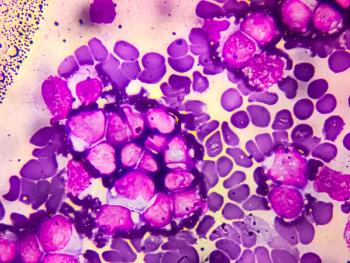
This article discusses clinical data for noncovalent Bruton tyrosine kinase inhibitors (BTKis), novel strategies in CLL, and the practical management of BTKi toxicities.

CAR T-cell therapy in multiple myeloma faces challenges from the immunosuppressive cells in the tumor microenvironment.
Peer Reviewed
This article reviews the efficacy and safety data for bispecific T-cell engagers and the practical considerations for their implementation across various types of practice sites for the historically difficult-to-treat relapsed/refractory B-cell lymphoma population.