

S. Diane Yamada, MD, president of the Society of Gynecologic Oncology (SGO), discusses some key developments in the field of gynecologic oncology that will be on the agenda at the SGO 2022 annual meeting.
S. Diane Yamada, MD, president of the Society of Gynecologic Oncology (SGO), discusses some key developments in the field of gynecologic oncology that will be on the agenda at the SGO 2022 annual meeting.
The KEYLYNK-010 trial was evaluating a combination of pembrolizumab (Keytruda) and olaparib (Lynparza) in patients with metastatic castration-resistant prostate cancer who progressed following chemotherapy and either abiraterone acetate (Zytiga) or enzalutamide (Xtandi).
The median survival time of patients was 12 months compared with 7 in the control group, the analysis demonstrates.

The research team used the National Cancer Institute’s Surveillance, Epidemiology, and End Results database, which provides nationwide information on cancer statistics.
Ramucirumab (Cyramza; Eli Lilly) is FDA-approved for 5 unique cancer indications.
BRACAnalysis CDx assay is indicated for use as a companion diagnostic to select patients with germline BRCA-mutated, HER2-negative, high-risk early breast cancer who may derive clinical benefit from olaparib.

Dr. Seiko Diane Yamada, MD, the 53rd president of Society of Gynecologic Oncology (SGO), discussed her goals for SGO during her tenure.
Olaparib (Lynparza) approved for patients with germline BRCA-mutated, HER2-negative, high-risk early breast cancer.
Shannon Hough, director of ClinReview and Clinical Content for McKesson, discusses the growing shift to biosimilars in oncology and the impact of increased access and reduced financial burden for patients on medication adherence.

Thomasina Morris, RPh, MHA, BCOP, pharmacist at Moffitt Cancer Center, discusses what oncology pharmacists should understand about rucaparib when treating ovarian cancer.

Supplemental new drug application submitted to the FDA for the approval of darolutamide (Nubeqa) plus docetaxel in patients with metastatic hormone-sensitive prostate cancer.

Phase 3 TROPiCS-02 study continues to follow patients for overall survival, a key secondary endpoint.
Epcoritamab is an investigational immunoglobulin G1-bispecific antibody being evaluated as a treatment for patients with follicular lymphoma in multiple clinical trials.

Pharmacy Times will be covering the upcoming Society of Gynecologic Oncology (SGO) Annual Meeting on Women’s Cancer live in Phoenix, Arizona, taking place March 18 through 21.

Poziotinib demonstrates positive results for treatment-naïve patients with non-small cell lung cancer harboring HER2 exon 20 insertion mutations.
Ivosidenib in combination with azacitidine found to significantly improve event-free survival in patients with previously untreated IDH1-mutated acute myeloid leukemia.

Thomasina Morris, RPh, MHA, BCOP, pharmacist at Moffitt Cancer Center, discusses the adverse events patients with ovarian cancer have reported during treatment with rucaparib.

Jakob Jensen, PhD, professor in the Department of Communication at the University of Utah and member of the Huntsman Cancer Institute, discusses how oncology pharmacy professionals can effectively address fatalistic beliefs and perceptions of cancer-related information among rural adults.

Researchers found that in a program of biennial screening of women aged 50 to 74 years, approximately 1 in 7 screen-detected breast cancer cases would be overdiagnosed.

Nivolumab (Opdivo) plus platinum-doublet chemotherapy approved for the treatment of adult patients with resectable non–small cell lung cancer in the neoadjuvant setting.
Durvalumab plus chemotherapy did not increase the discontinuation rate due to adverse events compared to chemotherapy alone.

Durable responses mark a significant advancement over chemotherapy, which may have only been effective for 9 to 10 months.

Acceptance is based on CheckMate -816 trial results where the agency granted priority review status to the Bristol Myers Squibb drug and assigned a PDUFA goal date of July 13, 2022.
Jakob Jensen, PhD, professor in the Department of Communication at the University of Utah and member of the Huntsman Cancer Institute, discusses how the beliefs and perceptions of cancer among adults living in rural areas compared to those of adults living in urban areas.

Filgrastim-ayow is indicated for the treatment of neutropenia, which is commonly experienced by patients receiving chemotherapy.

Thomasina Morris, RPh, MHA, BCOP, pharmacist at Moffitt Cancer Center, discusses how dosing for rucaparib treatment is assessed to treat patients with ovarian cancer.
The CAR T-cell therapy CYAD-101 was being evaluated in combination with FOLFOX followed by pembrolizumab (Keytruda) in patients with unresectable metastatic colorectal cancer.

Lakyn Husinka, PharmD, discussed new treatment options and pharmacists' role in treating patients with breast cancer.

The agency addresses the inclusion of older individuals in cancer-studies, the designing and conducting of multiple expansion cohorts, and the expedited development of biologics and drugs.
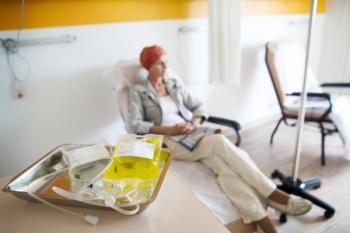
The median survival time for individuals with SCC and treated with Merck’s pembrolizumab was 13.9 months compared with 8.8 months in the control arm.