

Company releases data at the American Society of Clinical Oncology Annual Meeting 2022 showing that the drug is well-tolerated in patients with solid tumors.
Company releases data at the American Society of Clinical Oncology Annual Meeting 2022 showing that the drug is well-tolerated in patients with solid tumors.

There are a huge number of medical facilities in Ukraine that run international clinical trials, with the FDA noting that more than 250 drugs and devices were undergoing clinical research in Ukraine.

The new study analyzed KSHV’s latent-lytic switch, a process in which the virus exits its dormancy state to replicate in the host cell.

Pegfilgrastim-pbbk is the third oncology biosimilar developed by Amneal to gain FDA approval this year.

Tesh Khullar, co-founder and president of House Rx, discusses how social determinants of health can impact time to treatment initiation.

Analysis also shows a reduction in the need for opiate painkillers, and there was a decrease in other cancer-related symptoms, according to results published in Frontiers in Pain Research.

Pharmacy Times will be covering the American Society of Clinical Oncology (ASCO) 2022 Annual Meeting live in Chicago, Illinois, from June 3 through 7, 2022.

Tisagenlecleucel was shown to be effective in high-risk patients, including those who were heavily pretreated or had refractory disease.

We spoke with Kelly McAuliff, PharmD, BCOP, CSP, to learn about data being presented at the ASCO 2022 Annual Meeting.

Nivolumab (Opdivo) with fluoropyrimidine- and platinum-containing chemotherapy and nivolumab plus ipilimumab (Yervoy) approved as first-line treatments for unresectable advanced or metastatic esophageal squamous cell carcinoma.

Further sensitivity analyses to control for family alcohol consumption, family history, liver disease, and smoking, finds no convincing evidence that these factors affected the results.

Taking multiple prescription drugs and supplements can be especially dangerous for individuals with cancer who are about to undergo therapy.

Treatment with nirogacestat resulted in a 71% reduction in the risk of disease progression among adults with progressing desmoid tumors.
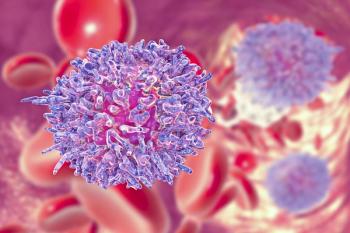
The approval is supported by data from a global phase 3 trial assessing the use of the drug for individuals with previously untreated IDH1-mutated acute myeloid leukemia.

Karen Fancher, PharmD, BCOP, a member of the Patient Advisory Panel at the Hematology/Oncology Pharmacy Association (HOPA), explains how her experience as a patient with cancer and an oncology pharmacy specialist informs her work on HOPA’s Patient Advisory Panel.
Byron Yoshino, PharmD, CEO of Pharmacare Hawaii, discusses the future of the home infusion space within the United States in the coming years.

Dong Xu, PhD, MS, curators' distinguished professor at the University of Missouri College of Engineering, discusses how artificial intelligence is being used to develop new drug therapies for medical treatments targeting cancers and other diseases.

Byron Yoshino, PharmD, CEO of Pharmacare Hawaii, discusses the rapidly growing home infusion space within Pharmacare Hawaii’s network of pharmacies.
Kirollos Hanna, PharmD, BCPS, BCOP, discussed how PARP inhibitors have changed the treatment landscape of ovarian cancer.
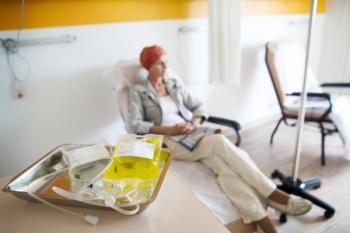
Watch for alopecia, arthralgia, diarrhea, fatigue, nausea, pyrexia, rash, and vomiting, among others.
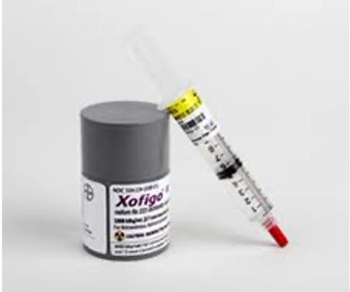
Xofigo is indicated for the treatment of patients with castration-resistant prostate cancer, symptomatic bone metastases, and no known visceral metastatic disease.

Study results also show a 50% increase in the precancerous condition, Barrett esophagus, between 2012 and 2019, in the same population.
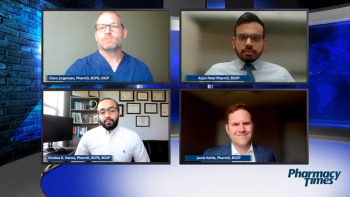
Experts discuss the role of pharmacists in improving screening rates for breast cancer, how they can support patients, and improve outcomes.
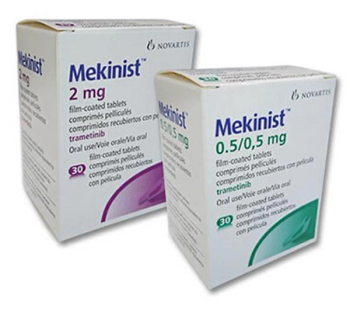
Trametinib (Mekinist) is a kinase inhibitor indicated as a single agent for the treatment of patients with unresectable or metastatic melanoma with BRAF V600E or V600K mutations as detected by an FDA-approved test.

Latest results of the phase 3 IKEMA trial demonstrate the longest median progression-free survival on a proteasome inhibitor backbone in this population, Sanofi says.

Independent committee recommends the phase 3 clinical trial continues to assess other primary and secondary endpoints for the treatment of unresectable or metastatic urothelial carcinoma.
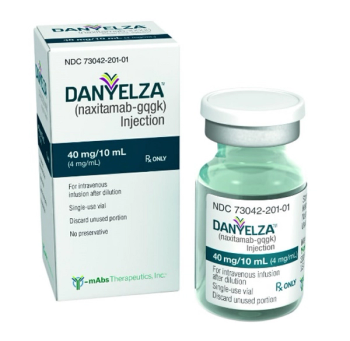
Naxitamab-gqgk (Danyelza) is for the treatment of pediatric and adult patients with relapsed or refractory high-risk neuroblastoma in the bone or bone marrow who have demonstrated a partial response, minor response, or stable disease to prior therapy.

Ribociclib plus fulvestrant achieved a median overall survival of 67.6 months in the first line setting for postmenopausal women with HR-positive/HER2-negative advanced breast cancer.
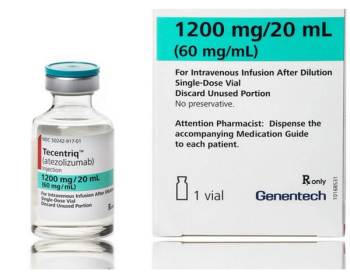
Atezolizumab (Tecentriq) is indicated for use in urothelial carcinoma, non-small cell lung cancer, triple-negative breast cancer, small cell lung cancer, hepatocellular carcinoma, and melanoma.

Aklilu Tedla, vice president of strategy and business development at Cardinal Health, discusses the cell and gene therapies in the pipeline for approval by the FDA.